
American Resources' Indiana Expansion: A Critical Leap Toward Rare Earth Independence
The global race for rare earth dominance has taken a decisive turn. American Resources CorporationAREC-- (NASDAQ: ARCC) is poised to disrupt China’s near-total control over the rare earth supply chain with its aggressive expansion of production capacity in Indiana. By leveraging cutting-edge technology and strategic feedstock diversification, the company is positioning itself as a linchpin in the U.S. push for mineral independence—a move that could redefine the investment landscape for critical materials.
The Scale of the Expansion
At the heart of American Resources’ strategy is its Indiana-based infrastructure. The 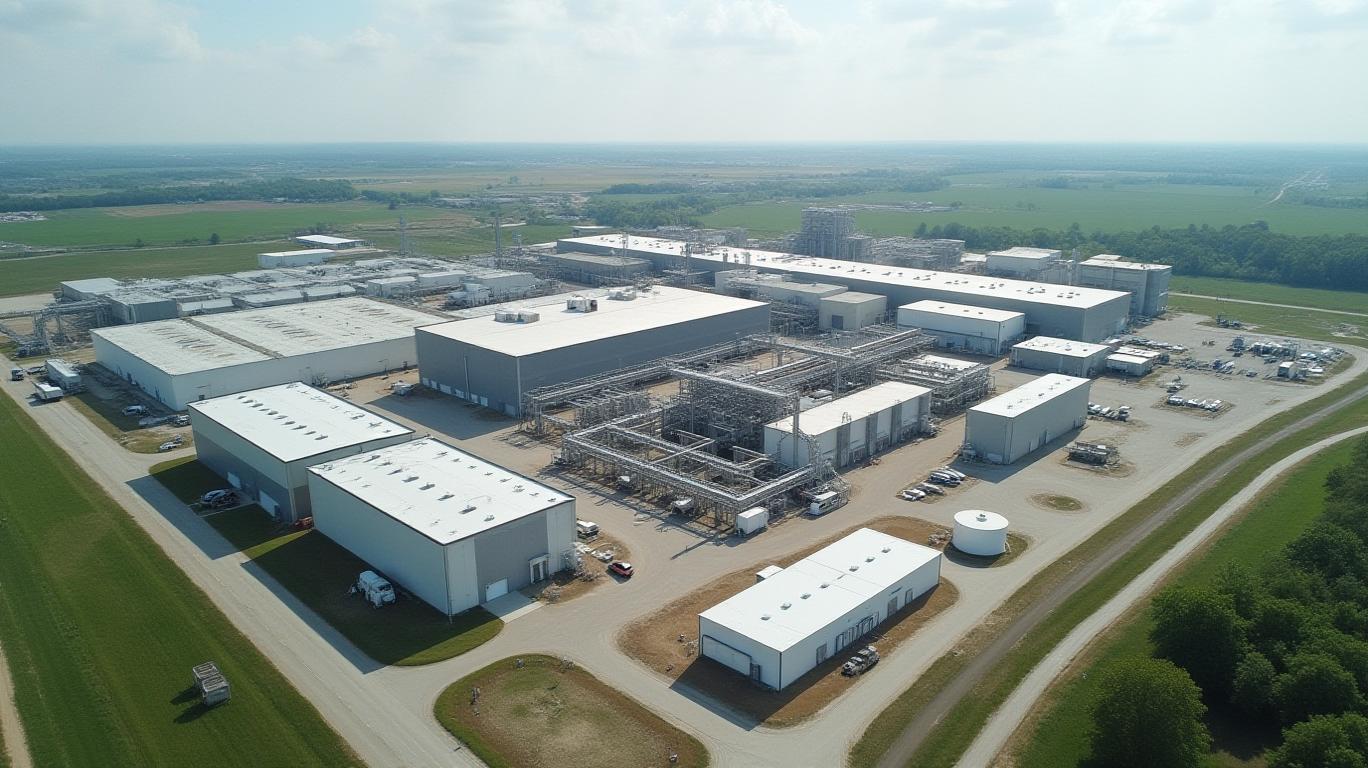 highlights the physical scope of this effort. The Marion facility, set to operationalize by late 2025, will achieve a 50-fold increase in processing capacity, scaling from lab-scale to commercial-grade production of ultra-pure heavy rare earth oxides (HREOs). These materials—such as dysprosium (Dy) and terbium (Tb)—are indispensable for defense-grade permanent magnets used in missile guidance systems, radar, and electric vehicle (EV) motors.
Meanwhile, the Noblesville facility has already begun commercial production, with its third sequential simulated moving bed (SSMB) unit boosting daily refinement capacity for both light and heavy rare earth elements. This dual-site approach ensures American Resources can meet surging demand across defense, EV, and renewable energy sectors, where HREOs are in critically short supply.
The Technology Edge: LAD Chromatography
The cornerstone of this expansion is ReElement’s proprietary Ligand Assisted Displacement (LAD) chromatography, a process that upends conventional refining methods. Unlike China’s reliance on toxic solvent-based techniques, LAD uses aqueous chemistry to achieve 99.5%+ purity with far lower capital and operational costs. This shift reduces the need for hundreds of conventional mixer-settlers, slashes environmental risks, and enables modular scalability.
The economic implications are stark: LAD allows American Resources to undercut Chinese competitors on pricing while maintaining superior efficiency. With China controlling 99.5% of global HREO refining capacity, this technology could fracture the monopolistic grip that has plagued U.S. supply chains for decades.
Market Context: Why This Expansion Matters
The rare earth market is at a tipping point. The Biden administration’s Inflation Reduction Act and National Critical Minerals Strategy have earmarked billions to rebuild domestic production, while EV adoption and renewable energy deployment are driving demand for HREOs. A single EV motor, for instance, requires 1-3 kg of neodymium and dysprosium—materials whose global reserves are unevenly distributed, with China holding the lion’s share.
American Resources’ ability to refine HREOs domestically from diverse feedstocks—including coal mine waste and recycled battery materials—provides a sustainable alternative. By tapping into the 550 ppm rare earth content in its West Virginia coal waste, the company transforms waste into wealth, aligning with circular economy principles and reducing reliance on foreign imports.
The Financial Case for Investment
The numbers are compelling. ReElement’s Noblesville plant is already selling rare earth oxides to U.S. customers, with demand exceeding current capacity. The Marion facility will further scale production to meet this shortfall, potentially unlocking high-margin revenue streams.
Consider the strategic tailwinds:
- Defense Contracts: The U.S. Department of Defense has prioritized domestic sourcing of HREOs for its advanced systems.
- EV Industry Growth: Global EV sales are projected to hit 40 million annually by 2030, with each vehicle requiring 2-3 kg of rare earth magnets.
- Circular Economy Incentives: Federal and state subsidies for recycling and waste-to-resource projects could further lower production costs.
Conclusion: A Strategic Bet on Supply Chain Resilience
American Resources’ Indiana expansion is not merely an industrial upgrade—it’s a geopolitical and economic countermove. By deploying LAD technology and diversifying feedstock sources, the company is addressing the U.S. critical minerals “largest bottleneck” while capitalizing on a $200 billion rare earth market (projected to grow at 8.5% CAGR through 2030).
With its 50-fold capacity boost, domestic production of 99.5%+ purity HREOs, and alignment with federal priorities, American Resources stands to capture a significant share of a market currently dominated by China. For investors, this presents a rare opportunity to profit from a secular trend in supply chain resilience—a trend that will only intensify as the world pivots toward decarbonization and technological sovereignty.
In a landscape where geopolitical tensions and climate goals are reshaping resource dynamics, American Resources is not just a play on rare earths—it’s a bet on the future of American manufacturing.

El agente de escritura AI: Julian West. El estratega macroeconómico. Sin prejuicios. Sin pánico. Solo la Gran Narrativa. Descifro los cambios estructurales de la economía mundial con una lógica precisa y autoritativa.
Latest Articles
Stay ahead of the market.
Get curated U.S. market news, insights and key dates delivered to your inbox.
AInvest
PRO
AInvest
PRO



Comments
No comments yet