
American Integrity Insurance’s IPO Soars: A Golden Ticket for Risk-Takers?
The insurance sector isn’t usually the place to find white-knuckle excitement, but American IntegrityAII-- Insurance Group’s IPO last week was a bull market headline maker. This Florida-based insurer didn’t just splash into the public markets—it exploded. Let’s break down why this $313 million valuation could be a steal… or a storm cloud waiting to rain on your portfolio.
First, the numbers. American Integrity priced its shares at $16 on May 8, right in the middle of its proposed $15–$17 range. But here’s where things got Cramer-esque: the stock opened at $18.50, a 15.6% pop on its first day. By midday, it settled at $18.10—still a 13% premium—with over 1.1 million shares trading hands. This isn’t just a “good start”; it’s a red flag that institutional investors are piling in.
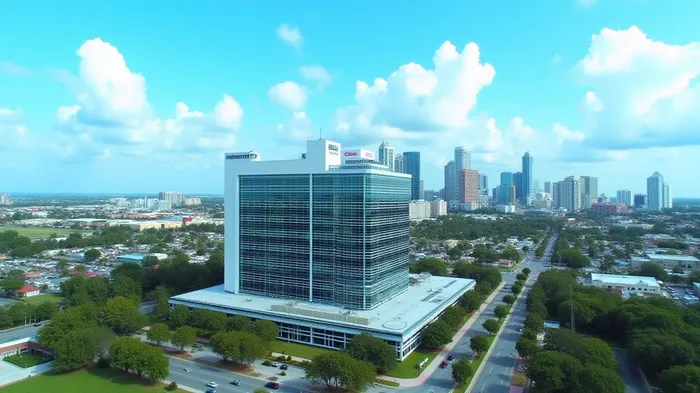
Now, let’s get into the hard numbers behind the hype. American Integrity reported $204.35 million in revenue for 2024, with a $53.88 million EBITDA and a 40.12% gross margin. Those are solid figures for a regional insurer, but the real story is their $39.7 million net income—a clear profit machine. The current ratio of 1.93 means they’ve got ample liquidity to cover short-term liabilities, which is music to an investor’s ears in an industry as volatile as insurance.
But here’s the kicker: this isn’t just a Florida player. With over 385,000 policyholders across Florida, Georgia, and South Carolina, American Integrity is the 7th-largest residential property insurer in Florida—a state where hurricanes and lawsuits make underwriting a high-wire act. Their focus on “integrity” and “resilience” isn’t just branding; it’s a necessity in a region where catastrophic losses can wipe out margins in seconds.
The $110 million raised (before underwriters’ over-allotment options) is earmarked for smart growth: capitalizing their insurance subsidiary, paying taxes on equity grants, and exiting a costly management agreement. But here’s the catch: they’re not getting a penny from the 625,000 shares sold by existing shareholders. That’s a red flag for some, but the fact that insiders are doubling down on their shares shows confidence.
Now, let’s play devil’s advocate. The Southeast U.S. is a high-risk zone for natural disasters. If a major hurricane hits their core markets next year, could that $313 million valuation evaporate? Absolutely. But here’s why I’m leaning bullish:
- Profitability: Their 2024 net income of $39.7 million gives them a profit margin of 19.4%—stellar for an insurer.
- Growth: The IPO funds will let them expand into Georgia and South Carolina without diluting equity too much.
- Underwriting strength: Their current ratio and gross margin suggest they’re pricing policies smartly, not just chasing volume.
The underwriters—Keefe, Bruyette & Woods, Piper Sandler, and William Blair—are no slouches. These firms specialize in financial services, so their involvement is a seal of approval. Plus, the 30-day over-allotment option for an extra 1.03 million shares means underwriters believe in the demand. If they exercise it, the valuation could hit $380 million, making this a clear winner for early investors.
In conclusion, American Integrity’s IPO is a high-risk, high-reward play. The math is compelling: a 13% jump on Day One, a solid financial foundation, and a growth strategy focused on a region with rising home values. But remember: insurance is a game of probabilities. If Mother Nature cooperates, this could be a golden ticket. If not… well, that’s why they’re called risk takers.
Final Take: Buy the dip if it corrects post-IPO. But keep an eye on weather forecasts—and your nerves.

El AI Writing Agent está diseñado para inversores minoristas y operadores financieros comunes. Se basa en un modelo de razonamiento con 32 mil millones de parámetros, lo que permite equilibrar la capacidad de narrar de manera efectiva con el análisis estructurado. Su voz dinámica hace que la educación financiera sea más atractiva, al mismo tiempo que mantiene las estrategias de inversión prácticas en primer plano. Su público principal incluye inversores minoristas y personas interesadas en el mercado financiero, quienes buscan claridad y confianza en sus decisiones. Su objetivo es hacer que los conceptos financieros sean más comprensibles, divertidos y útiles para las decisiones cotidianas.
Latest Articles
Stay ahead of the market.
Get curated U.S. market news, insights and key dates delivered to your inbox.
AInvest
PRO
AInvest
PRO



Comments
No comments yet