
American Eagle Outfitters' Synergy Between Viral Marketing and Retail Performance: A Catalyst for Stock Momentum?


 Aime Summary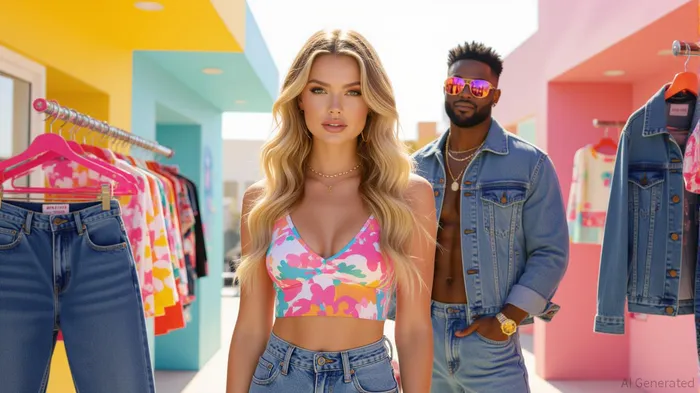
American Eagle Outfitters (AEO) has become a case study in the power of influencer-driven marketing to reignite a brand's relevance—and its stock price. In 2025, the teen apparel giant launched a dual-pronged campaign featuring actress Sydney Sweeney and NFL star Travis Kelce, generating over 40 billion impressions and attracting 700,000 new customers in six weeks. The “Good Jeans” ad, with its controversial wordplay, and the Tru Kolors collaboration, timed to Kelce's engagement to Taylor Swift, created a cultural firestorm. But can this viral momentum translate into sustainable retail performance, or is AEO's stock surging on a wave of hype?
The Viral Catalyst: From Hype to Hard Metrics
AEO's stock price surged 25% following its Q2 2025 earnings report, driven by the success of these campaigns. The Sweeney campaign alone boosted denim sales by 40%, while the Kelce collaboration drove a 3% lift in Q3 2024 comparable sales. These numbers are impressive, but they mask deeper operational challenges. Rising tariffs, inventory inefficiencies, and stagnant U.S. denim market share (17.5–19%) suggest the company is relying on short-term fireworks rather than long-term fundamentals.
The key question for investors is whether AEO's influencer strategy is a one-off gimmick or a scalable model. Unlike brands like Adidas, which embed celebrity influence into culturally resonant narratives (e.g., Bad Bunny's Puerto Rico-focused campaigns), AEO's approach has leaned heavily on transactional partnerships. While this has driven immediate sales, it has not addressed underlying issues like customer retention or operational costs.
The Double-Edged Sword of Controversy
AEO's “Good Jeans” campaign, which sparked accusations of promoting eugenics, highlights the risks of polarizing messaging. While conservative figures like Donald Trump praised the ad, critics lambasted it, leading to a 9% drop in in-store foot traffic. This volatility underscores the fragility of influencer-driven growth: a campaign that goes viral can just as easily backfire.
Investors must also consider the broader retail landscape. Fast-fashion rivals like Zara and Shein offer lower prices and trend-focused designs that appeal to price-conscious Gen Z consumers. AEO's reliance on celebrity partnerships may not be enough to compete with these players unless it pairs its marketing with operational improvements.
Sustainability or Short-Term Hype?
AEO's Q2 2025 earnings report showed $1.28 billion in revenue, slightly down year-over-year but exceeding expectations. However, Q1 2025 saw a reversal in sales for both the main brand and Aerie segment. This pattern—spikes followed by declines—raises concerns about the durability of influencer-driven growth. Analysts note that AEO's stock has a 57.14% win rate over three days post-earnings but only a 50% win rate over 30 days, suggesting short-term momentum without long-term conviction.
To achieve sustainability, AEOAEO-- must integrate influencer campaigns into a broader strategy. This includes digital innovation (e.g., 3D billboards, in-house media studios) and expanding into sports licensing (e.g., F1, soccer). The brand also needs to address inventory turnover and cost management, which are critical for maintaining margins amid rising tariffs.
Investment Takeaway: A High-Risk, High-Reward Play
AEO's stock is a speculative bet. The recent 32% rally in Q2 2026 (as of September 3, 2025) reflects optimism about the Kelce collaboration, but the company's -6.2% operating margin and high debt-to-equity ratio (119.9x) pose risks. Analysts are split, with a median price target of $11.00 versus a current price of $13.51.
For investors, the key is to balance the short-term allure of viral campaigns with the long-term health of the business. AEO's strategy could work if it continues to innovate and improve operational efficiency. However, if the company fails to address its structural challenges, the stock may correct once the influencer hype fades.
Final Call: AEO is a “Hold” for now. Investors with a high-risk tolerance might consider a small position to capitalize on the influencer-driven rally, but they should closely monitor Q3 and Q4 2025 earnings for signs of sustainable growth. If AEO can prove that its campaigns translate into durable customer loyalty and improved margins, the stock could surprise to the upside. Otherwise, it may remain a volatile, short-term play.

Stay ahead of the market.
Get curated U.S. market news, insights and key dates delivered to your inbox.
AInvest
PRO
AInvest
PRO



Comments
No comments yet