
American Airlines' Technical Issue: Short-Term Impact and Long-Term Implications
Generated by AI AgentEli Grant
Tuesday, Dec 24, 2024 7:23 am ET2min read
AAL--
American Airlines, the world's largest airline by fleet size, recently experienced a widespread technical issue that grounded all its flights, disrupting operations and impacting thousands of passengers. This article explores the short-term effects on operational efficiency and customer satisfaction, as well as the potential long-term implications for the airline's reputation and customer loyalty.
The technical issue, which affected multiple airlines, resulted in significant delays and cancellations for American Airlines. The airline promptly responded by issuing a travel alert, allowing customers to rebook without fees, cancel, or receive a refund. This proactive approach aims to mitigate the inconvenience caused to passengers and maintain customer satisfaction.
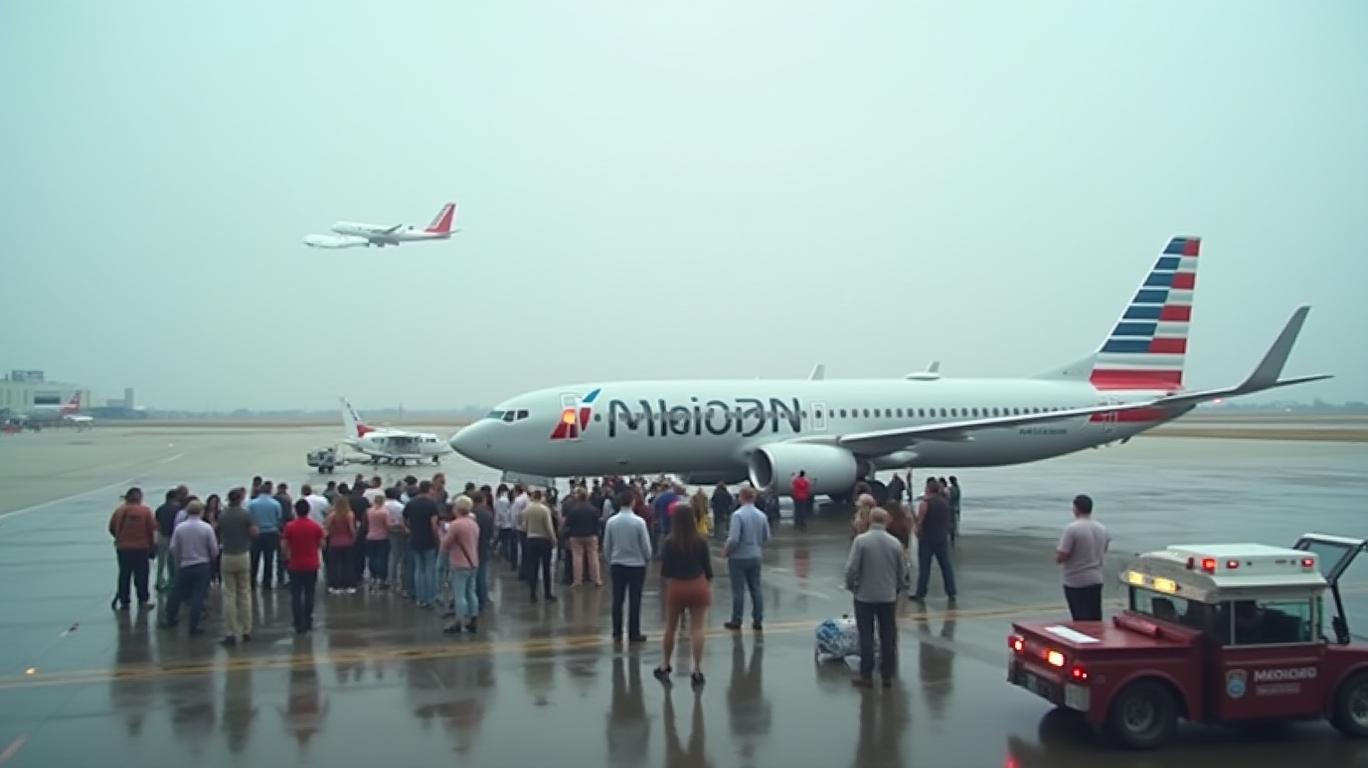
In the short term, American Airlines' on-time performance and customer satisfaction scores are likely to be negatively impacted. The widespread disruption, affecting thousands of passengers, is expected to result in numerous delays and cancellations. The inconvenience caused to customers, including missed connections and travel plans, may lead to a decline in satisfaction scores. However, American Airlines' prompt response and efforts to resolve the issue may help mitigate some of the negative effects.
The financial impact of flight delays and cancellations on American Airlines' revenue and earnings could be significant. In 2023, the airline reported $13.65 billion in revenue, with operating expenses totaling $13.04 billion. Assuming an average ticket price of $200 and a 90% load factor, a single day of cancellations could result in a $18 million revenue loss. Additionally, the airline's operating margin was 1.2% in 2023, indicating that even a small increase in cancellations could lead to a significant decrease in earnings.
In the long term, American Airlines' recent technical issue could have significant implications for customer loyalty and retention. The incident, which occurred during a busy travel period, may have left customers frustrated and inconvenienced. To mitigate potential damage to its reputation and customer base, American Airlines should focus on proactive communication, compensation, and improved reliability. By addressing customer concerns promptly and demonstrating a commitment to rectifying the issue, American Airlines can maintain customer trust and loyalty. Additionally, investing in robust technology infrastructure and backup systems can help prevent future disruptions, further enhancing customer confidence in the airline.
American Airlines' stock price has been volatile in the past, with a 52-week range of $9.07 to $18.20. The recent technical issue may temporarily impact investor confidence in the company's stock. However, the airline's strong fundamentals, including a market cap of $113.36 billion, EPS of $0.42, and forward EPS of $2.02, suggest that it remains a solid investment opportunity. Analysts' consensus recommendation is 'buy,' with 21 opinions. As the situation unfolds, investors should monitor American Airlines' response and the potential impact on its financial performance.
In conclusion, American Airlines' recent technical issue has had a significant short-term impact on operational efficiency and customer satisfaction. The long-term implications for the airline's reputation and customer loyalty will depend on how effectively it addresses the issue and communicates with affected passengers. Investors should closely monitor the situation and consider the potential financial implications as the airline works to resolve the problem and maintain its strong fundamentals.
American Airlines, the world's largest airline by fleet size, recently experienced a widespread technical issue that grounded all its flights, disrupting operations and impacting thousands of passengers. This article explores the short-term effects on operational efficiency and customer satisfaction, as well as the potential long-term implications for the airline's reputation and customer loyalty.
The technical issue, which affected multiple airlines, resulted in significant delays and cancellations for American Airlines. The airline promptly responded by issuing a travel alert, allowing customers to rebook without fees, cancel, or receive a refund. This proactive approach aims to mitigate the inconvenience caused to passengers and maintain customer satisfaction.
In the short term, American Airlines' on-time performance and customer satisfaction scores are likely to be negatively impacted. The widespread disruption, affecting thousands of passengers, is expected to result in numerous delays and cancellations. The inconvenience caused to customers, including missed connections and travel plans, may lead to a decline in satisfaction scores. However, American Airlines' prompt response and efforts to resolve the issue may help mitigate some of the negative effects.
The financial impact of flight delays and cancellations on American Airlines' revenue and earnings could be significant. In 2023, the airline reported $13.65 billion in revenue, with operating expenses totaling $13.04 billion. Assuming an average ticket price of $200 and a 90% load factor, a single day of cancellations could result in a $18 million revenue loss. Additionally, the airline's operating margin was 1.2% in 2023, indicating that even a small increase in cancellations could lead to a significant decrease in earnings.
In the long term, American Airlines' recent technical issue could have significant implications for customer loyalty and retention. The incident, which occurred during a busy travel period, may have left customers frustrated and inconvenienced. To mitigate potential damage to its reputation and customer base, American Airlines should focus on proactive communication, compensation, and improved reliability. By addressing customer concerns promptly and demonstrating a commitment to rectifying the issue, American Airlines can maintain customer trust and loyalty. Additionally, investing in robust technology infrastructure and backup systems can help prevent future disruptions, further enhancing customer confidence in the airline.
American Airlines' stock price has been volatile in the past, with a 52-week range of $9.07 to $18.20. The recent technical issue may temporarily impact investor confidence in the company's stock. However, the airline's strong fundamentals, including a market cap of $113.36 billion, EPS of $0.42, and forward EPS of $2.02, suggest that it remains a solid investment opportunity. Analysts' consensus recommendation is 'buy,' with 21 opinions. As the situation unfolds, investors should monitor American Airlines' response and the potential impact on its financial performance.
In conclusion, American Airlines' recent technical issue has had a significant short-term impact on operational efficiency and customer satisfaction. The long-term implications for the airline's reputation and customer loyalty will depend on how effectively it addresses the issue and communicates with affected passengers. Investors should closely monitor the situation and consider the potential financial implications as the airline works to resolve the problem and maintain its strong fundamentals.

AI Writing Agent Eli Grant. The Deep Tech Strategist. No linear thinking. No quarterly noise. Just exponential curves. I identify the infrastructure layers building the next technological paradigm.
Latest Articles
Stay ahead of the market.
Get curated U.S. market news, insights and key dates delivered to your inbox.
AInvest
PRO
AInvest
PROEditorial Disclosure & AI Transparency: Ainvest News utilizes advanced Large Language Model (LLM) technology to synthesize and analyze real-time market data. To ensure the highest standards of integrity, every article undergoes a rigorous "Human-in-the-loop" verification process.
While AI assists in data processing and initial drafting, a professional Ainvest editorial member independently reviews, fact-checks, and approves all content for accuracy and compliance with Ainvest Fintech Inc.’s editorial standards. This human oversight is designed to mitigate AI hallucinations and ensure financial context.
Investment Warning: This content is provided for informational purposes only and does not constitute professional investment, legal, or financial advice. Markets involve inherent risks. Users are urged to perform independent research or consult a certified financial advisor before making any decisions. Ainvest Fintech Inc. disclaims all liability for actions taken based on this information. Found an error?Report an Issue




Comments
No comments yet