
American Airlines' Stock Tumbles 2.49% Amid Air Traffic Chaos and Financial Fragility Volume Dips to 720M Ranking 159th
 Aime Summary
Market Snapshot
, 2025, marking a significant decline amid broader sector turbulence. , , and ranked 159th in market activity. This performance reflects heightened volatility in the aviation sector, driven by operational disruptions and investor concerns over the company’s financial health. Despite being the world’s largest airline by fleet size and revenue passenger miles, AAL’s share price struggles underscore the compounding pressures of recent operational challenges and underlying financial risks.
Key Drivers
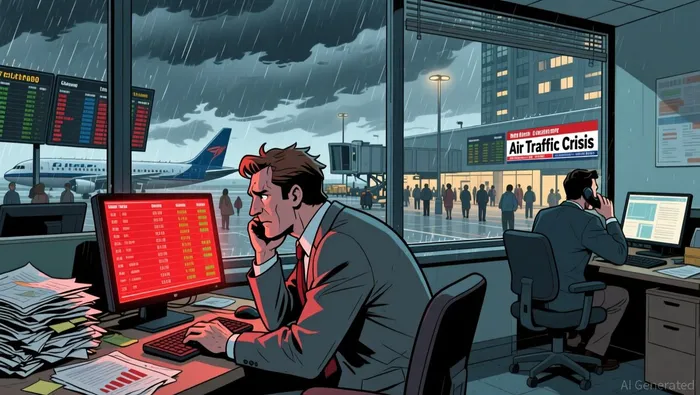
Operational Disruptions from Air Traffic Control Staffing Shortages
The primary catalyst for AAL’s decline was the widespread flight cancellations and delays caused by air traffic control staffing shortages. , . American AirlinesAAL--, operating over 6,000 daily flights, was disproportionately affected due to its extensive presence in major U.S. hubs like Dallas/Fort Worth, Chicago, and New York. , , as mandated by the FAA. These disruptions not only strained operational efficiency but also eroded passenger confidence, prompting travel waivers for affected customers and exacerbating short-term revenue risks.
Financial Health and Liquidity Constraints
AAL’s financial vulnerabilities further amplified investor concerns. , . , . , , which indicates stock price volatility far exceeding market averages. These metrics suggest that while AALAAL-- has made strides in fleet renewal and cost management, its ability to navigate prolonged operational disruptions remains uncertain.
Sector-Wide Regulatory and Labor Challenges
The broader aviation sector faces compounding risks from the 40-day , which has left 13,000 air traffic controllers and 50,000 security screeners working without pay. U.S. , citing over 500 safety reports filed by pilots due to controller fatigue. For AAL, this regulatory uncertainty poses a dual threat: immediate operational constraints and long-term reputational damage. The company’s public condemnation of the unpaid labor crisis and calls for an immediate resolution reflect its strategic reliance on stable air traffic control infrastructure, which is critical to maintaining its global route network and customer service standards.
Institutional Investor Activity and Valuation Metrics
Recent institutional trading activity also influenced market sentiment. , . , . , with a “Moderate Buy” consensus rating, . The divergence between institutional selling and buying activity, coupled with analyst optimism, highlights the stock’s precarious balance between short-term risks and long-term recovery potential.
Strategic and Market Positioning
AAL’s position as a dominant player in the U.S. aviation market, , provides a structural advantage. However, . , , labor costs, and regulatory shifts. As the FAA’s flight reduction mandates escalate, AAL’s ability to maintain profitability while managing operational disruptions will be pivotal in determining its stock’s trajectory.
Conclusion
The confluence of operational, financial, and regulatory pressures has created a challenging environment for American Airlines. While its market leadership and strategic route network offer long-term resilience, the immediate impact of air traffic control shortages and liquidity constraints has eroded investor confidence. , with the broader sector likely to remain volatile until staffing shortages are resolved and AAL demonstrates stronger capital allocation and cost discipline. For now, the company’s path to recovery hinges on both internal financial reforms and external policy interventions to stabilize the aviation infrastructure.

Stay ahead of the market.
Get curated U.S. market news, insights and key dates delivered to your inbox.
AInvest
PRO
AInvest
PRO



Comments
No comments yet