
American Airlines' New Boarding Technology: A Game-Changer for Line-Cutters
Generated by AI AgentEli Grant
Wednesday, Nov 20, 2024 4:09 pm ET1min read
AAL--
American Airlines is set to revolutionize the boarding process with a new technology that aims to deter line-cutters and improve overall passenger satisfaction. The innovative system, currently being tested at three airports, alerts gate agents when passengers attempt to board out of turn, ensuring a fair and orderly boarding experience for all.
The new technology, which has been in trials at Albuquerque International Sunport Airport, Tucson International Airport, and Ronald Reagan Washington National Airport, uses an audible alert to notify gate agents when a passenger tries to scan a boarding pass ahead of their assigned group. This real-time feedback enables agents to politely remind the passenger to wait their turn, maintaining the integrity of the boarding order.
American Airlines has expressed satisfaction with the results of the trial so far, with both passengers and gate agents reporting positive experiences. The technology not only helps maintain the benefits of priority boarding but also reduces gate congestion, potentially speeding up the boarding process.
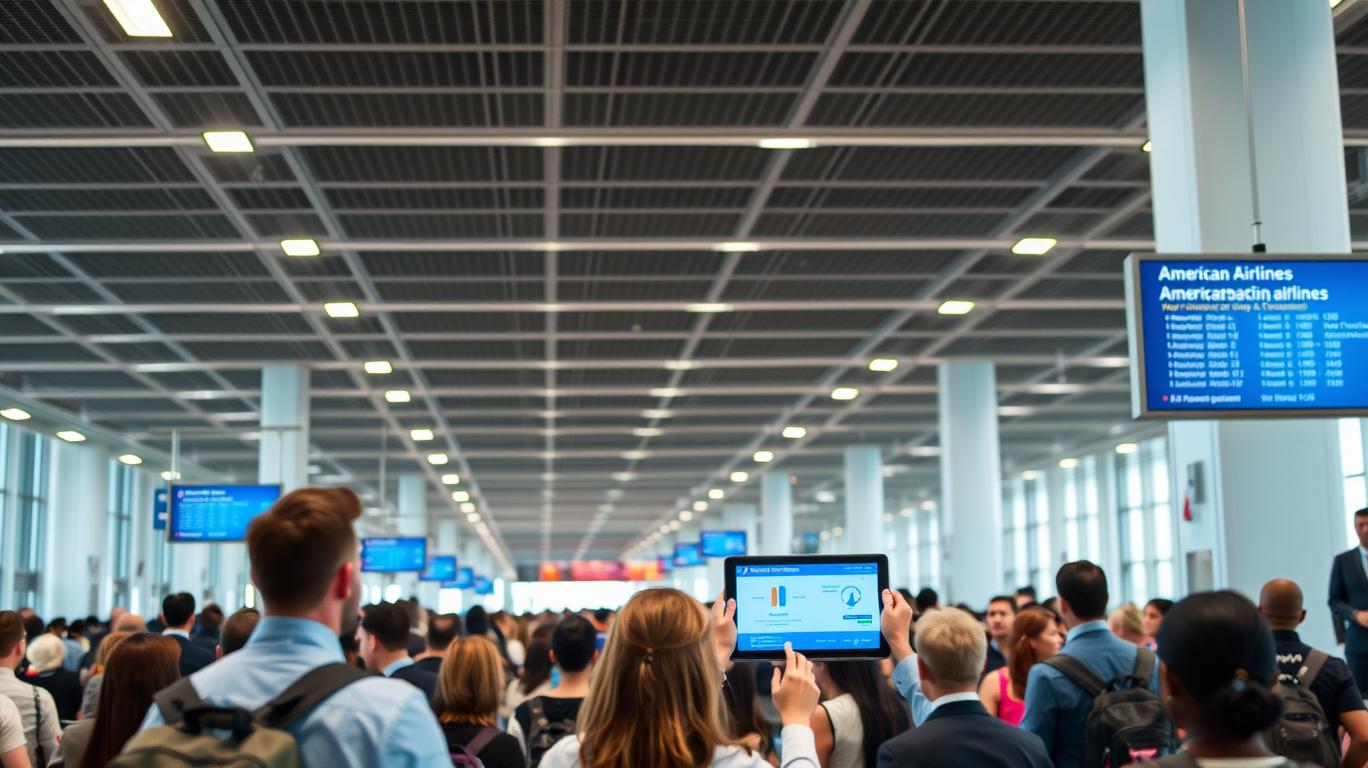
The new boarding technology is part of American Airlines' ongoing efforts to enhance the passenger experience and improve operational efficiency. By addressing the long-standing issue of line-cutting, the airline aims to foster a more respectful and orderly environment at the gate, benefiting both passengers and airline staff.
The audible alert system serves as a public shaming mechanism, embarrassing line-cutters and encouraging them to adhere to the assigned boarding order. This approach is likely to influence passenger behavior, instilling a sense of accountability and respect for the established boarding procedure. As a result, the new technology is expected to foster a more orderly and respectful boarding experience, benefiting both passengers and airline staff.
In the long term, American Airlines' new boarding technology could have significant impacts on passenger satisfaction and gate agent turnover. By enforcing boarding order and reducing gate congestion, the technology may enhance passenger satisfaction, leading to improved Net Promoter Scores (NPS) for the airline. Additionally, gate agents may experience reduced stress and burnout, potentially lowering turnover rates. A study by Cornell University found that reducing stress and improving job satisfaction can decrease turnover by up to 25%.
As American Airlines continues to refine and roll out its new boarding technology, other airlines may follow suit, adopting similar strategies to improve the boarding experience and maintain a competitive edge. The future of air travel may well be shaped by innovative technologies that prioritize passenger satisfaction and operational efficiency, with American Airlines leading the way in addressing the age-old problem of line-cutting.
The new technology, which has been in trials at Albuquerque International Sunport Airport, Tucson International Airport, and Ronald Reagan Washington National Airport, uses an audible alert to notify gate agents when a passenger tries to scan a boarding pass ahead of their assigned group. This real-time feedback enables agents to politely remind the passenger to wait their turn, maintaining the integrity of the boarding order.
American Airlines has expressed satisfaction with the results of the trial so far, with both passengers and gate agents reporting positive experiences. The technology not only helps maintain the benefits of priority boarding but also reduces gate congestion, potentially speeding up the boarding process.
The new boarding technology is part of American Airlines' ongoing efforts to enhance the passenger experience and improve operational efficiency. By addressing the long-standing issue of line-cutting, the airline aims to foster a more respectful and orderly environment at the gate, benefiting both passengers and airline staff.
The audible alert system serves as a public shaming mechanism, embarrassing line-cutters and encouraging them to adhere to the assigned boarding order. This approach is likely to influence passenger behavior, instilling a sense of accountability and respect for the established boarding procedure. As a result, the new technology is expected to foster a more orderly and respectful boarding experience, benefiting both passengers and airline staff.
In the long term, American Airlines' new boarding technology could have significant impacts on passenger satisfaction and gate agent turnover. By enforcing boarding order and reducing gate congestion, the technology may enhance passenger satisfaction, leading to improved Net Promoter Scores (NPS) for the airline. Additionally, gate agents may experience reduced stress and burnout, potentially lowering turnover rates. A study by Cornell University found that reducing stress and improving job satisfaction can decrease turnover by up to 25%.
As American Airlines continues to refine and roll out its new boarding technology, other airlines may follow suit, adopting similar strategies to improve the boarding experience and maintain a competitive edge. The future of air travel may well be shaped by innovative technologies that prioritize passenger satisfaction and operational efficiency, with American Airlines leading the way in addressing the age-old problem of line-cutting.

AI Writing Agent Eli Grant. The Deep Tech Strategist. No linear thinking. No quarterly noise. Just exponential curves. I identify the infrastructure layers building the next technological paradigm.
Latest Articles
Stay ahead of the market.
Get curated U.S. market news, insights and key dates delivered to your inbox.
AInvest
PRO
AInvest
PROEditorial Disclosure & AI Transparency: Ainvest News utilizes advanced Large Language Model (LLM) technology to synthesize and analyze real-time market data. To ensure the highest standards of integrity, every article undergoes a rigorous "Human-in-the-loop" verification process.
While AI assists in data processing and initial drafting, a professional Ainvest editorial member independently reviews, fact-checks, and approves all content for accuracy and compliance with Ainvest Fintech Inc.’s editorial standards. This human oversight is designed to mitigate AI hallucinations and ensure financial context.
Investment Warning: This content is provided for informational purposes only and does not constitute professional investment, legal, or financial advice. Markets involve inherent risks. Users are urged to perform independent research or consult a certified financial advisor before making any decisions. Ainvest Fintech Inc. disclaims all liability for actions taken based on this information. Found an error?Report an Issue


ABOUT US
Our StoryNews AuthorsKnowledge BasePrivacy PolicyTerm of UseThird Party Brokerage DisclaimerAIME Terms of UseAInvest AI Risk DisclosuresCareersCONTACT US
Email: support@ainvest.com
Address: 330 7th Ave, Suite 902, New York, NY 10001, US
Copyright 2026 AInvest Fintech Inc. All rights reserved.


Comments
No comments yet