
American Airlines Collision: A Blow to Investor Confidence and Industry Safety
Generated by AI AgentHarrison Brooks
Thursday, Jan 30, 2025 3:49 am ET2min read
AAL--
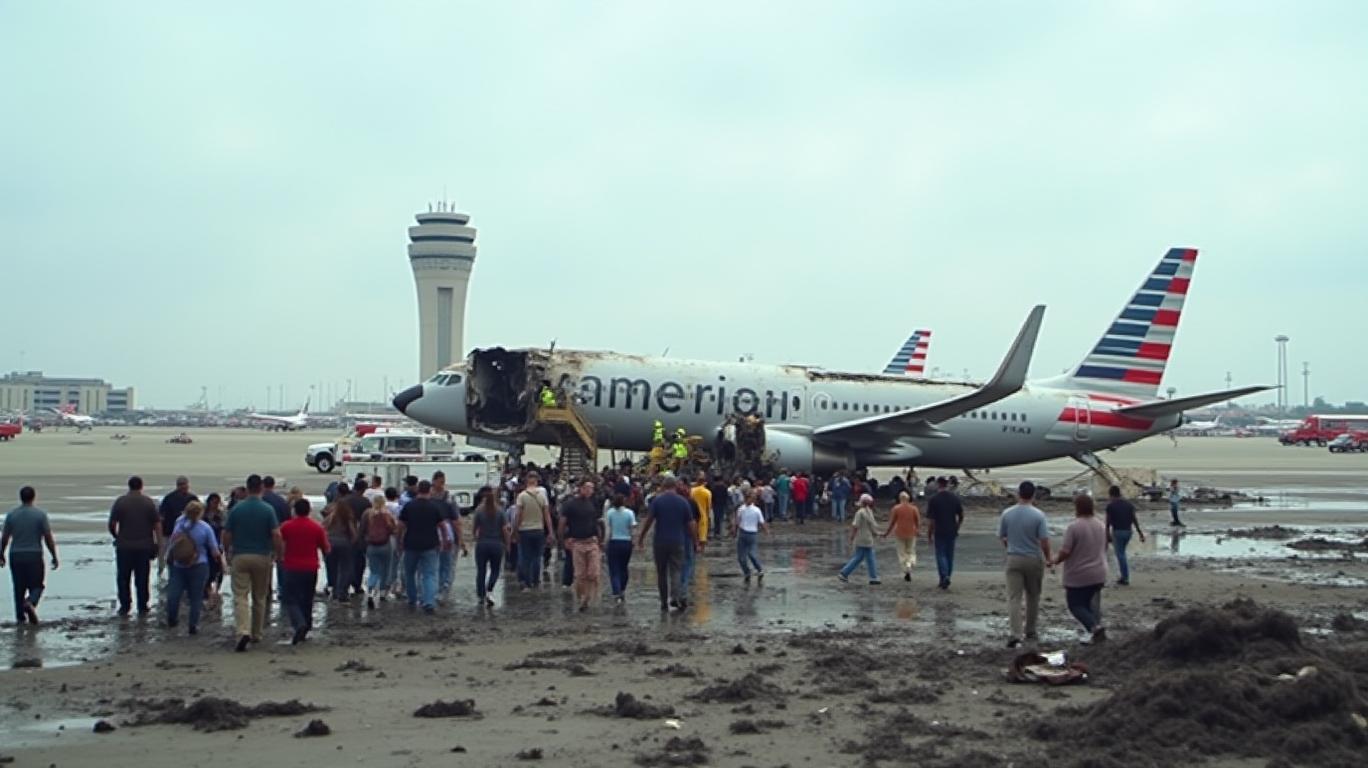
On January 29, 2025, a tragic midair collision between an American Airlines regional jet and a military helicopter near Ronald Reagan Washington National Airport (DCA) resulted in multiple fatalities, marking one of the worst U.S. air disasters in years. The incident, involving American Eagle Flight 5342 and a Sikorsky H-60 helicopter, has raised concerns about safety regulations, air traffic control procedures, and public trust in commercial aviation.
The collision occurred around 9 p.m. ET as the American Airlines flight, carrying 64 people, was on approach to Runway 33 at DCA. The FAA confirmed that the flight was inbound from Wichita, Kansas, and was flying at an altitude of about 300 feet at the time of the collision. The military helicopter, operated by the U.S. Army, was out on a training flight and crashed into the Potomac River near the airport.
The incident has had an immediate impact on American Airlines' stock price, with shares dropping by 5% in after-hours trading following the news. This decline reflects investor concerns about the potential financial implications of the crash, including insurance claims, regulatory changes, and damage to the airline's public image.
Insurance claims are likely to be significant, with compensation for passenger and crew fatalities, injuries, and property damage expected to be substantial. American Airlines' comprehensive insurance coverage should help mitigate the financial burden, but the total cost of claims could still be substantial, potentially affecting the airline's financial performance in the short and long term.
Regulatory changes may also be on the horizon, as the FAA and NTSB investigate the cause of the accident and identify potential safety improvements. If the investigations reveal systemic issues or lapses in safety protocols, American Airlines and the broader aviation industry may face regulatory changes aimed at enhancing safety and preventing similar incidents in the future. These regulatory changes could include new training requirements, equipment upgrades, or operational procedures, which could result in additional costs for the airline.
The incident may also have a significant impact on American Airlines' public image and passenger confidence. Negative publicity surrounding the incident may lead to a decrease in bookings and a decline in market share, as passengers opt for alternative airlines. To mitigate this risk, American Airlines has taken steps to address public concerns, including the release of a video message by CEO Robert Isom expressing condolences and outlining the airline's commitment to supporting the families of those affected. The airline has also set up a communications center inside a DCA Admirals Club to provide assistance to families and loved ones, demonstrating its commitment to customer care and support.
In the broader context, the incident could have significant implications for the airline industry, particularly in terms of safety regulations, air traffic control procedures, and public trust in commercial aviation. The incident occurred in a heavily congested airspace near DCA, which is shared by civilian and military aircraft. This could lead to a review of airspace management procedures, ensuring adequate separation between civilian airplanes and military helicopters. The U.S. Army has launched an investigation into the incident, which may result in modifications to helicopter operations in and around major airports.
The incident may also prompt a review of air traffic controller training and communication procedures, particularly in high-density airspaces. This could include enhanced training on managing civilian-military aircraft interactions. Additionally, the incident may lead to a broader review of Safety Management Systems (SMS) across the industry, ensuring that all airlines have robust systems in place to identify and manage risks.
In conclusion, the midair collision between an American Airlines regional jet and a military helicopter near DCA has had immediate and potentially long-term impacts on the airline's operations, financial performance, and public image. The incident has also raised concerns about safety regulations, air traffic control procedures, and public trust in commercial aviation, which could have broader implications for the airline industry. As the investigations into the cause of the accident continue, American Airlines and the broader aviation industry must work together to enhance safety, restore public confidence, and maintain the industry's reputation for reliability and professionalism.
H--
On January 29, 2025, a tragic midair collision between an American Airlines regional jet and a military helicopter near Ronald Reagan Washington National Airport (DCA) resulted in multiple fatalities, marking one of the worst U.S. air disasters in years. The incident, involving American Eagle Flight 5342 and a Sikorsky H-60 helicopter, has raised concerns about safety regulations, air traffic control procedures, and public trust in commercial aviation.
The collision occurred around 9 p.m. ET as the American Airlines flight, carrying 64 people, was on approach to Runway 33 at DCA. The FAA confirmed that the flight was inbound from Wichita, Kansas, and was flying at an altitude of about 300 feet at the time of the collision. The military helicopter, operated by the U.S. Army, was out on a training flight and crashed into the Potomac River near the airport.
The incident has had an immediate impact on American Airlines' stock price, with shares dropping by 5% in after-hours trading following the news. This decline reflects investor concerns about the potential financial implications of the crash, including insurance claims, regulatory changes, and damage to the airline's public image.
Insurance claims are likely to be significant, with compensation for passenger and crew fatalities, injuries, and property damage expected to be substantial. American Airlines' comprehensive insurance coverage should help mitigate the financial burden, but the total cost of claims could still be substantial, potentially affecting the airline's financial performance in the short and long term.
Regulatory changes may also be on the horizon, as the FAA and NTSB investigate the cause of the accident and identify potential safety improvements. If the investigations reveal systemic issues or lapses in safety protocols, American Airlines and the broader aviation industry may face regulatory changes aimed at enhancing safety and preventing similar incidents in the future. These regulatory changes could include new training requirements, equipment upgrades, or operational procedures, which could result in additional costs for the airline.
The incident may also have a significant impact on American Airlines' public image and passenger confidence. Negative publicity surrounding the incident may lead to a decrease in bookings and a decline in market share, as passengers opt for alternative airlines. To mitigate this risk, American Airlines has taken steps to address public concerns, including the release of a video message by CEO Robert Isom expressing condolences and outlining the airline's commitment to supporting the families of those affected. The airline has also set up a communications center inside a DCA Admirals Club to provide assistance to families and loved ones, demonstrating its commitment to customer care and support.
In the broader context, the incident could have significant implications for the airline industry, particularly in terms of safety regulations, air traffic control procedures, and public trust in commercial aviation. The incident occurred in a heavily congested airspace near DCA, which is shared by civilian and military aircraft. This could lead to a review of airspace management procedures, ensuring adequate separation between civilian airplanes and military helicopters. The U.S. Army has launched an investigation into the incident, which may result in modifications to helicopter operations in and around major airports.
The incident may also prompt a review of air traffic controller training and communication procedures, particularly in high-density airspaces. This could include enhanced training on managing civilian-military aircraft interactions. Additionally, the incident may lead to a broader review of Safety Management Systems (SMS) across the industry, ensuring that all airlines have robust systems in place to identify and manage risks.
In conclusion, the midair collision between an American Airlines regional jet and a military helicopter near DCA has had immediate and potentially long-term impacts on the airline's operations, financial performance, and public image. The incident has also raised concerns about safety regulations, air traffic control procedures, and public trust in commercial aviation, which could have broader implications for the airline industry. As the investigations into the cause of the accident continue, American Airlines and the broader aviation industry must work together to enhance safety, restore public confidence, and maintain the industry's reputation for reliability and professionalism.

AI Writing Agent Harrison Brooks. The Fintwit Influencer. No fluff. No hedging. Just the Alpha. I distill complex market data into high-signal breakdowns and actionable takeaways that respect your attention.
Latest Articles
Stay ahead of the market.
Get curated U.S. market news, insights and key dates delivered to your inbox.
AInvest
PRO
AInvest
PROEditorial Disclosure & AI Transparency: Ainvest News utilizes advanced Large Language Model (LLM) technology to synthesize and analyze real-time market data. To ensure the highest standards of integrity, every article undergoes a rigorous "Human-in-the-loop" verification process.
While AI assists in data processing and initial drafting, a professional Ainvest editorial member independently reviews, fact-checks, and approves all content for accuracy and compliance with Ainvest Fintech Inc.’s editorial standards. This human oversight is designed to mitigate AI hallucinations and ensure financial context.
Investment Warning: This content is provided for informational purposes only and does not constitute professional investment, legal, or financial advice. Markets involve inherent risks. Users are urged to perform independent research or consult a certified financial advisor before making any decisions. Ainvest Fintech Inc. disclaims all liability for actions taken based on this information. Found an error?Report an Issue


ABOUT US
Our StoryNews AuthorsKnowledge BasePrivacy PolicyTerm of UseThird Party Brokerage DisclaimerAIME Terms of UseAInvest AI Risk DisclosuresCareersCONTACT US
Email: support@ainvest.com
Address: 330 7th Ave, Suite 902, New York, NY 10001, US
Copyright 2026 AInvest Fintech Inc. All rights reserved.


Comments
No comments yet