
American Airlines Cancels Flights Amid Rising Competition and Operational Shifts
 Aime Summary
American Airlines Cancels Flights
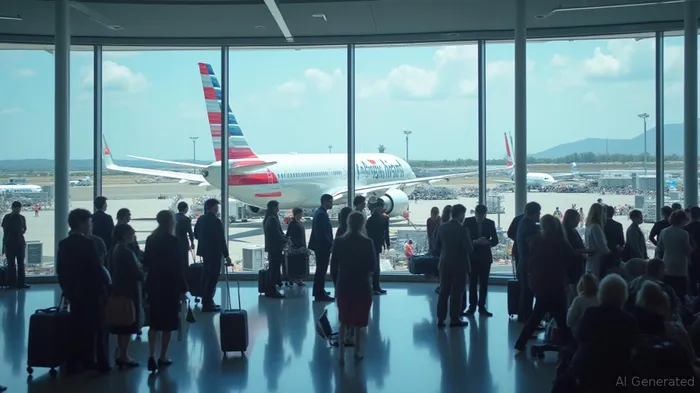
American Airlines is making significant adjustments to its flight schedules, announcing the cancellation of hundreds of flights starting in August 2025. These changes arise amidst operational and competitive pressures. The airline is reassessing its focus on major hubs where demand is robust while reducing flights on less profitable routes. This strategic move reflects American Airlines' aim to optimize its operations and cope with prevailing economic uncertainties and decreased demand in certain sectors.
The changes come against a backdrop of increased competition from rival airlines, particularly United AirlinesUAL-- and Delta Air LinesDAL--. Each of these competitors has notably invested in enhancing their services, including upgrading premium cabins and lounges, attracting higher-paying customers, which has reportedly put American AirlinesAAL-- under additional pressure.
Compounding American Airlines' challenges is a reported ongoing dispute with Chicago’s O’Hare International Airport, prompting a reduction of routes into and out of the hub. This reduction will see a significant decrease in weekly flights, impacting routes between Chicago and several key cities such as Dallas/Fort Worth, Wilmington, El Paso, Kansas City, Pittsburgh, and New York LaGuardia. In total, American Airlines will cut approximately 30 weekly flights from O’Hare to these destinations. Passengers with bookings on affected services may experience cancellations or rescheduling to alternative dates or routes.
Operational efficiency is further impacted by American Airlines' attempt to direct customers to book directly through their website rather than third-party platforms—a strategy that appears to have backfired as many business travelers favor corporate booking platforms. This, coupled with a focus on the Sun Belt region, has reportedly left the airline struggling with inflation and economic instability.
The wider context shows U.S. airlines, including United Airlines and JetBlueJBLU--, also scaling back flight schedules beginning in August. These actions are driven by shifting demand patterns, higher operational costs, and evolving economic pressures. Travelers planning summer trips are advised to stay informed and flexible due to potential disruptions in their plans with fewer flight choices and increased competition for available seats.
JetBlue is similarly adjusting its strategy and revising its schedule for the remainder of 2025, canceling routes such as New York’s JFK to several major destinations, reflecting the softer-than-expected travel demand. Long-term cost-cutting measures are being implemented across these airlines, aiming to maintain financial stability amidst a changing travel landscape.
Avelo Airlines is notably pulling out from the West Coast market, ending operations in California by December 2025, signaling challenges faced by low-cost carriers in maintaining profitability against larger rivals. This withdrawal affects travelers seeking affordable options and may increase fares from remaining operators in these areas.
These adjustments underscore a significant shift in the U.S. airline industry's approach to capacity planning post-pandemic, focusing more on maximizing profitability of the strongest market routes rather than expansive growth. As the travel sector navigates these changes, both airlines and travelers must remain adaptable to the evolving dynamics and continued operational constraints.

Stay ahead of the market.
Get curated U.S. market news, insights and key dates delivered to your inbox.
AInvest
PRO
AInvest
PRO



Comments
No comments yet