
American Airlines and the Airline Industry's Turbulent Path: Operational Risks, Investor Resilience, and the Case for Value Plays


 Aime Summary
The airline industry in 2025 remains a study in contrasts-simultaneously buoyed by post-pandemic demand and battered by operational headwinds. American AirlinesAAL--, one of the sector's bellwethers, has epitomized this duality, navigating a perfect storm of government shutdowns, staffing shortages, and fuel price volatility while attempting to reassure investors. For those seeking to understand the sector's volatility and identify value plays, the interplay between operational risk management, , and fleet modernization efforts offers critical insights.
Operational Risks: A Perfect Storm
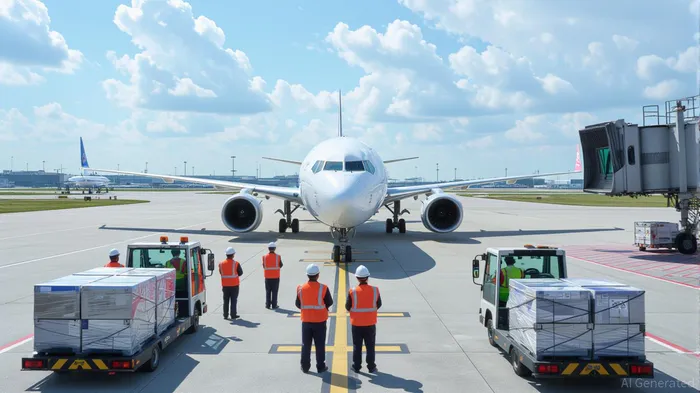 American Airlines' second quarter of 2025 was marked by a 36% increase in disruptive events, driven by a confluence of factors. The U.S. government shutdown
exacerbated air traffic control shortages, compounding existing challenges like staffing gaps at key hubs such as Dallas-Fort Worth and Chicago. These disruptions led to flight cancellations and delays, with
fewer than 70% of flights arriving within 14 minutes of their scheduled time during the summer. The ripple effects were immediate: by November 2025, the stock
amid investor concerns over operational inefficiencies and strategic workforce reductions.
Yet, American's story is not one of collapse. , the carrier continues to operate thousands of flights daily and has not indicated plans to shut down
according to recent reports. This resilience underscores the broader industry's ability to absorb shocks, even as operational risks persist. Analysts remain divided-some view these challenges as temporary, while others
emphasize the need for cost discipline amid rising labor and fuel costs.
Fuel Hedging and Fleet Modernization: Mitigating Exposure
American's approach to fuel risk management has evolved significantly. The airline, which
ceased hedging jet fuel costs after its 2013 merger with US Airways, now faces full exposure to price volatility. This strategy, once a hallmark of its predecessor, has left it vulnerable to fluctuations in a market where
. To offset this, American has focused on fleet modernization,
in Q2 2025 through the retirement of older aircraft and the deployment of more efficient models.
,
according to financial analysis. These improvements have been critical in maintaining investor confidence, particularly as
. However, the absence of hedging remains a double-edged sword. While lower fuel prices in 2025 provided some relief, any upward swing in costs could erode margins, especially as the industry grapples with a
.
Sustainable Aviation Fuel: A Long-Term Lever
American's non-traditional fuel strategies extend beyond efficiency gains. The airline has committed to replacing 10% of its jet fuel use with sustainable aviation fuel (SAF) by 2030, a goal
supported by partnerships with Valero and Infinium. In 2024, ,
position it as a leader in . These efforts align with broader industry trends, where North American airlines have collectively secured over 1 billion gallons of SAF commitments.
Operational fuel savings-such as single-engine taxiing and flight optimization-have also contributed to cost reductions,
. While these measures are high-certainty levers, their long-term impact on emissions is modest compared to SAF. Still, the dual approach of immediate savings and forward-looking investments underscores American's comprehensive strategy to manage fuel-related risks while supporting its net-zero emissions goal by 2050
according to its sustainability roadmap.
Investor Resilience and the Case for Value Plays
Despite the turbulence, American's financial resilience has been bolstered by strategic initiatives. In Q3 2025, the airline
, .
according to financial reports. These metrics have helped stabilize investor sentiment, even as the stock remains volatile.
The broader industry's performance offers additional context. While supply chain disruptions and aging fleets have increased maintenance costs and reduced fuel efficiency, ,
according to IATA projections. Airlines like WestJet, which
, demonstrate the potential for operational excellence to drive value.
For investors, the key lies in identifying carriers that balance short-term resilience with long-term innovation. American's focus on fleet modernization and SAF, combined with its liquidity and revenue growth, positions it as a compelling value play. However, the absence of fuel hedging and exposure to labor costs remain risks that must be carefully weighed.
Conclusion
The airline industry's 2025 volatility is a testament to its fragility and resilience. American Airlines, while not immune to operational shocks, has demonstrated a capacity to adapt through strategic fleet modernization, sustainable fuel initiatives, and financial prudence. For investors, the path forward requires a nuanced understanding of these dynamics. Those willing to look beyond short-term turbulence may find value in carriers that, like American, are investing in the tools to navigate an uncertain future.

Stay ahead of the market.
Get curated U.S. market news, insights and key dates delivered to your inbox.
AInvest
PRO
AInvest
PRO



Comments
No comments yet