
American Airlines' 787 Diversion Crisis: A Litmus Test for Operational Resilience and Stock Valuation
The recent wave of BoeingBA-- 787-8 and 787-9 Dreamliner diversions at American Airlines (AAL) has exposed vulnerabilities in its fleet management and maintenance strategies, raising critical questions about the airline's operational resilience and long-term financial health. With five major diversions between January and June 2025—including a hydraulic leak forcing a return to Amsterdam just 8 minutes after takeoff—and six transatlantic routes suspended due to capacity constraints, the crisis underscores systemic risks that could redefine investor perceptions of airline equities.
The Anatomy of the Crisis: A Timeline of Operational Failures
The Boeing 787-8 aircraft N819AN, a central figure in the crisis, has become a symbol of recurring mechanical instability. Since January 7, 2025, it has diverted four times in 25 days across routes to Europe and the U.S. East Coast, with unresolved issues in flaps, hydraulics, and navigation systems. The most recent incident on June 2, 2025, saw a 787-9 diverted to Rome due to Naples International Airport's inadequate firefighting infrastructure, highlighting gaps in real-time data integration for route planning.
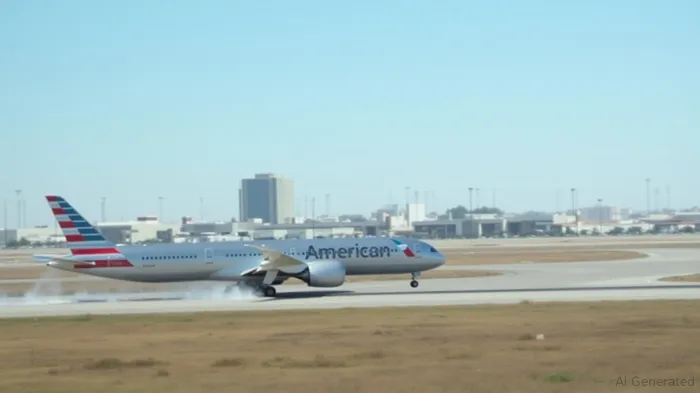
These incidents are not isolated. AAL's 27 undelivered 787-9s have forced reliance on older, less efficient 787-8 models, which now face mounting maintenance costs. Analysts estimate that aging components—such as composite airframes and hydraulic systems—are nearing their design thresholds, creating a costly cycle of repairs.
Financial Fallout: Costs, Route Cancellations, and Regulatory Risks
The crisis has already triggered a 15% decline in AAL's stock since January 2025, underperforming peers like Delta (DAL) and Lufthansa (LHA) by a wide margin. Key financial risks include:
- Elevated Maintenance Costs: AAL spent $4.9 billion on maintenance in 2024, a figure expected to rise as older fleets demand more frequent overhauls. The recurring issues with N819AN alone—grounded for 19 days in January—suggest escalating costs.
- Revenue Losses: Six transatlantic routes, including premium corridors like JFK-CDG and DFW-FRA, were suspended for up to two months, eroding high-margin revenue.
- Regulatory Penalties: The FAA and EU regulators are investigating the Naples diversion, which violated safety protocols. Under EU rules, passengers may seek compensation under EC 261/2004, adding to liability risks.
Competitive Disadvantage: How Peers Are Capitalizing on AAL's Struggles
While AAL grapples with 787 issues, competitors are leveraging healthier fleets to capture market share. Delta's fleet of newer Airbus A350s and Boeing 787-9s offers better fuel efficiency and reliability, while Lufthansa's flexible route network and timely maintenance protocols have minimized disruptions. This divergence suggests AAL's operational weaknesses could become a permanent drag on profitability.
Investment Implications: When to Avoid or Re-Engage
Investors should approach AAL with caution until three critical issues are resolved:
1. Fleet Modernization: Delays in 787-9 deliveries must be mitigated, or AAL risks further route suspensions.
2. Maintenance Transparency: Shareholders demand clarity on root causes—whether aging components, software flaws, or poor vendor oversight.
3. Regulatory Compliance: Penalties from the Naples incident and EU claims could pressure margins further.
For now, AAL's valuation is at risk until operational stability is restored. Investors may prefer airlines with younger fleets and stronger maintenance track records, such as Delta or JetBlue (JBLU), which have outperformed AAL by 20% year-to-date.
Conclusion: AAL's Crisis Reveals the Fragility of Airline Equity Valuations
The Boeing 787 crisis is more than a mechanical issue—it's a litmus test for AAL's ability to manage complex operations in a post-pandemic era. With competitors nipping at its heels and regulatory clouds looming, the airline's stock remains vulnerable. For investors, the lesson is clear: operational resilience is non-negotiable in an industry where one grounded aircraft can ground an entire valuation. Until AAL demonstrates it can master its fleet, skepticism—and caution—are warranted.

Stay ahead of the market.
Get curated U.S. market news, insights and key dates delivered to your inbox.
AInvest
PRO
AInvest
PRO



Comments
No comments yet