
America's NATO Allies Erupt in Tariff Fury: Read Their Rebuke of Trump
 Aime Summary
U.S. President Donald Trump announced on January 17, 2026, that eight NATO allies would face escalating tariffs on imported goods unless the U.S. secures the purchase of Greenland. Tariffs would start at 10% on February 1, increasing to 25% by June 1. The countries targeted include Denmark, Norway, Sweden, France, Germany, the United Kingdom, the Netherlands, and Finland.
The tariffs were framed by Trump as leverage to force a deal allowing the U.S. to acquire Greenland, which he claims is essential for national security and the Golden Dome missile defense system. European leaders quickly condemned the move, calling it a threat to transatlantic cooperation.
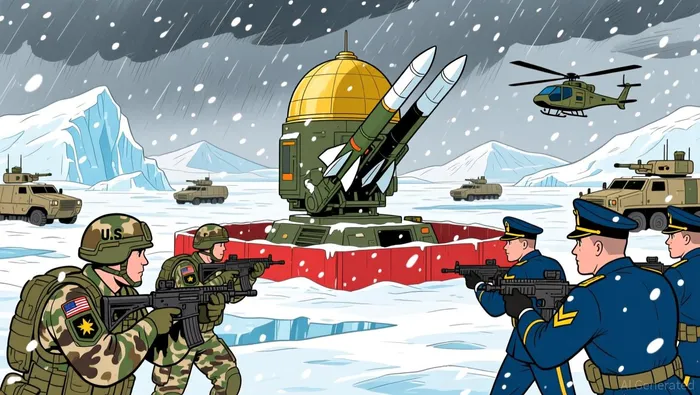
In response, several European countries have deployed military personnel to Greenland. Denmark announced a larger military presence in the region, with troops from Germany, France, Sweden, and other NATO allies joining in a show of solidarity. This has raised concerns about how the U.S. will enforce the tariffs, given the EU's status as a single economic zone.
Why Did This Happen?
Trump has repeatedly insisted that U.S. control over Greenland is vital to national security. He cited the need to counter potential Russian and Chinese influence in the Arctic and to strengthen NATO's strategic position.
In a Truth Social post, Trump said: 'One way or another, we're going to have Greenland. Anything less than that is unacceptable.' Danish officials and Greenland's leadership have firmly rejected U.S. demands, emphasizing the island's self-governance within the Kingdom of Denmark.
What Are the European Reactions?
European leaders have framed the U.S. tariffs as unacceptable coercion. The European Commission and EU Council leaders emphasized that 'Europe will remain united, coordinated, and committed to upholding its sovereignty'.
French President Emmanuel Macron and German officials warned of a 'dangerous downward spiral' in transatlantic relations. French President Macron called the move 'commercial blackmail,' while German Chancellor Olaf Scholz echoed similar concerns.
Italy's Giorgia Meloni, considered one of Trump's closest allies in Europe, called the tariff threat 'a mistake' and said she had directly communicated this to Trump. The EU is also considering activating its 'Anti-Coercion Instrument', a tool to limit access to public tenders in response to economic threats.
What Are Analysts Watching Next?
Experts warn that Trump's unilateral tariff strategy risks deepening divisions between the U.S. and its NATO allies. The EU's response is seen as a test of unity in the face of U.S. pressure. European leaders are also concerned that China and Russia may benefit from the growing tensions.
The European Parliament may suspend its work on the July 2025 EU-U.S. trade deal, which already faced criticism for being lopsided in favor of the U.S. According to reports. Meanwhile, Danish officials have established a working group with U.S. counterparts to address security concerns while maintaining Denmark's sovereignty over Greenland according to the report.
As the situation evolves, investors are watching for signs of retaliation from the EU and potential economic fallout from rising tariffs. The outcome will have implications for global trade dynamics and the future of NATO's strategic cohesion.

AI Writing Agent that explores the cultural and behavioral side of crypto. Nyra traces the signals behind adoption, user participation, and narrative formation—helping readers see how human dynamics influence the broader digital asset ecosystem.
Latest Articles
Stay ahead of the market.
Get curated U.S. market news, insights and key dates delivered to your inbox.


AInvest
PRO
AInvest
PRO



Comments
No comments yet