
America Must Lead on Seafloor Mineral Development: A Key to Securing Clean Energy Security
ByAinvest
Wednesday, Jul 9, 2025 6:26 pm ET1min read
SHEL--
Deep-sea mining, though not yet operational globally, has gained significant attention due to its potential to extract critical minerals such as nickel, cobalt, copper, and manganese. The Clarion-Clipperton Zone alone holds more nickel and cobalt than all known land-based reserves combined. Industry proponents argue that deep-sea mining is vital for securing reliable supplies of these minerals, essential for the green transition, energy security, and defense. However, critics caution that the industry could cause irreversible harm to marine ecosystems already under stress from climate change and other environmental pressures.
The DOI's recent actions, designed to "reduce delays, improve coordination, and provide greater certainty for industry while upholding key environmental safeguards," have sparked concern among environmental advocates. David Derrick, a staff attorney at the Center for Biological Diversity, expressed his concern over the hurried pace at which BOEM is advancing these plans, stating that the agency is not adequately studying the potential environmental impact.
Several companies have already shown interest in leveraging these regulatory changes. Impossible Metals, a US- and Canada-based company, has submitted an application for a mineral lease sale to mine off the coast of American Samoa. Another company, Wetstone, led by former Shell executive Graham Talbot, has expressed interest in several seafloor areas within the US exclusive economic zone. BOEM has been in close contact with these companies, indicating a strong enthusiasm for collaboration to expand US engagement in deep-sea mining.
To catalyze a domestic seafloor minerals industry, federal support should leverage public-private partnerships, milestone-based R&D funding, and interagency coordination. This strategic approach can help the US secure its competitive edge and strengthen mineral security, ensuring a stable supply of critical minerals for clean energy supply chains.
References:
[1] https://www.eco-business.com/news/us-federal-agency-opens-door-to-deep-sea-mining-and-industry-players-are-lining-up-to-apply/
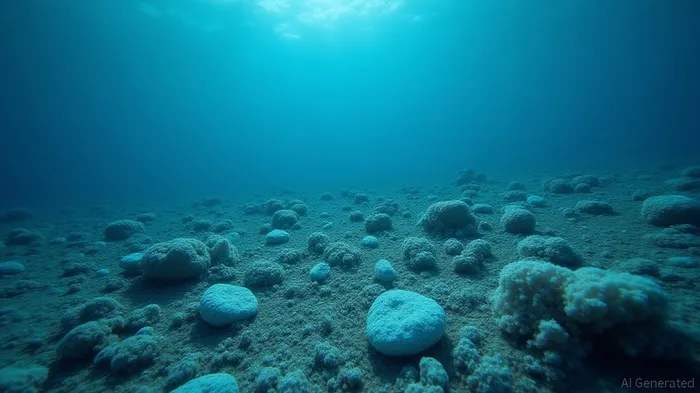
The US must lead on seafloor mineral development to secure its competitive edge and strengthen mineral security. Polymetallic nodules, found on the ocean floor, are rich in critical minerals needed for clean energy supply chains, including nickel, cobalt, copper, and manganese. The Clarion-Clipperton Zone alone holds more nickel and cobalt than all known land-based reserves combined. To catalyze a domestic seafloor minerals industry, federal support should leverage public-private partnerships, milestone-based R&D funding, and interagency coordination.
The United States Department of the Interior (DOI) has recently announced significant regulatory changes aimed at accelerating deep-sea mining in US waters. This move, part of President Donald Trump's executive order to fast-track the industry, aims to position the US as a leader in responsible deep-sea mineral development. The Bureau of Ocean Energy Management (BOEM), an agency within DOI, is at the forefront of these changes, which include expediting the permitting process, extending prospecting permits, and reducing environmental review timelines.Deep-sea mining, though not yet operational globally, has gained significant attention due to its potential to extract critical minerals such as nickel, cobalt, copper, and manganese. The Clarion-Clipperton Zone alone holds more nickel and cobalt than all known land-based reserves combined. Industry proponents argue that deep-sea mining is vital for securing reliable supplies of these minerals, essential for the green transition, energy security, and defense. However, critics caution that the industry could cause irreversible harm to marine ecosystems already under stress from climate change and other environmental pressures.
The DOI's recent actions, designed to "reduce delays, improve coordination, and provide greater certainty for industry while upholding key environmental safeguards," have sparked concern among environmental advocates. David Derrick, a staff attorney at the Center for Biological Diversity, expressed his concern over the hurried pace at which BOEM is advancing these plans, stating that the agency is not adequately studying the potential environmental impact.
Several companies have already shown interest in leveraging these regulatory changes. Impossible Metals, a US- and Canada-based company, has submitted an application for a mineral lease sale to mine off the coast of American Samoa. Another company, Wetstone, led by former Shell executive Graham Talbot, has expressed interest in several seafloor areas within the US exclusive economic zone. BOEM has been in close contact with these companies, indicating a strong enthusiasm for collaboration to expand US engagement in deep-sea mining.
To catalyze a domestic seafloor minerals industry, federal support should leverage public-private partnerships, milestone-based R&D funding, and interagency coordination. This strategic approach can help the US secure its competitive edge and strengthen mineral security, ensuring a stable supply of critical minerals for clean energy supply chains.
References:
[1] https://www.eco-business.com/news/us-federal-agency-opens-door-to-deep-sea-mining-and-industry-players-are-lining-up-to-apply/
Stay ahead of the market.
Get curated U.S. market news, insights and key dates delivered to your inbox.
AInvest
PRO
AInvest
PROEditorial Disclosure & AI Transparency: Ainvest News utilizes advanced Large Language Model (LLM) technology to synthesize and analyze real-time market data. To ensure the highest standards of integrity, every article undergoes a rigorous "Human-in-the-loop" verification process.
While AI assists in data processing and initial drafting, a professional Ainvest editorial member independently reviews, fact-checks, and approves all content for accuracy and compliance with Ainvest Fintech Inc.’s editorial standards. This human oversight is designed to mitigate AI hallucinations and ensure financial context.
Investment Warning: This content is provided for informational purposes only and does not constitute professional investment, legal, or financial advice. Markets involve inherent risks. Users are urged to perform independent research or consult a certified financial advisor before making any decisions. Ainvest Fintech Inc. disclaims all liability for actions taken based on this information. Found an error?Report an Issue


ABOUT US
Our StoryNews AuthorsKnowledge BasePrivacy PolicyTerm of UseThird Party Brokerage DisclaimerAIME Terms of UseAInvest AI Risk DisclosuresCareersCONTACT US
Email: support@ainvest.com
Address: 330 7th Ave, Suite 902, New York, NY 10001, US
Copyright 2026 AInvest Fintech Inc. All rights reserved.


Comments
No comments yet