
America's Higher Education Undergoes Major Shift Amid Political Tensions and Policy Changes
 Aime Summary
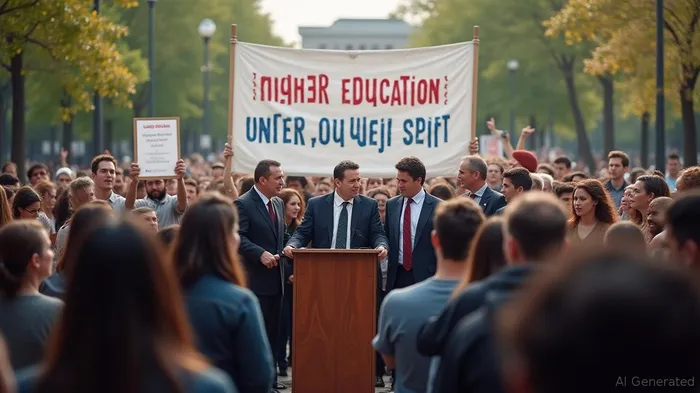
The United States of America, known globally for its formidable national economy, is undergoing notable transformations in its educational landscape. The ninth annual Varying Degrees survey by New America highlights a shift in public perception towards higher education, reflecting changing priorities and a newfound consensus among Americans on educational matters. This evolution suggests significant changes in the future of American higher education, underscoring the importance of understanding public sentiment.
Political tensions have heightened between the United States and Brazil due to Trump's proposed 50% tariff against Brazil, motivated by what he describes as a 'witch hunt' against Brazilian politician Jair Bolsonaro. This move could have ramifications for trade relations and diplomatic engagement between both nations as they navigate these strained bilateral ties.
Civil rights and democracy within Black America are in a 'state of emergency,' with recent reports warning of the unraveling of civil rights protections. These pressing challenges demand urgent advocacy and policy intervention to safeguard liberties and support the community's resilience. Stakeholders are keenly aware of the implications for social justice and civil rights, driving a reinvigorated push for change.
The Trump administration's controversial approach, including cuts to federally funded research and development and contentious policies on higher education and immigration, has sparked debates about the long-term impacts on America's scientific and educational infrastructure. These actions raise alarm among stakeholders, emphasizing concerns about the future of innovation and societal progress.
In April 2025, the America First Policy Institute (AFPI) issued a comprehensive primer containing policy recommendations. This document, derived from extensive research and analysis of 130 sources, seeks to guide future legislative and administrative decisions. The institute's efforts reflect a strategic commitment to influencing policy-making through well-founded research.
The historical perspective on the Mohawk Resistance at Oka remains a profoundly instructive component in understanding Native American activism and resilience. This standoff near Montreal in 1990 stands as a testament to Indigenous resistance and advocacy, offering enduring lessons and inspiration for change over the decades.
Keeping abreast with developments in the United States is essential for a comprehensive insight into the country's evolving dynamics. Fact-based reporting from various news outlets continues to provide a clear understanding of the intricate political, social, and economic tapestryTPR-- that America maintains, both domestically and on the global stage.

Stay ahead of the market.
Get curated U.S. market news, insights and key dates delivered to your inbox.


AInvest
PRO
AInvest
PRO



Comments
No comments yet