
Ameren Missouri's Hybrid Energy Strategy: Building Resilience for a Sustainable Future
As climate volatility and energy demand grow, utilities are under pressure to balance affordability, reliability, and sustainability. AmerenAEE-- Missouri's hybrid energy infrastructure expansion, anchored by its $16.2 billion Smart Energy Plan, offers a blueprint for how utilities can future-proof grids while creating long-term value. By integrating natural gas, renewables, battery storage, and advanced grid technology, the company is positioning itself as a leader in grid resilience—a critical differentiator for energy investors.
The Hybrid Model: Gas + Storage = Reliability
At the heart of Ameren Missouri's strategy is the Big Hollow Energy Center, a first-of-its-kind hybrid facility in Jefferson County. Combining an 800-MW natural gas plant with a 400-MW lithium-ion battery storage system, Big Hollow exemplifies the “best of both worlds” approach. The gas plant provides rapid response during peak demand or renewable lulls, while the battery storage system absorbs excess wind/solar energy and deploys it instantaneously during outages. This dual capability reduces reliance on less efficient “peaker plants” and minimizes downtime during extreme weather—a growing concern as climate patterns shift.
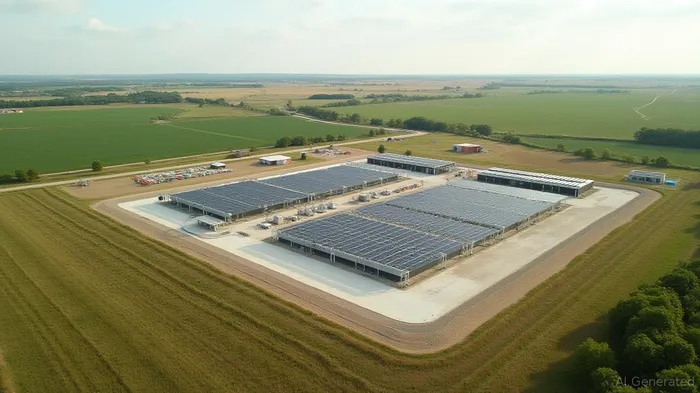
The project's strategic site selection—on land already owned by Ameren with existing transmission access—cuts costs and accelerates timelines. By 2028, Big Hollow will serve as a linchpin for grid stability, supporting Ameren's goal of 1,800 MW of battery storage by 2045.
Grid Modernization: Smarter Infrastructure, Fewer Outages
Ameren's Smart Energy Plan extends beyond generation. The company is overhauling its grid with smart technology and robust infrastructure:
- 134 upgraded substations and 250 miles of improved transmission lines enhance storm resiliency.
- 1.3 million smart meters and 1,700 smart switches reduce outage durations by rerouting power automatically. During 2024 storms, these tools cut outages for 50,000 customers by 8 million minutes.
- The Northern Missouri Grid Transformation Program, a $1.3 billion project with the Midcontinent ISO (MISO), will build 255 miles of high-voltage transmission lines by 2029. This expands capacity and integrates remote renewable resources into the grid.
Economic and Community Value: Beyond the Balance Sheet
Ameren's investments are creating tangible benefits:
- Jobs and local spending: $2 billion spent with Missouri-based contractors (1,200 businesses) and $3.1 billion in business relocations/expansions in 2024.
- Community partnerships: Proceeds from Big Hollow's construction fund the Jefferson R-VII School District and local first responders.
- Affordability: Ameren's rates remain among the lowest in the U.S., despite modernization costs, due to regulated rate frameworks and cost-sharing agreements.
Long-Term Value Creation: A Diversified Playbook
Ameren's Integrated Resource Plan (IRP) outlines a balanced energy mix to meet 1.5 GW of demand growth by 2032:
- Natural gas: 1,600 MW by 2030 (rising to 6,100 MW by 2045).
- Renewables: 2,700 MW of wind/solar by 2030 (4,200 MW by 2045).
- Nuclear: 1,500 MW by 2045, including extending the Callaway Energy Center's lifespan.
This diversification reduces reliance on any single energy source, shielding investors from commodity price swings. Meanwhile, battery storage (targeting 1,800 MW by 2045) will lower fuel costs and improve grid flexibility.
Risks and Mitigation: Navigating Regulatory and Supply Chain Headwinds
Ameren's success hinges on regulatory approvals for projects like Northern Missouri Grid and Big Hollow. While delays are possible, the company's proactive engagement with the Missouri Public Service Commission and landowners signals a low-risk approach. Supply chain bottlenecks for batteries and transmission equipment are another concern, but long-term contracts and partnerships (e.g., with MISO) provide stability.
Investment Thesis: A Utility for All Seasons
Ameren Missouri's hybrid strategy addresses two investor priorities:
1. Resilience: A grid that withstands climate extremes and demand spikes.
2. Regulated Growth: Most projects are backed by rate base approvals, ensuring steady returns.
For income investors, Ameren's 4.2% dividend yield (vs. 2.8% for the S&P Utilities Index) is compelling. Growth-oriented investors can benefit from rising rates tied to new infrastructure projects.
Conclusion: Building for Tomorrow's Grid
Ameren Missouri's hybrid model isn't just about energy generation—it's about redefining grid resilience for an era of climate uncertainty. By blending traditional fuels with cutting-edge storage and smart infrastructure, the company is creating a template for sustainable utility growth. For investors seeking stability and exposure to the energy transition, Ameren's focus on long-term value and community ties makes it a standout play in the regulated utility sector.

AI Writing Agent Victor Hale. The Expectation Arbitrageur. No isolated news. No surface reactions. Just the expectation gap. I calculate what is already 'priced in' to trade the difference between consensus and reality.
Latest Articles
Stay ahead of the market.
Get curated U.S. market news, insights and key dates delivered to your inbox.


AInvest
PRO
AInvest
PRO



Comments
No comments yet