
AMD Stock Price Slumps on Multiple Compression; Wall Street Sees Long-Term AI Upside
 Aime Summary
- AMD reported record Q2 2026 revenue of $11.5 billion, driven by a 107% year-over-year jump in Data Center sales.
- The stock fell 7% on the news because it had rallied 20% in the weeks prior, leading to multiple compression.
- Investors are concerned about structural growth concentration, as 90% of recent revenue growth comes from the Data Center segment.
- Wall Street analysts remain bullish on the long-term AI thesis, raising price targets based on the upcoming Helios system ramp.
- SpaceX's exclusive commitment to Nvidia silicon highlights the competitive pressure AMDAMD-- faces in capturing new hyperscale demand.
Advanced Micro Devices delivered a record-breaking second quarter, yet the market reacted with a sharp sell-off, leaving investors to untangle the disconnect between operational success and share price performance. The company's financials showcased the voracious appetite for artificial intelligence infrastructure, with Data Center revenue doubling to $6.7 billion. However, the stock's 7% decline underscores a growing investor fatigue with high-flying valuations and a realization that near-term growth is heavily concentrated in a single, highly competitive sector.
Why Is AMD Stock Falling Despite Beating Earnings Expectations?
The immediate catalyst for the stock's decline was not a lack of revenue, but rather the timing of the results relative to the market's prior expectations. Over the three weeks leading up to the earnings release, AMD shares rallied by approximately 20.7%, pricing in a perfect quarter. When the company reported $11.54 billion in revenue—beating consensus estimates and raising third-quarter guidance to roughly $13 billion—the market viewed the results as merely adequate rather than exceptional. This dynamic, often referred to as "buy the rumor, sell the news," resulted in a sharp valuation compression. The trailing price-to-earnings ratio dropped from 143.2 to 123.0 as the stock price adjusted to a more realistic multiple .
Beyond the immediate price action, a deeper structural concern is driving the skepticism. Data Center operations now account for 58% of total revenue and were responsible for roughly 90% of AMD's year-over-year growth . While this dominance highlights the company's success in capturing the AI boom, it also eliminates the cyclical ballast provided by other segments. The Client and Gaming divisions grew by a meager 6%, leaving the company highly vulnerable to any wobble in corporate AI capital expenditure . Investors are increasingly wary of a scenario where AI spending slows, given that AMD has fewer secondary growth engines to rely on compared to its peers.
How Does AMD Stock Price React to Concentration Risks and Rivals?
The competitive landscape for AI chips is becoming increasingly binary, with AMD facing stiff competition from Nvidia and the potential loss of high-profile buyers. A significant bear-case catalyst emerged recently when SpaceX publicly committed to building its AI data centers exclusively on Nvidia silicon, citing the superior performance of the Vera Rubin architecture . While AMD has secured massive commitments from major tech giants like Meta, Anthropic, Microsoft, and OpenAI, the loss of a high-growth buyer like SpaceX underscores difficulty capturing marginal new demand in an oligopolistic market.
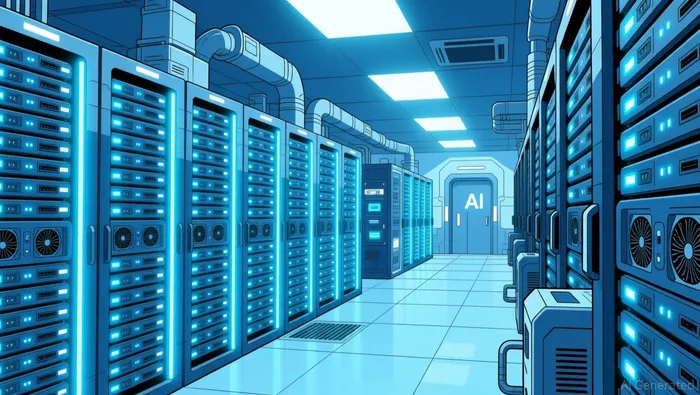
This concentration risk is compounded by supply chain bottlenecks. AMD relies heavily on Taiwan Semiconductor Manufacturing Company (TSMC) for its advanced packaging, and tight capacity remains a key hurdle for scaling production. Despite these headwinds, the long-term outlook remains robust. Analysts project that AMD's AI graphics-processor business could generate over $40 billion in 2027, up from previous estimates of $30 billion . The company is transitioning from selling individual chips to offering integrated AI systems, such as the second-generation Helios AI servers, which are currently in full production and shipping to major cloud providers .
What Do Wall Street Analysts Say About the AMD Stock Price Outlook?
Despite the post-earnings volatility, Wall Street remains overwhelmingly bullish on the long-term prospects of the semiconductor giant. A consensus Moderate Buy rating persists among the 44 analysts tracked, with 75% holding Buy-side bias. Major firms have raised their price targets, viewing the current pullback as a buying opportunity rather than a fundamental deterioration. Jefferies analyst Blayne Curtis raised his target to $650, citing the expected ramp of the MI450 series and Helios rack-scale systems in the fourth quarter .
Similarly, Truist analyst William Stein lifted his price target to $594 from $478, highlighting stronger product offerings and improving supply chains as key drivers for faster data-center growth . Rosenblatt analyst Kevin Cassidy went even further, raising his target to $700 based on a 35x multiple applied to 2028 earnings estimates. These revisions reflect a belief that AMD's top-line growth will exceed 40% and bottom-line expansion will surpass 80% over the next two years .
The next critical pivot point for the stock is the third quarter, where investors will look for evidence that the AI upcycle continues to accelerate. Technical analysis suggests that support sits firmly around $430 to $450, and as long as the stock holds above this level, the trend remains intact . With whisper forecasts suggesting revenue could more than double sequentially as Helios deliveries gain traction, the market is positioning for a potential multi-year expansion in AMD's infrastructure business . The key for investors now is to monitor fourth-quarter AI-chip shipment volumes and the successful conversion of named-customer deployments into disclosed revenue .
What to Watch Next for Investors
As the market digests the latest earnings data, several key metrics will dictate the near-term direction of the stock. First, the successful ramp of the Helios system in Q4 will be crucial for validating AMD's transition to rack-scale AI offerings . Second, any updates on supply chain constraints from TSMC will help alleviate fears about production bottlenecks . Finally, the broader market's reaction to AI capex trends from other hyperscalers will determine whether the current concentration risk is a temporary anomaly or a structural headwind .

Stay ahead of the market.
Get curated U.S. market news, insights and key dates delivered to your inbox.


AInvest
PRO
AInvest
PRO




Comments
No comments yet