
AMC CEO Slams Robinhood Tokenized Stocks, Threatens SEC Action
 Aime Summary
- AMC Entertainment CEO Adam Aron has launched a public campaign against Robinhood MarketsHOOD--, accusing the fintech platform of operating a "pseudo-fake market" by listing tokenized versions of its stock.
- The CEO described the practice as "contemptible" and "outrageous," arguing that the tokenized structure misleads investors regarding actual ownership and voting rights.
Aron has formally demanded that RobinhoodHOOD-- cease trading these tokens immediately, initiating a legal review that could culminate in a formal complaint with the Securities and Exchange Commission (SEC).[^
This escalation underscores the growing friction between traditional corporate governance structures and emerging fintech innovations in asset tokenization.
- The conflict highlights regulatory ambiguities surrounding third-party tokenized real-world assets and their impact on public company control.
Why Is AMCAMC-- CEO Threatening SEC Action Against Robinhood?
AMC Entertainment CEO Adam Aron has escalated a dispute with Robinhood Markets by publicly demanding halt to tokenized AMC stock tokens. Aron contends that the tokens, issued by a Jersey-based entity, undermine shareholder rights and interfere with the company's ability to control its capital-raising activities. He described the practice as "shocking and shameful," arguing that marketing securities offshore that do not comply with U.S. regulations.
The core of Aron’s objection lies in the structural differences between traditional stock ownership and the tokenized product. He argues that the tokens could confuse investors about their actual ownership status, effectively stripping them of crucial shareholder rights such as voting. Furthermore, Aron contends that this mechanism limits AMC’s ability to raise capital through traditional equity offerings.
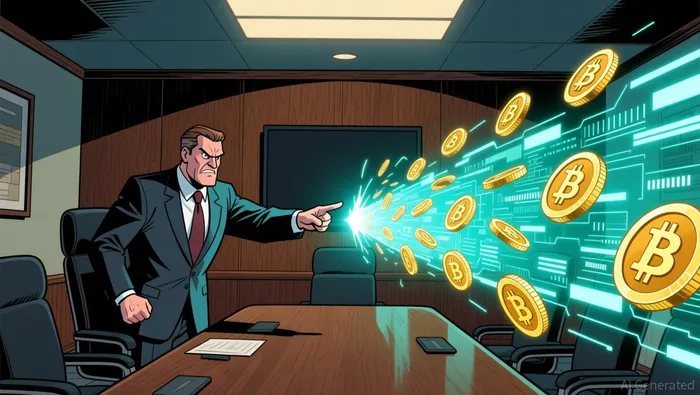
Aron has called on Robinhood to cease and desist trading these tokenized assets immediately. The situation has escalated to the point where AMC is conducting a legal review of the tokens' legality, with Aron hinting at the possibility of filing a formal complaint with the Securities and Exchange Commission (SEC).[^
This conflict highlights ongoing tensions between traditional corporate governance structures and emerging fintech innovations in asset tokenization. The dispute also underscores a significant financial tension for companies like AMC, which utilized elevated share prices to issue equity and raise billions following the 2021 meme-stock era. Token holders, however, generate no issuance proceeds for the company, suggesting Aron’s frustration stems from the realization that retail traders can access price exposure without contributing to the company’s capital structure.
How Is Robinhood Defending Its Tokenized Stock Products?
Robinhood Markets has rejected AMC Entertainment’s demand to stop trading tokens tied to its stock, escalating the legal and public relations dispute. Dan Gallagher, Robinhood’s chief legal officer, challenged AMC to pursue litigation, stating the firm would "educate" AMC's lawyers on U.S. securities laws. Robinhood CEO Vlad Tenev reinforced this stance, affirming support for the "Stock Tokens" product and questioning Aron's concerns.
Legal experts suggest AMC’s path is narrow, particularly since the tokens are distributed offshore and absent from Robinhood’s U.S. app. There is no obvious U.S. securities law violation, as tokens are not registered under the U.S. Securities Act and cannot be offered, sold, or delivered to U.S. persons. Potential claims would likely rely on trademark misuse or false association, which Robinhood can counter by emphasizing clear disclaimers.
Robinhood’s documents describe the assets as tokenized debt securities issued by Robinhood Assets (Jersey) Limited, rather than shares issued by the companies they track. Each ERC-20 token corresponds to a particular stock or exchange-traded fund and uses a ChainlinkLINK-- data feed to publish its reference price onchain. The tokens are backed one-for-one by underlying shares held with a licensed custodian.
Ownership of a token, however, does not give its holder legal or beneficial rights against AMC or any other referenced company. Token holders cannot vote as AMC shareholders, and their claims depend on their contractual relationship with the Jersey issuer. Daniel Lasko of Arcus compared the structure to an ETF, arguing that publicly traded companies have limited control over third-party financial products based on their stock.
What Are The Market Implications Of Tokenized Equity Disputes?
The scale of the tokenized-stock market amplifies the regulatory stakes of this dispute. Robinhood Chain, launched in July 2026, lists over 190 stock tokens, with the broader market reaching $13.4 billion in combined value as of September 1, 2026. While the specific AMC token pool remains small with approximately $382,600 in liquidity, the rapid growth and high revenue generation of the network have drawn intense scrutiny.
The SEC’s Divisions of Corporation Finance, Investment Management, and Trading and Markets have drawn a formal distinction between issuer-sponsored and third-party tokenized securities. The SEC’s Investor Advisory Committee recommended mandatory disclosures that explain token holders’ ownership rights and called for oversight of intermediaries.
Marcin Kaźmierczak, co-founder of blockchain oracle provider RedStoneRED--, said the dispute concerns how Robinhood structured and issued the asset, noting it is a consent and registration issue. He expects the fight to speed up the push for an actual U.S. framework rather than slow tokenization down.
This standoff highlights the regulatory ambiguity and structural mechanics of tokenized real-world assets. It may accelerate U.S. regulatory frameworks for tokenized assets, forcing clearer definitions of investor protections and corporate control in the digital asset space.
- The dispute highlights the regulatory risks of third-party tokenized equities and may accelerate US regulatory frameworks for tokenized assets.

Blending traditional trading wisdom with cutting-edge cryptocurrency insights.
Latest Articles
Stay ahead of the market.
Get curated U.S. market news, insights and key dates delivered to your inbox.


AInvest
PRO
AInvest
PRO




Comments
No comments yet