
Amazon and USPS Partnership: Why This Logistics Deal Matters for Investors
 Aime Summary
Amazon has secured a new deal with the U.S. Postal Service, , or over 1 billion packages annually.
The agreement stabilizes logistics costs for Amazon .
USPS, facing $9 billion in losses in 2025 and potential within 12 months, benefits from Amazon's continued reliance on its rural delivery infrastructure.
Amazon and USPS have reached a pivotal agreement that could reshape the logistics landscape for both parties. The deal, which preserves 80% of Amazon's delivery volume with USPS, ensures that the U.S. Postal Service remains a critical player in the e-commerce delivery ecosystem. For investors, this is more than a logistical partnership—it reflects broader trends in supply chain management, financial stability, and strategic interdependence. The agreement also signals Amazon's continued reliance on third-party logistics to meet its delivery goals, even as it explores long-term alternatives.
Why Is This AmazonAMZN-- USPS Delivery Deal Important for Investors?
The renewed partnership between Amazon and USPS highlights the growing importance of logistics efficiency in e-commerce. For Amazon, retaining 80% of its deliveries with USPS means it can avoid the operational and financial costs of building its own nationwide delivery network. For USPS, the agreement provides crucial financial support in a year when its budget is expected to face significant strain. Investors should pay close attention to how this partnership affects Amazon's logistics expenses and USPS's ability to remain without additional government intervention.
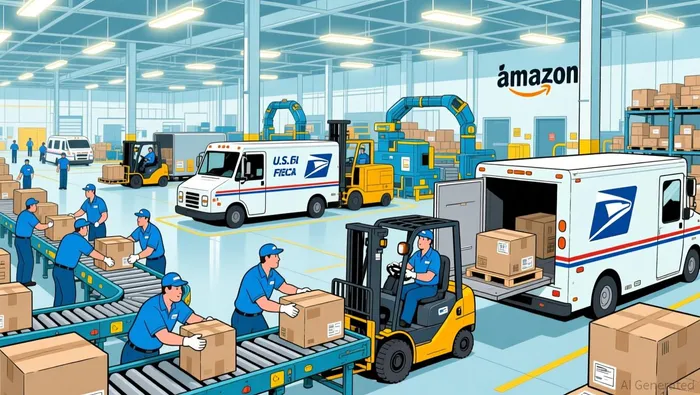
This deal also underscores the structural dependency of Amazon on USPS for rural deliveries, where the postal service's nationwide network and infrastructure remain unmatched. While Amazon has been expanding its own delivery fleet, it continues to rely on USPS for last-mile delivery in less densely populated areas. This partnership is a short-term solution, but it sets the stage for future negotiations around pricing, delivery volume, and potential shifts in Amazon's strategy.
What Does the Amazon USPS Partnership Mean for Retail Investors?
For retail investors, the Amazon-USPS deal is a reminder of the complex interdependencies in the logistics sector. USPS's financial struggles, which include $9 billion in losses and projected cash depletion within a year, make it a high-risk partner for Amazon and other large retailers. The agreement buys time for both parties, but it does not resolve the underlying issue: USPS's financial model is unsustainable at current revenue levels. Amazon's ability to maintain this partnership while managing its logistics costs could have long-term implications for its profit margins and competitive position.
From an investment perspective, the partnership also raises questions about the future of the logistics industry. Amazon's continued reliance on USPS indicates that large-scale self-delivery networks may not be the immediate future of e-commerce logistics. However, if USPS fails to stabilize its finances, Amazon may revisit its strategy and invest more heavily in its own delivery infrastructure. Retail investors should monitor Amazon's logistics expenses and USPS's financial filings to gauge the long-term viability of this partnership.
What's Next for Amazon's Delivery Strategy and USPS's Financial Health?
Looking ahead, both Amazon and USPS face significant challenges. USPS is likely to push for higher postage rates to offset rising labor costs and financial shortfalls, which could impact Amazon's delivery expenses. Amazon, in turn, may explore alternative delivery solutions if USPS's financial situation worsens or if it becomes too costly to maintain its current delivery model. Investors should watch for changes in USPS's budget requests, Amazon's logistics strategy, and any regulatory developments that could affect the postal service's financial stability.
For now, the agreement provides a tactical truce that benefits both parties. But as the logistics industry continues to evolve, investors should remain cautious. The Amazon-USPS partnership is a short-term win, but long-term solutions will depend on structural changes in both companies' financial models and operational strategies.

Stay ahead of the market.
Get curated U.S. market news, insights and key dates delivered to your inbox.


AInvest
PRO
AInvest
PRO



Comments
No comments yet