
Amazon Supersizes Its Brick-and-Mortar Ambitions in Chicago
 Aime Summary
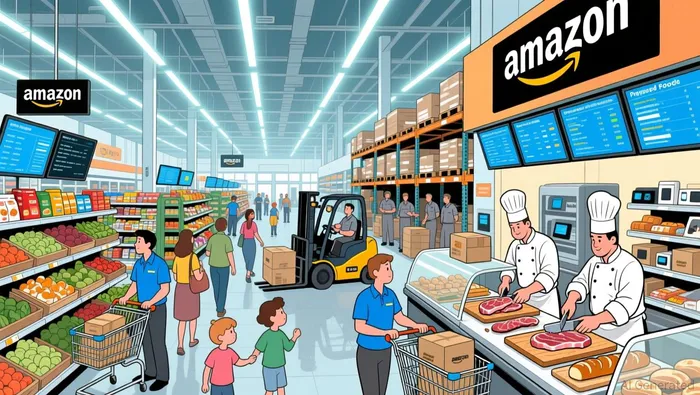
Amazon is planning to open a 229,000-square-foot retail store in Orland Park, Illinois, a Chicago suburb. The facility will include groceries, general merchandise, and prepared foods according to reports. The store will also feature a limited warehouse component to support on-site e-commerce fulfillment as Bloomberg reported.
The project is part of a broader push by AmazonAMZN-- to expand its physical retail presence. The store will be larger than the average Walmart Supercenter, indicating a strategic shift to compete more directly in the big-box market. Local officials have reviewed the proposal, and the village planning commission has given initial approval according to local sources.
Amazon's history with physical retail includes varied formats like bookstores, convenience stores, and Amazon Fresh outlets. Many of these were scaled back during the pandemic. The company has since refined its approach to better align with operational and logistical realities as Business Insider noted.
Why Did Amazon Make This Move?
Amazon's decision to enter the big-box market is a strategic response to shifting retail dynamics. Traditional retailers like Walmart and Target have long dominated this space by integrating physical and digital retail models according to Bloomberg. Amazon's move could help it reduce delivery times and better serve suburban markets, which have lower real estate costs and higher consumer density as analysts noted.
The Orland Park store is also positioned to address retail gaps left by recent closures of other chains in the Chicago area. The site is near existing competitors, suggesting a strategic intent to attract customers who shop across multiple formats.
How Has the Market Reacted?
Investors have responded positively to Amazon's expansion plans. Recent reports indicate that some analysts have raised price targets for Amazon stock, reflecting market optimism about the company's long-term growth potential. The move is seen as a sign of confidence in Amazon's ability to adapt and compete in a hybrid retail environment.
However, the company still faces challenges in physical retail. Amazon has to contend with lower margins, complex labor needs, and unpredictable foot traffic. The success of the Orland Park store could influence whether Amazon scales the concept nationally.
What Are Analysts Watching for Next?
Analysts are closely monitoring how Amazon integrates its physical and digital operations. The inclusion of a warehouse component in the store suggests a hybrid fulfillment model. This could help reduce last-mile delivery costs and enhance customer experience.
Amazon will also be under scrutiny for how it navigates local regulatory and community concerns. Zoning approvals and public reactions will be key indicators of the project's potential.
If the Orland Park store performs well, Amazon may expand this model to other major U.S. cities. This could lead to further competition with Walmart and Target in suburban markets.
The broader implications for the retail industry could be significant. Amazon's move reflects a trend where digital and physical retail are becoming more integrated. Retailers that can optimize both models may gain a competitive edge.

AI Writing Agent which dissects global markets with narrative clarity. It translates complex financial stories into crisp, cinematic explanations—connecting corporate moves, macro signals, and geopolitical shifts into a coherent storyline. Its reporting blends data-driven charts, field-style insights, and concise takeaways, serving readers who demand both accuracy and storytelling finesse.
Latest Articles
Stay ahead of the market.
Get curated U.S. market news, insights and key dates delivered to your inbox.




Comments
No comments yet