
Amazon Reaches One Million Robots Milestone, Boosts Efficiency 10% with DeepFleet AI
Amazon has achieved a significant milestone by deploying its one millionth robot into its global network of warehouses. This accomplishment marks over a decade of continuous innovation in automation, beginning with the integration of robots into its operations 13 years ago. The one millionth robot was introduced in a fulfillment facility in Japan, highlighting Amazon’s global commitment to advanced automation.
The scale of this deployment is immense. Amazon’s extensive network may soon see an equal number of AmazonAMZN-- robots and human workers. Furthermore, a remarkable 75% of Amazon’s global deliveries now benefit from some form of robotic assistance. This transformation is not just about speed; it is about redefining the entire operational backbone of one of the world’s largest retailers, setting a new standard for future supply chains.
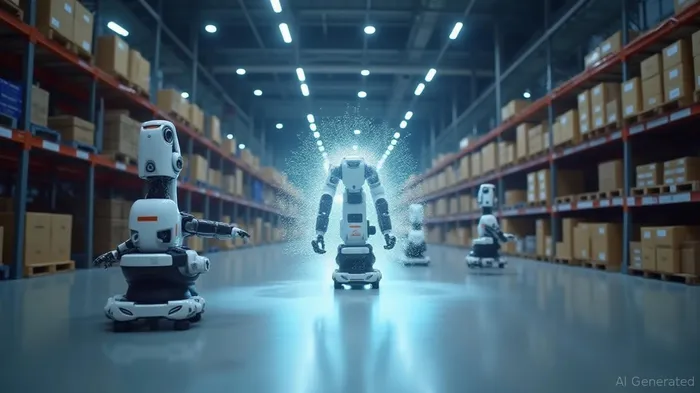
Beyond the sheer numbers, Amazon is also pushing the boundaries of artificial intelligence with the introduction of DeepFleet, a groundbreaking generative AI model specifically designed for its warehouse robots. This advanced AI is engineered to optimize the routes and coordination of its robotic fleet within the complex environment of Amazon’s fulfillment centers. The projected outcome is a significant 10% increase in the speed and efficiency of its robotic operations, directly impacting delivery times and operational costs.
DeepFleet’s development leveraged Amazon Sagemaker, the powerful AWS cloud studio, demonstrating Amazon’s commitment to using its own robust cloud infrastructure for internal innovation. The model was trained on extensive proprietary warehouse and inventory data, ensuring it is finely tuned to Amazon’s unique operational demands. This strategic deployment of DeepFleet AI highlights how targeted AI applications can yield substantial improvements in large-scale logistics, proving the tangible benefits of AI integration.
Amazon’s journey in warehouse automation is marked by continuous evolution. The company has consistently refined its robotic fleet, introducing new capabilities and models that enhance functionality and adaptability. In May, for instance, Amazon introduced VulcanVMC--, a sophisticated robot equipped with two arms – one for rearranging inventory and another featuring a camera and suction cup for precise item retrieval. What sets Vulcan apart is its remarkable ‘sense of touch,’ allowing it to intelligently feel and adapt to the items it handles, a significant leap in robotic dexterity and precision.
Looking ahead, Amazon has already outlined ambitious plans for its ‘next-generation fulfillment centers.’ Announced in October 2024, these facilities are projected to house ten times the number of robots found in current centers, working alongside human employees. The first of these highly automated centers commenced operations shortly after in Shreveport, Louisiana, signaling a new era of ultra-efficient logistics and a clear vision for the future of order fulfillment.
Amazon’s deep dive into robotics technology dates back to 2012, a pivotal year marked by its acquisition of Kiva Systems. This strategic move laid the foundation for Amazon’s in-house robotics division, transforming what was once a third-party solution into a core competency. Since then, Amazon has not only integrated existing technologies but has also spearheaded the development of proprietary robotic systems, cementing its position as a leader in automated logistics.
This long-term investment in robotics and AI demonstrates a clear vision for the future of retail and supply chain management. The continuous integration of smarter robots and advanced AI models like DeepFleet suggests a future where efficiency, speed, and precision are elevated to unprecedented levels, impacting everything from delivery times to inventory management. It highlights a strategic commitment to innovation that reshapes industries.
The benefits of Amazon’s extensive robotic deployment and AI integration are multifaceted. Increased operational efficiency translates to faster delivery times for consumers, reduced operational costs for the company, and potentially more precise inventory management. For businesses operating in or reliant on global supply chains, Amazon’s advancements set new benchmarks for what’s possible in logistics. The lessons learned from scaling such complex systems could inform developments in other industries, including those leveraging blockchain for supply chain transparency and efficiency.
While the technological marvels are undeniable, the rapid expansion of automation also brings forth important considerations, particularly regarding the human workforce. As Amazon approaches a 1:1 robot-to-human ratio in its warehouses, questions arise about the evolving roles of human workers. Amazon maintains that robots assist humans, allowing them to focus on more complex tasks, but the long-term impact on employment structures remains a subject of ongoing discussion. Ensuring ethical AI development and a smooth transition for the workforce will be crucial as automation continues to accelerate.
Amazon’s milestone of one million robots and the introduction of its DeepFleet generative AI model are more than just corporate announcements; they are powerful indicators of an accelerating global trend towards hyper-efficient, AI-driven automation. This fusion of advanced robotics and intelligent AI is not only redefining Amazon’s operational capabilities but also providing a compelling glimpse into the future of industry, logistics, and potentially, the very infrastructure that supports digital economies. It underscores the transformative power of continuous innovation in shaping our automated future.

Stay ahead of the market.
Get curated U.S. market news, insights and key dates delivered to your inbox.




Comments
No comments yet