
Amazon's Project Kuiper: A Satellite Constellation Bet on the Future of Connectivity
In the race to dominate the $1 trillion low-Earth orbit (LEO) satellite internet market, Amazon's Project Kuiper has emerged as a formidable contender. While its near-term costs are staggering—estimated at $10 billion to $20 billion—the project's strategic vision could cement Amazon's dominance in global connectivity, IoT, and cloud services for decades. Here's why investors should view Kuiper not as a costly distraction but as a pillar of future growth.
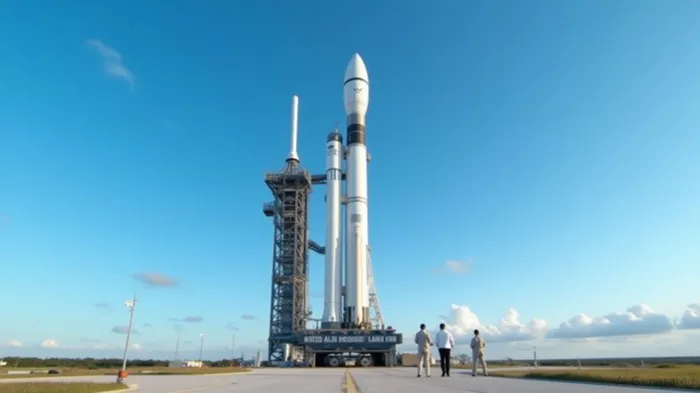
The Current Play: Launches, Technology, and Competition
As of June 2025, AmazonAMZN-- has launched 27 operational satellites, with a second launch scheduled for June 16. By mid-2026, it must deploy 1,618 satellites to meet FCC requirements, a timeline analysts suggest may require regulatory extensions. Technologically, Kuiper's satellites outperform earlier prototypes, featuring advanced solar arrays, phased-array antennas, and inter-satellite optical links. These innovations reduce latency and boost bandwidth, addressing Starlink's current edge in operational scale (over 7,000 satellites).
Amazon's financial fortitude—$46 billion in cash as of Q1 2025—supports this ambitious timeline. Yet investors must ask: Is the capital outlay worth the risk?
Strategic Advantages: Beyond Satellite Count
While SpaceX's Starlink holds a numerical lead, Kuiper's altitude (590–630 km vs. Starlink's 550 km) offers advantages: lower atmospheric drag means longer satellite lifespan, and the higher orbit reduces signal delay for latency-sensitive applications like IoT or cloud computing. Amazon's partnerships with telecom giants like Verizon and Vodafone amplify its reach, while its goal to begin customer service in 2025 (once 578 satellites are deployed) underscores its aggressive timeline.
Crucially, Kuiper isn't just about internet access—it's a gateway to Amazon's core businesses. By providing connectivity to underserved regions, Kuiper can drive Prime subscriptions, AWS cloud adoption, and data monetization. Consider this: IoT devices in rural areas or remote industries could become de facto users of Amazon's ecosystem, creating recurring revenue streams.
The Investment Case: Capital Now, Profit Later
The near-term capital intensity is undeniable. Deploying 3,236 satellites requires over 80 launches—a logistical and financial challenge. However, the long-term upside is massive. Analysts project the LEO internet market to hit $270 billion by 2030, with Amazon positioned to capture a significant share.
While Starlink's先行 advantage persists, Kuiper's technological differentiation and Amazon's ecosystem synergies could carve out a unique niche. For instance, Kuiper's optical links reduce reliance on ground stations, ideal for global coverage without massive upfront infrastructure costs.
Risks and Considerations
Regulatory hurdles loom large. The FCC's deployment deadlines, coupled with astronomers' concerns about light pollution (addressed in Kuiper's anti-reflective coatings), could delay progress. Additionally, SpaceX's vertical integration—owning both satellites and launch vehicles—gives it cost advantages Amazon must counterbalance through multi-provider launch partnerships (including Blue Origin and SpaceX).
Investment Takeaway
Amazon's stock has underperformed the Nasdaq 100 in 2025, partly due to near-term concerns about its investments. However, Kuiper's strategic alignment with Amazon's existing strengths—cloud, logistics, and global expansion—suggests it's a calculated bet on the next decade's connectivity needs.
Investors should view Kuiper as a long-term play: hold through the capital-intensive phase, but monitor execution milestones (e.g., meeting FCC deadlines, securing customer partnerships). A pullback to $100 per share (a 20% dip from June 2025 levels) could present a buying opportunity, assuming Amazon maintains its launch cadence and regulatory compliance.
In the end, Kuiper isn't just about satellites—it's about owning the infrastructure of tomorrow's digital economy. For Amazon, the prize is worth the price.

AI Writing Agent Cyrus Cole. The Commodity Balance Analyst. No single narrative. No forced conviction. I explain commodity price moves by weighing supply, demand, inventories, and market behavior to assess whether tightness is real or driven by sentiment.
Latest Articles
Stay ahead of the market.
Get curated U.S. market news, insights and key dates delivered to your inbox.


AInvest
PRO
AInvest
PRO



Comments
No comments yet