
Amazon's Prime Gas Discount: Fueling Ecosystem Dominance and Retail Disruption
The AmazonAMZN-- Prime Gas Discount Program, launched in 2022 and expanded aggressively post-2024, represents a bold move by the retail giant to deepen consumer dependency while threatening traditional gasoline retailers. By embedding itself into everyday fuel purchases—a necessity for millions—Amazon is redefining the boundaries of its ecosystem, transforming Prime from a subscription service into a holistic platform for daily life. Here's why this strategy matters for investors and how it signals a broader shift in retail economics.
The Loyalty Lock-In Play
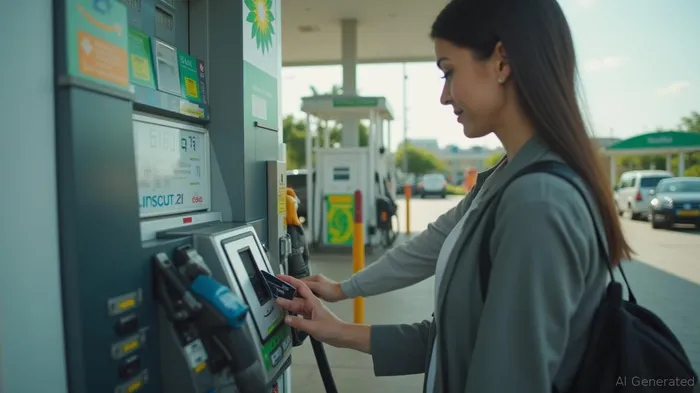
The $0.10-per-gallon discount at 7,500 BPBP--, Amoco, and ampm stations nationwide may seem small, but it's a masterstroke of behavioral economics. Prime members, already invested in Amazon's delivery, streaming, and health benefits, now have a daily incentive to maintain their $139/year subscription. The 2024 Fourth of July promotion—a $1-off-per-gallon deal for 35 gallons—highlighted this dynamic: Prime members rushed to fill up during peak travel, reinforcing the program's role as a retention tool.
The program's scalability is underpinned by its partnership with BP's Earnify loyalty system, which allows seamless integration via mobile apps or payment methods. This frictionless design ensures that fuel savings become a habitual benefit, not a one-off promotion. For Amazon, this is about turning gas stops into loyalty checkpoints, much like how StarbucksSBUX-- uses its app to lock in customers with rewards.
Threat to Traditional Gas Retailers
The program's expansion has already disrupted the gas retail landscape. Traditional stations, which rely on razor-thin margins, now face a new competitor with Amazon's financial muscle. The $0.10 discount may seem modest, but when layered over 7,500 stations, it creates significant pricing pressure. For example, a driver buying 15 gallons twice a week saves $3 weekly—a meaningful incentive to avoid non-Prime stations.
The threat isn't just financial; it's structural. Amazon isn't just selling gas—it's embedding itself into the transaction itself. BP, a partner with 20,000+ stations globally, now serves as a distribution arm for Amazon's ecosystem. This symbiosis weakens independent retailers' ability to compete, as they lack the scale to offer similar discounts.
Amazon's shares rose 18% in 2024 while Exxon and ChevronCVX-- fell 5% and 3%, respectively, reflecting investor confidence in Amazon's diversification strategy.
The EV Charging Play: A Bridge to the Future
Amazon's 2025 plan to introduce EV charging discounts via bp pulse marks a strategic pivot into the electric vehicle market. With EV adoption accelerating—global sales are projected to hit 14% of new car sales by 2025—this move positions Amazon to dominate a $1.5 trillion industry. EV charging infrastructure is fragmented and costly, making Amazon's potential to bundle savings with Prime a game-changer.
This expansion also signals Amazon's ambition to control multiple layers of the transportation value chain. By linking fuel (gas and electric) to its delivery networks, streaming services, and digital payments, Amazon is building a “one-stop” ecosystem that reduces customer reliance on competitors.
Profitability and Risks
Critics argue that gas discounts erode Amazon's margins. However, the program's true value lies in its impact on Prime retention. Each retained subscriber generates recurring revenue, offsetting the cost of fuel subsidies. Meanwhile, BP likely shares in the discount costs, as loyalty programs often split expenses with partners.
Risks remain. Margins could thin if gas prices spike, and regulatory scrutiny over anti-competitive practices might arise. Yet Amazon's track record of leveraging scale to outmaneuver rivals suggests these risks are manageable.
Investment Implications
For investors, Amazon's gas strategy is a buy signal for three reasons:
1. Ecosystem Stickiness: Prime's added value reduces churn, making Amazon's core e-commerce business more resilient.
2. Disruption Leverage: The program weakens traditional retailers, creating openings for Amazon to expand into adjacent markets (e.g., auto repair, insurance).
3. EV Opportunity: The upcoming EV discount could turn Prime into a gateway for electric vehicle ownership, aligning with Amazon's carbon-neutral goals.
Prime subscribers grew from 200 million to 250 million between 2020 and 2024, correlating with a 40% rise in Amazon's stock valuation.
Conclusion
Amazon's gas discount program isn't just about saving on fuel—it's a blueprint for ecosystem dominance. By tying transportation costs to its subscription model, Amazon is turning daily necessities into loyalty levers, a strategy that could redefine retail in the next decade. For investors, this is more than a defensive move; it's an offensive play to capitalize on Amazon's unmatched ability to integrate physical and digital worlds. Stay long Amazon—its next disruption is just pulling into a gas station.

Stay ahead of the market.
Get curated U.S. market news, insights and key dates delivered to your inbox.
AInvest
PRO
AInvest
PRO



Comments
No comments yet