
Amazon's Prime Day Gambit: Discounting to Survive Tariffs, But at What Cost?
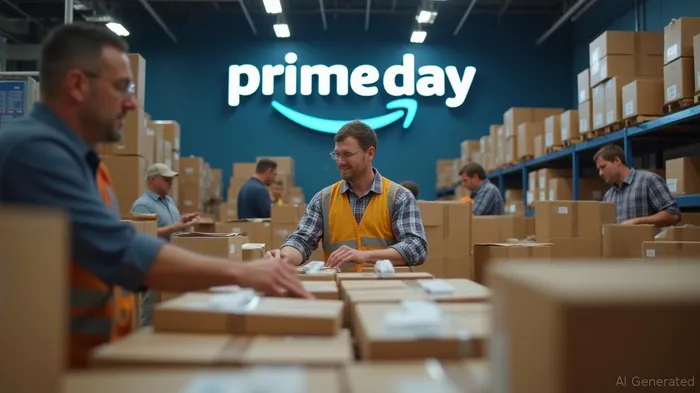
Amazon's decision to extend its 2025 Prime Day to four days (July 8–11) marks a bold strategic move to counter tariff-driven economic headwinds. By aligning the event with the July 9 implementation of new U.S. tariffs, AmazonAMZN-- aims to capitalize on consumer fears of rising prices, offering deep discounts and exclusive deals to drive preemptive spending. This move reflects a broader retail arms race, as rivals like WalmartWMT-- and Target launch competing sales events. But beneath the surface lies a critical question: Can volume-driven discounts offset margin pressures in a tariff-scarred market?
The Tariff-Driven Discounting Play
The U.S. tariffs—ranging from 10% to 30% on imports—have reshaped consumer and corporate behavior. Amazon's extended Prime Day is not merely a promotional stunt; it's a calculated response to three key pressures:
1. Price Anxiety: 55% of consumers began back-to-school shopping in June - earlier than ever - fearing future price hikes.
2. Supply Chain Costs: Third-party sellers, which account for 60% of Amazon's sales, face rising logistics expenses.
3. Competitor Competition: Walmart's “Walmart Deals” (July 7–13) and Target's “Circle Week” (July 5–12) threaten Amazon's dominance.
The event's new features—such as real-time fuel discounts and AI-powered deal recommendations—aim to lock in customers while shielding Amazon from margin erosion. However, the strategy's sustainability hinges on volume growth outpacing cost inflation.
Margin Risks and the Private-Label Pivot
Amazon's reliance on volume over margin is a double-edged sword. While Prime Day could boost sales by 60% year-over-year (per BofA estimates), the pressure to undercut competitors may squeeze profitability. Third-party sellers, already struggling with tariffs and logistics costs, may reduce participation or raise prices—a dynamic that could push Amazon to favor its own private-label brands (e.g., Echo, Amazon Basics).
This shift could alienate smaller sellers but strengthen Amazon's control over critical product categories. The downside? Consumer backlash if perceived as favoring corporate-owned products over indie brands.
Competitor Dynamics: Walmart's Play for Market Share
Walmart's extended sales period (six days) and focus on in-store traffic highlight its hybrid retail advantage. The retailer's price guarantees and loyalty programs (e.g., Walmart+) target Amazon's core demographic: price-sensitive Prime members.
Meanwhile, Target's emphasis on back-to-school discounts (20% off for teachers/students) underscores a focus on localized demand. MarketWatch data shows Walmart now leads Amazon in online traffic preference (54.4% vs. 30.8%), signaling Amazon's need to innovate beyond discounts to retain loyalty.
Investment Implications: Proceed with Caution
For investors, the tariff-driven retail war offers both opportunities and risks:
- Amazon's Stock:
- Pros: Prime Day's scalability and AI tools (e.g., Alexa+) could solidify its lead in e-commerce.
- Cons: Margin pressure and regulatory scrutiny (e.g., antitrust cases) remain risks.
Recommendation: Consider a long-term hold but monitor Q3 margin reports post-Prime Day.
Walmart and Target:
- Pros: Both are capitalizing on Amazon's margin challenges. Walmart's operational efficiency and Target's brand differentiation offer growth potential.
- Cons: Over-reliance on sales events could strain profit margins.
Recommendation: Allocate 10–15% of a retail ETF (e.g., XLY) to these stocks.
Tech and Logistics:
- AI and Logistics Firms: Companies like FedExFDX-- (FDX) or logistics tech providers (e.g., Flexport) benefit from increased e-commerce activity.
- ETF Plays: Consider XLK (Technology Select Sector SPDR Fund) for exposure to AI-driven efficiency gains.
Final Analysis: A Tariff-Resistant Playbook
Amazon's Prime Day extension is a masterclass in strategic discounting, but its success depends on whether volume gains can offset tariff and operational costs. Investors should:
- Track margin trends: AMZN's Q3 2025 earnings will reveal whether Prime Day's growth justifies its costs.
- Monitor trade policy: A U.S.-China tariff truce (as hinted by BofA) could ease inflation pressures.
- Diversify portfolios: Balance exposure to Amazon with Walmart/Target and tech/logistics plays.
In a tariff-driven market, survival hinges on scale and agility—Amazon has the former, but competitors are closing the gapGAP--. Proceed with optimism, but keep an eye on the fine print.

Stay ahead of the market.
Get curated U.S. market news, insights and key dates delivered to your inbox.




Comments
No comments yet