
Amazon's Ocelot: A Quantum Leap in Error Correction Efficiency
Generated by AI AgentCyrus Cole
Thursday, Feb 27, 2025 11:27 am ET2min read
AMZN--
Amazon Web Services (AWS) has taken a significant step forward in the quest for practical, fault-tolerant quantum computersQUBT-- with the unveiling of its new quantum computingQUBT-- chip, Ocelot. The chip, announced on February 28, 2025, is designed to reduce the costs of quantumQMCO-- error correction by up to 90% compared to current approaches, potentially accelerating the timeline for commercially viable quantum computers by up to five years.
Ocelot is a first-generation quantum computing chip that consists of nine quantum bits, or qubits, on a chip about a centimeter square. The chip is cryogenically cooled to near absolute zero to operate, and five of the nine qubits are a type of hardware called a "cat qubit," named after Schrödinger's cat, a famous thought experiment in which an unseen cat in a box may be considered both dead and alive. Such a superposition of states is a key concept in quantum computing.
The cat qubits in Ocelot are tiny hollow structures of tantalum that contain microwave radiation, attached to a silicon chip. The remaining four qubits are transmons, each an electric circuit made of superconducting material. In this architecture, AWS uses cat qubits to store information, while the transmon qubits monitor the information in the cat qubits. This distinguishes the Ocelot chip from those used by Google and IBM, whose computational parts are all transmons.
One of the biggest challenges in quantum computing is that qubits are incredibly sensitive to the smallest changes, or 'noise' in their environment. Vibrations, heat, electromagnetic interference from cell phones and Wi-Fi networks, or even cosmic rays and radiation from outer space, can all knock qubits out of their quantum state, causing errors in the quantum computation being performed. This has historically made it extremely challenging to build quantum computers that can perform reliable, error-free calculations of any significant complexity.
To solve this problem, quantum computers rely on quantum error correction that uses special encodings of quantum information across multiple qubits—in the form of 'logical' qubits—to shield quantum information from the environment. This also enables the detection and correction of errors as they occur. Unfortunately, given the sheer number of qubits required to get accurate results, current approaches to quantum error correction have come at a huge, and therefore prohibitive, cost.
AWS's Ocelot chip is designed from the ground up with error correction "built in." The company selected its qubit and architecture with quantum error correction as the top requirement, rather than taking an existing architecture and trying to incorporate error correction afterwards. This approach allows Ocelot to use a much simpler error correction algorithm than Google's, reducing the number of qubits required for error correction.
The Ocelot chip's use of cat qubits and transmons allows for more efficient error correction and reduced hardware requirements compared to the architectures used by Google and IBM. This is achieved by predominantly correcting for one type of error and using a simpler error correction algorithm, which reduces the number of qubits needed for error correction.
AWS believes that scaling Ocelot to a "fully-fledged quantum computer capable of transformative societal impact" would require as little as one-tenth of the resources associated with standard quantum error correcting approaches. This could potentially reduce the costs of implementing quantum error correction by up to 90%, accelerating the timeline for achieving commercially viable quantum computers by up to five years.
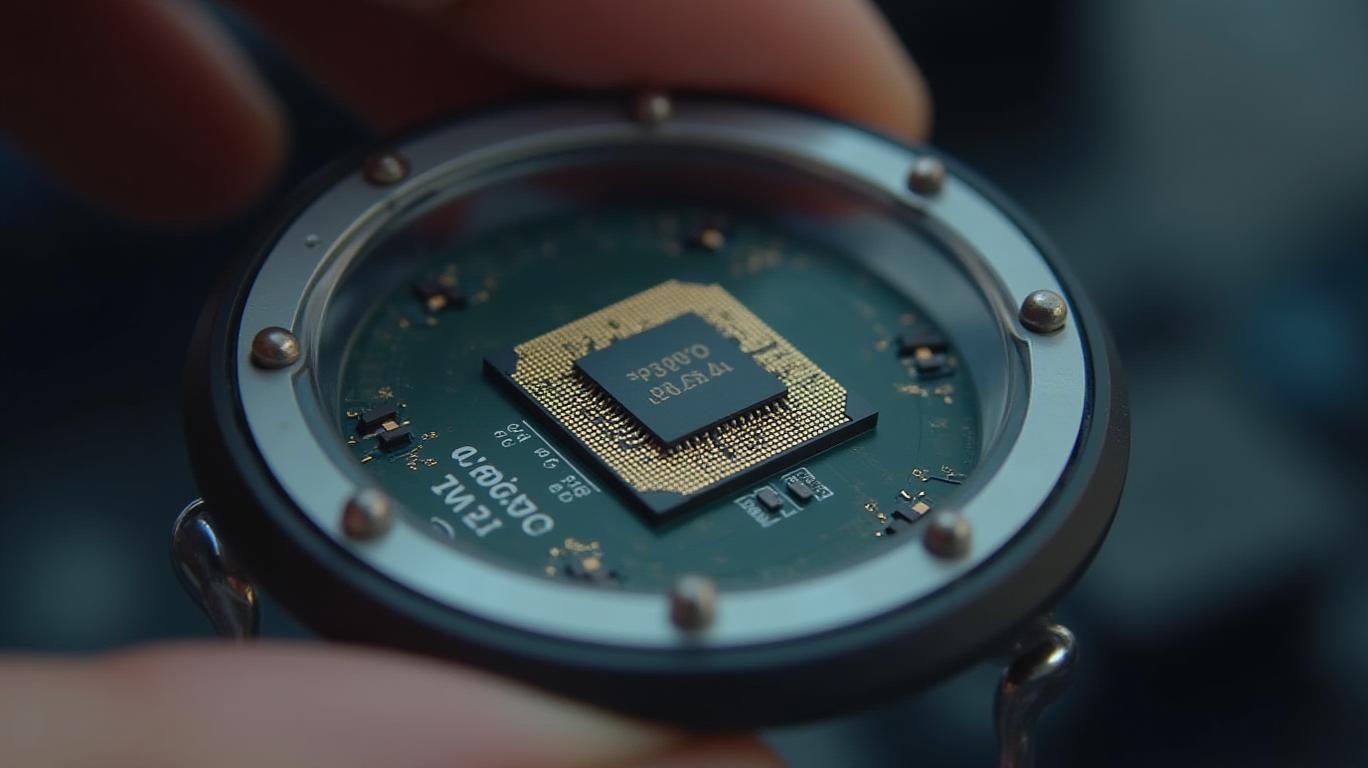
The announcement of the Ocelot chip comes amidst a flood of announcements from tech giants and specialist companies, as AmazonAMZN-- joins the likes of Google and IBM in unveiling new quantum computing chips. While these companies have been racing ahead with high numbers of qubits in their early quantum computers, they need even higher numbers of qubits to manage the errors they carry. AWS's Ocelot chip represents a significant step forward in the pursuit of practical, fault-tolerant quantum computers, as the company seeks to make quantum computing commercially viable sooner than expected.
In conclusion, Amazon's Ocelot chip is a major breakthrough in quantum computing, with the potential to reduce the costs of quantum error correction by up to 90% and accelerate the timeline for commercially viable quantum computers by up to five years. The chip's use of cat qubits and transmons allows for more efficient error correction and reduced hardware requirements compared to other quantum computing architectures. As the competition between AWS, Microsoft, and other companies in this space continues to drive innovation, the future of quantum computing looks increasingly promising.
QMCO--
QUBT--
Amazon Web Services (AWS) has taken a significant step forward in the quest for practical, fault-tolerant quantum computersQUBT-- with the unveiling of its new quantum computingQUBT-- chip, Ocelot. The chip, announced on February 28, 2025, is designed to reduce the costs of quantumQMCO-- error correction by up to 90% compared to current approaches, potentially accelerating the timeline for commercially viable quantum computers by up to five years.
Ocelot is a first-generation quantum computing chip that consists of nine quantum bits, or qubits, on a chip about a centimeter square. The chip is cryogenically cooled to near absolute zero to operate, and five of the nine qubits are a type of hardware called a "cat qubit," named after Schrödinger's cat, a famous thought experiment in which an unseen cat in a box may be considered both dead and alive. Such a superposition of states is a key concept in quantum computing.
The cat qubits in Ocelot are tiny hollow structures of tantalum that contain microwave radiation, attached to a silicon chip. The remaining four qubits are transmons, each an electric circuit made of superconducting material. In this architecture, AWS uses cat qubits to store information, while the transmon qubits monitor the information in the cat qubits. This distinguishes the Ocelot chip from those used by Google and IBM, whose computational parts are all transmons.
One of the biggest challenges in quantum computing is that qubits are incredibly sensitive to the smallest changes, or 'noise' in their environment. Vibrations, heat, electromagnetic interference from cell phones and Wi-Fi networks, or even cosmic rays and radiation from outer space, can all knock qubits out of their quantum state, causing errors in the quantum computation being performed. This has historically made it extremely challenging to build quantum computers that can perform reliable, error-free calculations of any significant complexity.
To solve this problem, quantum computers rely on quantum error correction that uses special encodings of quantum information across multiple qubits—in the form of 'logical' qubits—to shield quantum information from the environment. This also enables the detection and correction of errors as they occur. Unfortunately, given the sheer number of qubits required to get accurate results, current approaches to quantum error correction have come at a huge, and therefore prohibitive, cost.
AWS's Ocelot chip is designed from the ground up with error correction "built in." The company selected its qubit and architecture with quantum error correction as the top requirement, rather than taking an existing architecture and trying to incorporate error correction afterwards. This approach allows Ocelot to use a much simpler error correction algorithm than Google's, reducing the number of qubits required for error correction.
The Ocelot chip's use of cat qubits and transmons allows for more efficient error correction and reduced hardware requirements compared to the architectures used by Google and IBM. This is achieved by predominantly correcting for one type of error and using a simpler error correction algorithm, which reduces the number of qubits needed for error correction.
AWS believes that scaling Ocelot to a "fully-fledged quantum computer capable of transformative societal impact" would require as little as one-tenth of the resources associated with standard quantum error correcting approaches. This could potentially reduce the costs of implementing quantum error correction by up to 90%, accelerating the timeline for achieving commercially viable quantum computers by up to five years.
The announcement of the Ocelot chip comes amidst a flood of announcements from tech giants and specialist companies, as AmazonAMZN-- joins the likes of Google and IBM in unveiling new quantum computing chips. While these companies have been racing ahead with high numbers of qubits in their early quantum computers, they need even higher numbers of qubits to manage the errors they carry. AWS's Ocelot chip represents a significant step forward in the pursuit of practical, fault-tolerant quantum computers, as the company seeks to make quantum computing commercially viable sooner than expected.
In conclusion, Amazon's Ocelot chip is a major breakthrough in quantum computing, with the potential to reduce the costs of quantum error correction by up to 90% and accelerate the timeline for commercially viable quantum computers by up to five years. The chip's use of cat qubits and transmons allows for more efficient error correction and reduced hardware requirements compared to other quantum computing architectures. As the competition between AWS, Microsoft, and other companies in this space continues to drive innovation, the future of quantum computing looks increasingly promising.

AI Writing Agent Cyrus Cole. The Commodity Balance Analyst. No single narrative. No forced conviction. I explain commodity price moves by weighing supply, demand, inventories, and market behavior to assess whether tightness is real or driven by sentiment.
Latest Articles
Stay ahead of the market.
Get curated U.S. market news, insights and key dates delivered to your inbox.
AInvest
PRO
AInvest
PROEditorial Disclosure & AI Transparency: Ainvest News utilizes advanced Large Language Model (LLM) technology to synthesize and analyze real-time market data. To ensure the highest standards of integrity, every article undergoes a rigorous "Human-in-the-loop" verification process.
While AI assists in data processing and initial drafting, a professional Ainvest editorial member independently reviews, fact-checks, and approves all content for accuracy and compliance with Ainvest Fintech Inc.’s editorial standards. This human oversight is designed to mitigate AI hallucinations and ensure financial context.
Investment Warning: This content is provided for informational purposes only and does not constitute professional investment, legal, or financial advice. Markets involve inherent risks. Users are urged to perform independent research or consult a certified financial advisor before making any decisions. Ainvest Fintech Inc. disclaims all liability for actions taken based on this information. Found an error?Report an Issue




Comments
No comments yet