
Amazon's Logistics Strategy: How Warehouse Investments Boost Operational Efficiency
 Aime Summary
. - The facility will improve delivery times and reduce operational costs by consolidating inventory before shipping to fulfillment centers. , highlighting Amazon's long-term strategy to support local economies. - This expansion aligns with Amazon's broader logistics goals to optimize its supply chain and meet growing e-commerce demand. - Investors should monitor the long-term impact of these warehouse investments on Amazon's operational efficiency and market share in the logistics sector.
Amazon is reshaping the logistics landscape with a bold new investment in its supply chain infrastructure. Earlier this week, the tech giant celebrated the ribbon-cutting of a 635,000-square-foot Inbound Cross Dock facility in Desert Hot Springs, California. 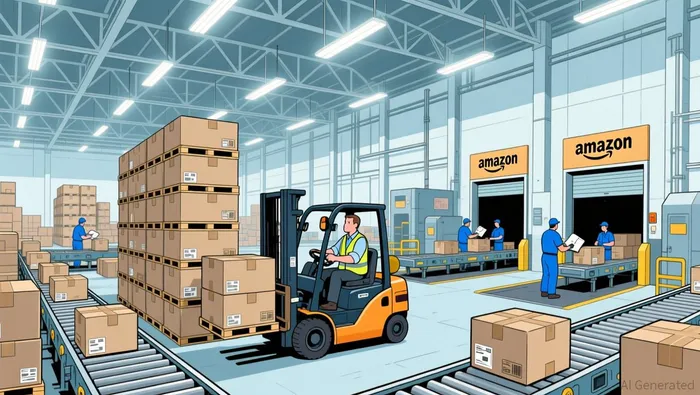 This facility is a critical node in Amazon's logistics network, designed to optimize inventory handling and cut delivery times. For investors, this move signals Amazon's ongoing commitment to outperform in the highly competitive e-commerce space.
Why Is AmazonAMZN-- Investing in Warehouse Infrastructure for Logistics?
Amazon's new facility is a "middle mile" operation that functions as a crucial link between suppliers and its fulfillment centers. The company refers to it as a hub for receiving, consolidating, and redistributing inventory more efficiently before it reaches final destinations. This kind of infrastructure helps Amazon reduce handling costs, improve inventory turnover, and ultimately deliver a faster experience for customers. With e-commerce demand rising steadily, optimizing this middle-mile logistics has become a strategic priority.
Such warehouse facilities are not just about physical space—they represent Amazon's broader push to build a more agile and scalable supply chain. The Desert Hot Springs site is expected to reduce delivery times in the region and enhance the company's ability to handle large volumes of inventory with minimal friction.
What Does This Mean for Retail Investors and the Market?
For retail investors, Amazon's warehouse expansion offers a tangible example of how supply chain optimization can drive operational efficiency and profitability. The company's focus on logistics isn't just about cutting costs—it's about creating a competitive moat. By investing in advanced warehouse technology and workforce development, Amazon is positioning itself to maintain its dominance in the e-commerce market.
, reflecting Amazon's strategy to invest in regional communities. This move not only supports local economies but also helps Amazon build long-term relationships with local governments and suppliers. From an investor standpoint, this kind of infrastructure expansion can lead to more predictable delivery performance and, in turn, stronger customer retention.
Moreover, Amazon is not alone in this push. Other tech giants, including Google, Microsoft, and Meta, are also investing heavily in infrastructure, particularly in data centers. While Amazon's focus is on warehousing, these broader trends show a common theme: tech companies are increasingly prioritizing physical infrastructure to support growth.
What to Watch as This Facility Comes Online
With the new warehouse now operational, investors should keep a close eye on how this investment affects Amazon's logistics costs and delivery performance. While the company has not released specific financial projections for the facility, its impact could be reflected in key metrics like operating expenses and customer satisfaction scores.
Additionally, how Amazon scales this model in other regions could be a valuable indicator of its long-term logistics strategy. If these middle-mile facilities prove successful, the company may replicate them in other high-growth markets, further solidifying its edge in the e-commerce space.
For now, the Desert Hot Springs Inbound Cross Dock is a strong sign that Amazon is serious about maintaining its leadership in logistics and customer experience. As more facilities come online, this infrastructure could become a key differentiator in a sector where speed and efficiency are king.

Stay ahead of the market.
Get curated U.S. market news, insights and key dates delivered to your inbox.


AInvest
PRO
AInvest
PRO



Comments
No comments yet