
Amazon LEO Secures Satellite Landing Permit in Nigeria but Needs Additional Licences to Sell Services
 Aime Summary
Amazon LEO has been granted a satellite landing permit by Nigeria’s NCC to operate its satellites over Nigerian territory. The permit allows the use of Ka-band spectrum and supports Fixed Satellite Service (FSS), Mobile Satellite Service (MSS), and Earth Stations in Motion (ESIM) according to the report. However, AmazonAMZN-- cannot legally deliver last-mile connectivity to homes, businesses, or enterprises in Nigeria without an Internet Service Provider (ISP) licence and an International Access Gateway licence. According to analysis, Amazon LEO's satellite landing permit is valid for seven years and is part of a planned constellation of up to 3,236 LEO satellites. The permit is one of several required for Amazon to move from airspace coverage to delivering services to end-users. While the NCC has approved the landing permit, Amazon must still secure the ISP and Gateway licences before it can operate at scale. The NCC has emphasized that the licensing structure in Nigeria is designed to ensure market oversight, consumer protection, national security, and service quality as detailed in reports.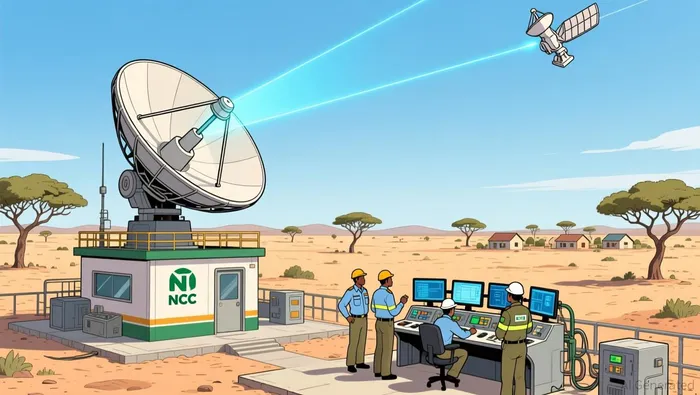 The ISP licence costs ₦500,000 ($357) and is valid for five years, while the Gateway licence requires significant technical and financial capacity and can cost between ₦25 million and ₦50 million for 10 years according to licensing data.
What Additional Steps Does Amazon Need to Take to Operate in Nigeria? To deliver internet services to the public, Amazon must apply for both an ISP and a Gateway licence. The ISP licence is necessary to sell internet access, while the Gateway licence is required for international connectivity and direct interconnection with global networks as the regulatory framework indicates. The NCC has stated that obtaining these licences involves rigorous requirements, including proof of technical and financial capacity, deployment plans, and market presence according to licensing guidelines.
How Does Nigeria's Licensing Framework Affect Satellite Broadband Providers? Nigeria's licensing framework is designed to regulate and manage the expansion of satellite broadband providers. By separating space-segment approvals from last-mile and gateway permissions, the NCC retains control over market competition, consumer protection, and national security according to NCC analysis. This structure ensures that companies like Amazon cannot enter the market immediately and must comply with local regulations before offering services at scale as reported.
What Options Are Available for Amazon to Enter the Nigerian Market? Amazon has several options to enter the Nigerian market. It can apply for the additional licences, partner with existing Nigerian licensees, or operate a wholesale or hybrid model that depends on local operators for last-mile delivery according to regulatory sources. The NCC has stated that operational licensees must demonstrate active market presence and robust infrastructure to qualify for the necessary permits as detailed in licensing documents. Until Amazon secures the required licences, its satellites may cover Nigeria's skies, but the country's internet market remains regulated and open to competition according to market analysis. The regulatory steps highlight the complexity of entering the satellite broadband market in Nigeria, even for a global tech giant like Amazon as comprehensive reports indicate.

Blending traditional trading wisdom with cutting-edge cryptocurrency insights.
Latest Articles
Stay ahead of the market.
Get curated U.S. market news, insights and key dates delivered to your inbox.
AInvest
PRO
AInvest
PRO



Comments
No comments yet