
Amazon's Corporate Layoffs: Why the Cuts Matter for Investors and the Future of Work
 Aime Summary
- Amazon is preparing a second wave of corporate layoffs, targeting up to 30,000 roles by mid-2026.
- The layoffs are attributed to excessive bureaucracy and organizational inefficiencies, not directly to financial distress or AI adoption.
- Amazon CEO Andy Jassy has emphasized that the cuts aim to streamline decision-making and improve company agility.
- Capital expenditures surged 55% year-over-year, reflecting Amazon's aggressive investments in AI and infrastructure.
- The layoffs have sparked investor concerns about Amazon's growth story and operational efficiency.
Amazon is once again making headlines with a major restructuring of its corporate workforce. This second wave of job cuts, expected to affect up to 10% of its corporate staff, follows a similar round in October 2025. While the company frames the moves as necessary for internal efficiency, the timing and scale have raised questions about Amazon's broader strategy, particularly as it invests heavily in artificial intelligence. For investors, the combination of significant layoffs and rising capital expenditures signals a pivotal moment in the company's evolution.
What Are the Key Details of Amazon's Corporate Layoffs?
Amazon's upcoming layoffs, which began in January 2026, are expected to impact 14,000–15,000 employees, with the full 30,000 reduction target to be reached by mid-2026. These cuts span several high-growth departments, including AmazonAMZN-- Web Services (AWS), core retail, HR, and Prime Video. The company has also given affected employees a 90-day window to seek internal positions, but this deadline is fast approaching.
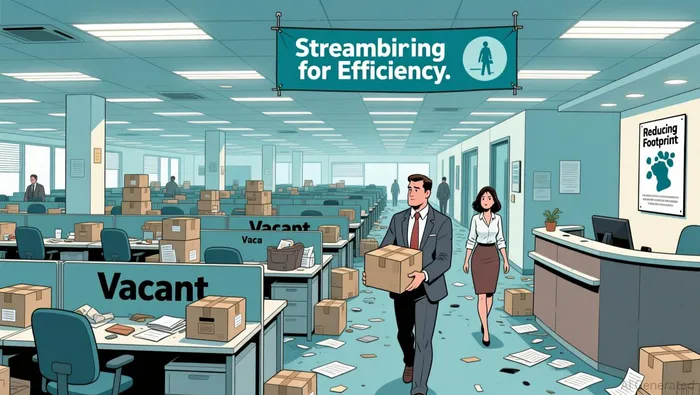
CEO Andy Jassy has framed these cuts as part of a cultural shift, emphasizing the need to eliminate layers of management that have slowed decision-making and reduced accountability. According to Jassy, the cuts are not financially motivated or directly tied to AI adoption, but rather a strategic response to internal inefficiencies. That said, Amazon has also implemented an anonymous feedback system, which has led to over 450 process changes aimed at improving internal agility.
How Are Investors and the Market Reacting to the News?
Market reactions to the news have been mixed. Amazon shares have stalled in early 2026 as investors digest the scale of the cuts alongside a 55% year-over-year increase in capital expenditures, which reached $35.1 billion in Q3 2025. Despite 13.4% revenue growth, operating income increased by just 0.06%, and free cash flow dipped to $14.8 billion. These figures have led some analysts to question whether Amazon's AI-driven initiatives will deliver sufficient returns to justify the costs.
The company's move to streamline its corporate structure also raises broader questions about the future of work at Amazon. With layoffs now surpassing even the record 27,000 jobs cut in 2022, the scale of the reductions has led to speculation that Amazon is preparing for a more aggressive restructuring than in previous years. However, Jassy has repeatedly emphasized that hiring is ongoing in high-priority areas like machine learning and AI development, suggesting that the cuts are not a sign of a company in retreat.
What Should Investors Watch For Next?
The next few months will be critical in determining how these changes impact Amazon's operations and market performance. Investors will be closely watching whether the layoffs lead to measurable improvements in efficiency and cost control. Additionally, the company's AI initiatives—particularly its massive data center investments—will be key to assess whether these expenditures are generating meaningful returns.
Another important factor to monitor is the impact on employee morale and retention. While Amazon is offering retraining and upskilling programs, the loss of 30,000 corporate roles could lead to talent attrition, especially in departments like HR and AWS where leadership and institutional knowledge are vital. Leadership will need to carefully balance the need for efficiency with the risk of damaging long-term innovation and productivity.
For now, the combination of layoffs and AI investments highlights the tension between short-term cost-cutting and long-term growth bets. As Amazon continues to reshape its corporate culture and streamline its operations, the focus will remain on whether these changes translate into sustainable value for investors and stakeholders.

Stay ahead of the market.
Get curated U.S. market news, insights and key dates delivered to your inbox.


AInvest
PRO
AInvest
PRO



Comments
No comments yet