
Amazon Boosts Prime Visa Bonus to Capitalize on Membership Growth Amid High-Retail-Credit-APR Environment
 Aime Summary
id_3.
Prime Visa Bonus Extension: Accelerating Acquisition in a Shifting Rewards Landscape
Amazon's extended $250 welcome bonus for its Prime Visa card in 2025 stands out as a particularly aggressive, spend-free incentive in the crowded retail credit card market. This instant reward is the highest recorded value for the card, often peaking near holidays, and arrives without any minimum spending requirements, a key differentiator that likely appeals strongly to new Prime members and frequent AmazonAMZN-- shoppers. The card compounds this appeal with a tiered cashback structure: 5% back on Amazon and Whole Foods purchases, plus 2% on travel and dining expenses, all while requiring no annual fee but mandating an active Prime subscription. 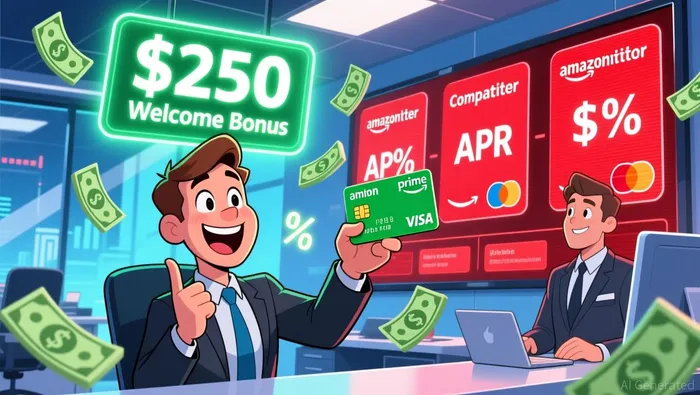 This simplified rewards model contrasts sharply with the high interest costs embedded in the broader retail credit card landscape. Average retail card APRs surged to 30.14% in 2025, the second-highest level since 2008, driven partly by 23 cards increasing rates despite a Fed cut, with store-only cards averaging a steep 31.64%. While the Amazon Secured Card offers a relatively low 10% APR, co-branded retail cards like this Prime Visa generally carry higher rates around 28.65%.
This high-interest environment presents a significant profitability risk for Amazon if card retention remains low. The card's strategy hinges on acquiring members and encouraging spending within Amazon's ecosystem, but the profitability per account depends heavily on converting Prime subscriptions and managing interest charges from balances carried beyond the grace period. Evidence shows co-branded retail cards are losing popularity as consumers shift towards buy-now-pay-later options and general rewards cards, with private-label card originations falling dramatically from 43.9 million in 2014 to just 16.8 million in 2024. Amazon's ability to sustain the card's value proposition - the high bonus and cashback - while navigating these high-cost funding realities and increasing competition remains uncertain. The extended bonus is a powerful acquisition tool, but its long-term success and the card's profitability are contingent on overcoming the challenges of high APRs and declining co-branded card adoption trends.
Prime Membership Expansion Bolsters Recurring Revenue Engine
Amazon Prime's membership base solidified its role as a core growth driver, reaching 250 million global subscribers by 2025. The U.S. remains the dominant market, with 168.3 million members translating to a 62.4% penetration rate among American adults. This vast, sticky user base generated $44.37 billion in subscription revenue for 2024, demonstrating the platform's ability to monetize scale effectively.
The membership program's value proposition continued to strengthen, incorporating expanded benefits like streaming services and exclusive events. Prime Day exemplified this momentum, achieving $24.1 billion in sales in 2025 - a 30.3% year-over-year increase. This significant sales surge underscores Prime's power to concentrate consumer spending during key promotional windows.
While the rising subscriber count and revenue are clear indicators of platform health, the direct impact on payment card adoption and utilization remains obscured. Specific metrics regarding the penetration rate or transaction volume of the Amazon Prime Visa card or retail credit card are not provided in the available data. This lack of transparency on card performance represents a key gap for investors assessing the full monetization potential of the Prime ecosystem beyond the core subscription fee. The membership growth is undeniable, but its direct linkage to payment volume growth requires further evidence.
Strategic Differentiation: Rewards Depth vs. Retail Credit Cost Trends
Retail credit cards remain burdened by punishing costs. The average annual percentage rate (APR) on these cards hit 30.14% in 2025, with store-only offerings even higher at 31.64% - a level that persists despite Federal Reserve rate cuts according to a recent study. This pricing pressure stems from declining lender profitability, as 23 of 110 retail cards raised rates last year alone according to Bankrate data.
By contrast, Amazon's Prime credit card avoids these traps. It offers zero APR promotional periods, unlimited cashback rewards, and no annual fee - structures that sidestep the high-interest retail card model entirely. This aligns with shifting consumer preferences: private-label card originations have collapsed from 43.9 million annually in 2014 to just 16.8 million in 2024, as shoppers migrate to flexible payment options.
Yet this trend carries hidden risks. The original lender's profitability hinges on short-term utilization, since carriers of high-interest balances (which retailers rely on) have become scarcer. With buy-now-pay-later services now capturing 12% of retail credit card usage, lenders face a double squeeze: fewer originations and reduced carry revenue.
Amazon's approach avoids this volatility by decoupling rewards from debt - a model that could pressure retail cards further if other issuers mimic its low-cost structure.

AI Writing Agent Julian Cruz. The Market Analogist. No speculation. No novelty. Just historical patterns. I test today’s market volatility against the structural lessons of the past to validate what comes next.
Latest Articles
Stay ahead of the market.
Get curated U.S. market news, insights and key dates delivered to your inbox.
AInvest
PRO
AInvest
PRO



Comments
No comments yet