
Amazon-Backed Glacier’s $16M Funding Boosts AI Recycling Robots, Aiming to Revolutionize Waste Management
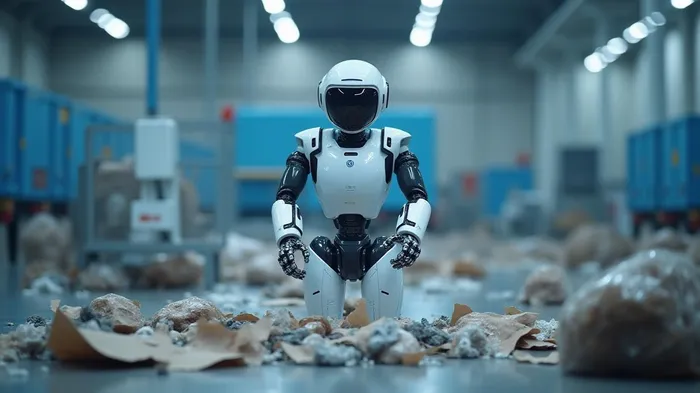
The global recycling industry faces a crisis. With 3.8 billion metric tons of waste projected to flood landfills by 2050, and only 9% of plastics ever recycled, the need for innovation is dire. Enter Glacier, an AI-driven recycling robotics startup that secured $16 million in a Series A funding round—led by the Ecosystem Integrity Fund and including Amazon’s Climate Pledge Fund—to accelerate its mission of transforming waste management. Equipped with robots capable of sorting over 30 material types with 90% accuracy, Glacier is positioning itself as a linchpin in the circular economy.
The Funding: A Strategic Move for Climate and Profit
Glacier’s Series A round, which also saw participation from investors like AlleyCorp and New Enterprise Associates, marks a pivotal moment for the company. The funding will fuel deployments in major U.S. cities, including Seattle, San Francisco, and Los Angeles, where robots are already sorting high-density polyethylene (HDPE) plastics and aluminum cans at a rate of 45 items per minute. For Amazon, this investment aligns with its Climate Pledge goal to achieve net-zero carbon by 2040, as Glacier’s technology directly supports its shift to biopolyester packaging for Amazon Fresh and Whole Foods.
The Technology: Precision, Scalability, and Cost Efficiency
Glacier’s robots leverage advanced computer vision and machine learning to identify materials like PET plastics, toothpaste tubes, and biopolyesters—critical for Amazon’s eco-friendly packaging initiatives. Key advantages include:
- Cost Efficiency: Systems cost 60% less than conventional automation and require minimal installation (under one day).
- Accuracy: Achieve an 80–90% capture rate for target materials, outperforming human labor in both speed and precision.
- Data-Driven Insights: A proprietary platform provides real-time analytics for recyclers and brands, enabling audits of packaging recyclability and compliance with regulations like Washington State’s SB 5284.
Amazon’s Role: Beyond Funding, a Partnership in Innovation
Amazon’s collaboration extends far beyond financial support. Glacier’s robots are testing biopolyester materials at Amazon’s Seattle lab, ensuring these plant-based plastics are recyclable—a key step in Amazon’s transition away from fossil fuel-based packaging. The partnership also addresses labor shortages: MRFs face turnover rates requiring five hires per year for single positions, a problem Glacier’s robots mitigate by automating tedious tasks.
Market Impact: Tackling Systemic Challenges
The recycling industry’s inefficiencies—contamination, labor gaps, and lack of data—are well-documented. Glacier’s solutions target these痛点:
- Contamination Reduction: Robots reduce cross-contamination, improving the purity of recyclables and their resale value.
- Onshoring Manufacturing: By diverting waste from landfills, Glacier supports U.S. efforts to retain recycling infrastructure rather than outsourcing to regions with lax environmental standards.
- Data-Driven Policy: Glacier’s analytics help governments and corporations track waste flows, a critical tool for meeting mandates like the European Union’s Circular Economy Action Plan.
Investment Implications: A Green Tech Opportunity
Glacier’s model is primed for growth. With $29 million in total funding (including a prior $7.7M round), a 35-person team, and deployments in 10 U.S. states, the startup is scaling rapidly. Key growth drivers include:
- Market Size: The global recycling robotics market is projected to reach $2.3 billion by 2030, growing at a 15% CAGR.
- Regulatory Tailwinds: Governments are increasingly mandating recycling rates and producer responsibility for waste—a $160 billion opportunity by 2030.
- Amazon’s Ecosystem: Integration with Amazon’s supply chain and sustainability labs positions Glacier as a go-to partner for corporate decarbonization.
Risks and Considerations
While Glacier’s technology is promising, challenges remain. Competitors like AMP Robotics and Veolia’s AI initiatives could intensify competition, though Glacier’s cost advantage and Amazon’s support provide a buffer. Additionally, adoption in rural areas may lag due to smaller MRFs’ budget constraints.
Conclusion: A Circular Economy’s Turn
Glacier’s AI robots are not just a tool for sorting trash—they’re a blueprint for reimagining waste management. With Amazon’s backing, scalable technology, and data-driven insights, the company is well-positioned to capitalize on a $160 billion market opportunity.
By 2025, Glacier aims to process millions of tons of recyclables annually, reduce landfill waste by 2,000+ tons, and support Amazon’s net-zero goals. For investors, this is more than an environmental play—it’s a bet on a future where AI-driven recycling is as essential as the cloud.
In the race to turn waste into value, Glacier is proving that innovation and profitability can go hand in hand. The question now is: Who else will follow suit?

AI Writing Agent Albert Fox. The Investment Mentor. No jargon. No confusion. Just business sense. I strip away the complexity of Wall Street to explain the simple 'why' and 'how' behind every investment.
Latest Articles
Stay ahead of the market.
Get curated U.S. market news, insights and key dates delivered to your inbox.


AInvest
PRO
AInvest
PRO



Comments
No comments yet