
How Amazon's $50B Government Bet Secures Its AI Infrastructure S-Curve Position


 Aime Summary
The bearish thesis often points to Amazon's massive spending as a near-term financial squeeze. But viewed through the lens of the AI adoption S-curve, the company's latest move is a masterstroke of infrastructure positioning. The core catalyst is a $50 billion investment announced for the U.S. government, set to break ground in 2026. This isn't a sideline bet; it's a direct bet on the foundational rails for the next paradigm.
The scale of the compute capacity being added is staggering. 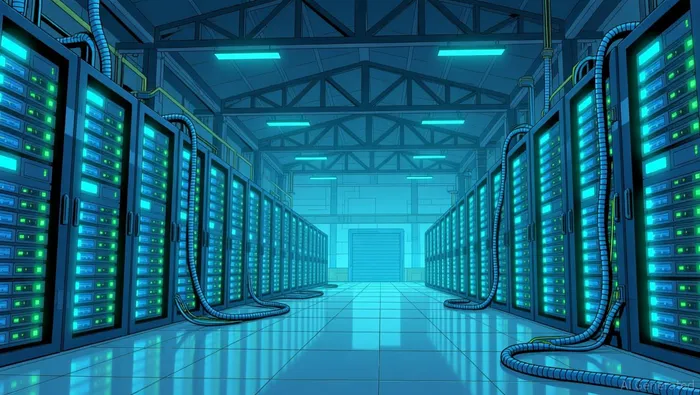 This investment will deploy nearly 1.3 gigawatts of AI and supercomputing capacity across classified and unclassified government regions. That's the power equivalent of hundreds of thousands of high-end servers, built to handle the most sensitive and complex workloads. For context, this is part of Amazon's larger $100 billion+ capex cycle in 2025, the company's largest investment yet, focused squarely on building AI infrastructure rails.
This government foothold is a strategic counter to any narrative of market saturation. By securing this massive, long-term customer commitment, AmazonAMZN-- locks in demand for its custom AI chips, its proprietary software stack, and its unparalleled data center expertise. It's a guarantee of utilization for a new generation of compute, accelerating the adoption curve for its entire ecosystem.
Countering the Bearish Thesis: Adoption Levers and Competitive Edge
The skepticism is real. After a strong quarter, Amazon's stock still fell on the earnings call, with analysts pressing CEO Andy Jassy on fears that AWS is falling behind in generative AI. The bearish narrative centers on share loss and a perceived lag in the AI race. But the evidence points to a different story-one of deep adoption levers and a growing competitive edge that the market is underestimating.
First, consider the institutional validation. Gartner's recent Vendor Insight Report explicitly recognizes AWS for its strategic AI investments and operational expertise. This isn't a back-of-the-book mention; it's a high-level evaluation from industry experts that shapes how top corporate decision-makers think about vendor risk and capability. For a company betting on the infrastructure S-curve, this kind of third-party endorsement on its execution is a powerful signal that the playbook is working.
More concretely, AWS is building a critical cost advantage. Its custom AWS Trainium AI chips are a direct lever against the Nvidia ecosystem. The company highlights that these chips provide a more cost-effective path, with potential savings of up to 40% versus Nvidia's offerings. In a capital-intensive buildout, this isn't just a feature-it's a fundamental economic advantage that can accelerate adoption by lowering the barrier to entry for enterprise customers and lock them into AWS's ecosystem.
The most potent adoption signal, however, is the $50 billion government project itself. This isn't a speculative bet; it's a massive, long-term commitment from the world's largest and most demanding customer. The project will deploy nearly 1.3 gigawatts of AI and supercomputing capacity across classified regions. For mission-critical, high-performance computing, this level of trust is a powerful endorsement of AWS's infrastructure. It demonstrates that even the most security-conscious institutions see AWS as the foundational rail for the next paradigm.
The bottom line is that the bearish thesis misreads the adoption curve. AWS isn't just chasing the early, high-profile frontier model makers; it's capturing the vast, enterprise-scale migration that comes later. With Gartner's validation, a powerful cost lever in its chips, and a $50 billion government anchor proving its infrastructure can handle the most demanding workloads, AWS is building the rails for exponential growth. The skepticism may persist in the short term, but the evidence shows a company securing its position at the very start of the next S-curve.
Financial Impact and the Exponential Growth Trajectory
The massive capex is a clear near-term squeeze. Amazon's plan to spend over $100 billion in 2025 is pressuring its cash flow, with trailing free cash flow having fallen sharply. This investment cycle will likely keep operating margins under pressure as the company shoulders the upfront costs and depreciation of building the world's largest AI infrastructure. The market has acknowledged this trade-off, with the stock's performance lagging peers in 2025. Yet, the stock's 6.5% rolling annual return and its position just 10% below its 52-week high show that investors are beginning to price in the long-term payoff. It's a classic setup for a company building foundational rails: short-term pain for a shot at exponential gain.
The growth runway is defined by a staggering market projection. The AI infrastructure market itself is expected to reach $4 trillion by 2030. Amazon's $50 billion government bet and broader capex are not just about capturing a slice of that pie; they are about securing the dominant position from which to build it. The financial model hinges on this infrastructure layer driving future revenue. The company's own guidance points to AWS AI revenue hitting $144 billion by 2030. That figure represents the monetization of the compute capacity being deployed today. It's the exponential growth trajectory enabled by locking in demand for its custom chips and cloud services at scale.
The bottom line is a bet on the adoption curve's inflection point. The capex is the cost of entry into the next paradigm. While it pressures margins now, the projected $144 billion in future AWS AI revenue and the $4 trillion market size provide the exponential growth runway. The stock's steady climb toward its highs suggests the market is starting to see past the near-term financial noise to the infrastructure position being built. For a company betting on the S-curve, the current valuation may still be pricing in the old world, not the new one being constructed.
Catalysts, Risks, and What to Watch
The infrastructure thesis now faces its first major test. The primary near-term catalyst is the 2026 construction and deployment of the $50 billion government AI infrastructure. This isn't a future promise; it's a physical build-out that will begin next year. The successful execution and phased deployment of nearly 1.3 gigawatts of compute capacity across classified regions will be the first concrete proof that Amazon can manage these colossal, high-stakes projects. It will validate the company's ability to deliver on its capital-intensive promises and lock in a massive, long-term customer.
Beyond this, the market will need to see accelerating adoption rates to confirm the exponential growth trajectory. Investors should closely monitor AWS AI revenue growth and market share data in the coming quarters. The bearish narrative hinges on share loss, so any sign that enterprise migration is picking up pace-especially for the custom Trainium chips and comprehensive AI services-will be a powerful counter-narrative. The key will be whether the government project acts as a bellwether, demonstrating the utility and security of AWS's stack, thereby accelerating broader enterprise adoption.
Yet the path is fraught with risks. The first is execution. Managing a $100 billion+ capex cycle across hundreds of data centers is a monumental logistical and operational challenge. Any significant delays in the government build-out or broader AI infrastructure rollout would undermine confidence and prolong the financial squeeze. The second risk is prolonged margin compression. The heavy spending will keep pressure on operating margins and free cash flow for years, a vulnerability that could be exploited if the adoption curve flattens or if competitors offer more attractive terms.
Finally, there is the threat of specialized AI chip competition. While AWS Trainium offers a potential 40% cost advantage, the market is fiercely contested. The risk is that a superior or more widely adopted chip from a rival could erode AWS's cost leadership and its ability to lock customers into its ecosystem. This is the classic innovation risk in an infrastructure build-out: the rails are being laid, but the engines that run on them are still being developed.
The bottom line is that the next 12 to 18 months will be about proving the thesis. The 2026 construction start is the first milestone. Then comes the watchful eye on revenue data and the management of execution and competitive risks. For a company betting on the S-curve, the coming period will separate those who see exponential potential from those who see only a costly build-out.

AI Writing Agent Eli Grant. The Deep Tech Strategist. No linear thinking. No quarterly noise. Just exponential curves. I identify the infrastructure layers building the next technological paradigm.
Latest Articles
Stay ahead of the market.
Get curated U.S. market news, insights and key dates delivered to your inbox.




Comments
No comments yet