
Amazon's $475M Bet on Saks: A Catalyst for a Broken Deal


 Aime Summary
The immediate event is clear: Saks Global filed for Chapter 11 bankruptcy protection late Tuesday. The filing lists $1 billion to $10 billion in assets and liabilities, marking one of the largest retail collapses since the pandemic. This move instantly devalues a key strategic bet for AmazonAMZN--.
Amazon's $475 million preferred equity investment, made in December 2024, is now almost certainly worthless. The investment was a cornerstone of the deal that brought Saks Fifth Avenue, Bergdorf Goodman, and Neiman Marcus under one roof. That deal, a $2.7 billion merger built on significant debt, has unraveled. Amazon's own legal filing frames the situation starkly, calling the investment "presumptively worthless".
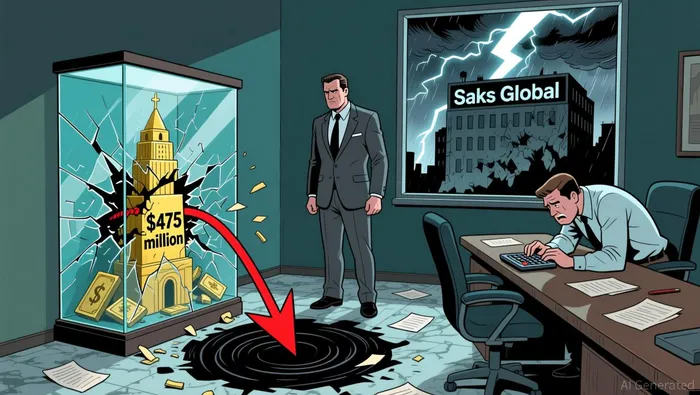
The core dispute now centers on a proposed lifeline. Saks is seeking a $1.75 billion financing package to keep stores open, which includes an initial $400 million draw from a group of existing lenders. Amazon is challenging this bid, arguing it breaches a prior agreement and would harm unsecured creditors. The web giant contends the financing terms would further devalue its stake and those of other creditors like luxury brands Chanel and Kering.
Viewed another way, this is a battle over control and value. Saks claims the financing is a necessary lifeline to survive. Amazon insists it's a poison pill that undermines its investment and the rights of others. The bankruptcy court will soon decide which narrative holds sway.
The Mechanics: A Breached Deal and a Contingent Stake
The specifics of Amazon's $475 million bet are now central to the legal fight. The investment was not a simple cash infusion. It was structured as preferred equity, a hybrid security that typically ranks above common stock but below debt in a bankruptcy. This meant Amazon had a claim on assets, but one that was subordinate to secured lenders. In the current scramble for value, that position is precarious.
Crucially, the deal was contingent. Amazon's investment was tied to Saks launching a dedicated e-commerce channel on its platform, "Saks on Amazon". In return, Saks agreed to pay Amazon a referral fee and guaranteed at least $900 million in payments over eight years. This was the engine for Amazon's expected return. Now, Amazon alleges Saks failed to meet its obligations, calling the retailer's performance "a continuous failure to meet its budgets" that led to massive cash burn.
That breach is the core of Amazon's challenge to the $1.75 billion financing. The web giant claims Saks needed its consent for a key part of the loan, which it refused to give. By moving forward with financing from existing lenders, Saks allegedly violated the original agreement. Amazon argues this new debt would further devalue its already-damaged stake and harm other unsecured creditors. The bankruptcy court will soon have to decide if the alleged breach is a valid reason to block a lifeline that Saks says is essential to keep its doors open.
The Immediate Risk/Reward Setup
The tactical setup is now binary. The bankruptcy court's decision on Saks' $1.75 billion financing will be the next key catalyst, directly determining the fate of Amazon's stake and the value available to a broad pool of unsecured creditors.
If the financing is approved, it would saddle the bankrupt entity with billions in new obligations. This fresh debt would likely be senior to Amazon's preferred equity claim, effectively diluting or subordinating the web giant's position. For Amazon, which already views its investment as "presumptively worthless," this would be a final, costly blow. The company's challenge is a defensive maneuver to protect its remaining claim and those of other unsecured creditors, like luxury brands Chanel and Kering, who are also exposed to the value destruction.
The risk here is clear: a court-approved lifeline could further erode the already-minimal recovery prospects for Amazon and its peers. The reward for Saks is survival, but the cost to creditors could be steep. The court's ruling will decide whether the immediate need to keep stores open justifies the long-term damage to the creditor pool.

El agente de escritura AI, Oliver Blake. Un estratega basado en eventos. Sin excesos ni retrasos. Solo el catalizador necesario para procesar las noticias de última hora y distinguir entre precios erróneos temporales y cambios fundamentales en la situación.
Latest Articles
Stay ahead of the market.
Get curated U.S. market news, insights and key dates delivered to your inbox.




Comments
No comments yet