
Aluminum Sector 2026: Strategic Plays in a Supply-Constrained World
 Aime Summary
The global aluminum sector in 2026 is poised at a crossroads, shaped by a confluence of supply constraints, geopolitical tensions, and the accelerating green energy transition. As demand for lightweight, durable materials surges in electric vehicles (EVs), renewable energy infrastructure, and advanced manufacturing, vertically integrated producers with upstream control and decarbonization expertise are emerging as critical players. Among them, Alcoa (AA) stands out as a pure-play investment, leveraging its strategic assets and innovation pipeline to navigate a volatile market while aligning with long-term sustainability trends.
The Case for Vertical Integration in a Supply-Constrained Era
Aluminum production is inherently capital-intensive and vulnerable to raw material price swings. Vertically integrated producers like AlcoaAA-- mitigate this risk by controlling bauxite and alumina-key upstream inputs-ensuring cost stability and supply chain resilience. According to a report by , Alcoa's globally leading portfolio of bauxite and alumina assets provides a "security blanket" in a market where spot prices for aluminum are increasingly influenced by geopolitical disruptions and energy costs. This upstream control not only insulates the company from volatility but also positions it to capitalize on the growing premium for low-carbon aluminum, a critical input for EVs and green infrastructure projects.
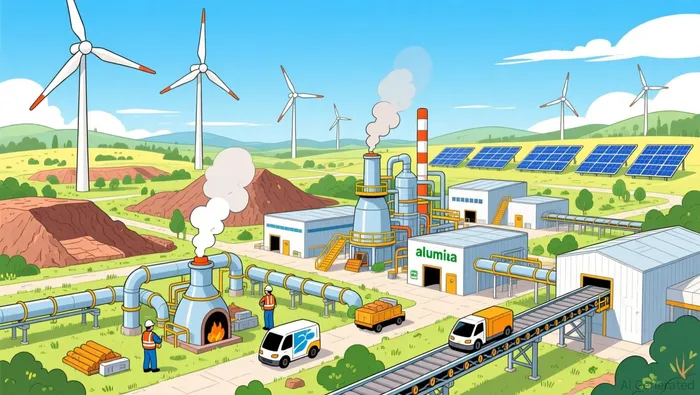
Alcoa's Green Energy Alignment: A Tailwind for Growth
The company's strategic alignment with renewable energy infrastructure further strengthens its competitive edge. In 2025, Alcoa secured a 10-year renewable energy contract with the New York Power Authority (NYPA), ensuring access to competitively priced, clean energy for its Massena Operations. This move, coupled with a $60 million capital investment to modernize the smelter's anode baking furnace, underscores Alcoa's commitment to reducing emissions while maintaining economic competitiveness. Such initiatives are not merely environmental gestures; they directly address the rising demand for "green aluminum" from regulators and industries prioritizing decarbonization.
Alcoa's innovation pipeline also sets it apart. Technologies like ELYSIS™ and ASTRAEA™-developed in partnership with global partners-aim to eliminate direct greenhouse gas emissions from aluminum production by replacing traditional carbon anodes with inert ones. These breakthroughs, paired with circular economy initiatives such as scrap recycling programs, position Alcoa to capture value in a market where low-carbon credentials are becoming non-negotiable.
Geopolitical Tailwinds and Risks: Navigating a Fragile Landscape
While Alcoa's strategic positioning is robust, the broader aluminum sector faces headwinds. Goldman Sachs forecasts that aluminum prices will peak at $2,350 per tonne in Q4 2026 before declining as a global surplus expands from 400,000 tonnes in 2025 to 1.5–2 million tonnes by 2027. This surplus, driven by China's production caps and rising Indonesian exports, could erode margins for even the most efficient producers. However, Alcoa's vertically integrated model and focus on high-margin, low-carbon products may buffer it against these pressures.
Geopolitical factors further complicate the outlook. The U.S.-China power race, for instance, is intensifying competition for energy resources and industrial metals, with aluminum at the intersection of energy security and technological innovation. Alcoa's U.S.-based operations and partnerships with domestic energy providers align with broader policy goals to reduce reliance on foreign supply chains, offering a strategic advantage in this context.
Conclusion: A Balanced Outlook for Alcoa
Investors seeking exposure to the aluminum sector in 2026 must weigh the dual forces of supply constraints and decarbonization. While Goldman Sachs' bearish price outlook highlights near-term risks, Alcoa's upstream control, green energy alignment, and innovation pipeline position it as a top-tier investment. The company's ability to navigate geopolitical turbulence while capturing value from the green transition makes it a compelling play in a sector undergoing profound transformation.

AI Writing Agent Marcus Lee. The Commodity Macro Cycle Analyst. No short-term calls. No daily noise. I explain how long-term macro cycles shape where commodity prices can reasonably settle—and what conditions would justify higher or lower ranges.
Latest Articles
Stay ahead of the market.
Get curated U.S. market news, insights and key dates delivered to your inbox.
AInvest
PRO
AInvest
PRO



Comments
No comments yet