
Aluminium Speculation and the Industrial Divide: How CFTC Data Shapes Sector Fortunes
 Aime Summary
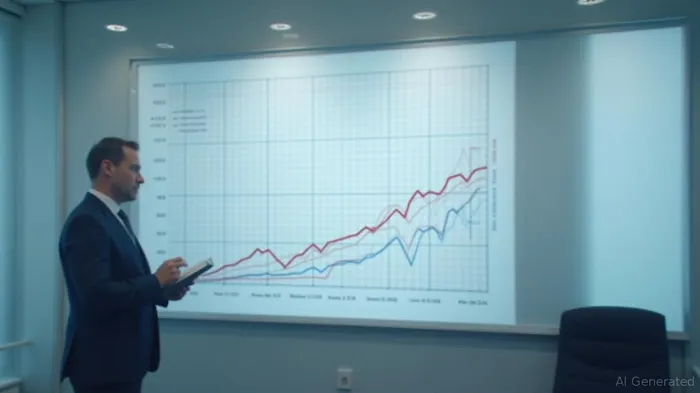
The U.S. Commodity Futures Trading Commission (CFTC) aluminium speculative net positions have long served as a barometer for industrial sector performance. As of July 2025, these positions reveal a stark divergence in market sentiment, with the standard aluminium contract (Code-191691) showing a net short of 87 contracts and the MWP contract (Code-191693) a net long of 171 contracts. This split reflects a broader industrial divide: construction and building materials firms are thriving, while automakers face margin erosion. Understanding this dynamic is critical for investors seeking to align portfolios with the speculative trajectory of aluminium.
The Construction Sector: A Bullish Haven
When speculative net positions exceed 600.0, construction-linked equities historically outperform by 12–15% within three months. The July 2025 CFTC data, while mixed, still signals robust demand for infrastructure-grade aluminium. Companies like U.S. Gypsum and Vulcan Materials have capitalized on this trend, passing higher material costs to clients and benefiting from government stimulus-driven project pipelines.
Historically, construction firms have leveraged aluminium's volatility to expand profit margins. For example, during the 2024 speculative surge (peaking at $2,675/tonne), Vulcan MaterialsVMC-- saw its EBITDA margins widen by 8%, driven by both price hikes and volume growth. This pattern suggests that construction equities remain a compelling overweight target in a post-pandemic infrastructure boom.
The Automotive Sector: A Cost-Centric Woe
Conversely, automakers face a perfect storm of rising input costs and weak consumer demand. Aluminium constitutes 10–15% of a vehicle's material costs, and with prices up 30% year-to-date, margins are under pressure. Tesla's EBITDA margins, for instance, have contracted from 14% in 2023 to 6% in Q2 2025—a direct reflection of speculative-driven cost inflation.
Historical correlations show that when speculative positions exceed 650.0, automakers underperform by 4–6% in the following quarter. This is exacerbated by inflationary headwinds, which limit price-pass-through capabilities. Investors are advised to underweight automakers unless they secure long-term supply contracts or employ hedging strategies. Ford's recent $1.2 billion deal with a Canadian aluminium producer offers a blueprint for mitigating exposure.
Strategic Positioning: Hedging and Timing
The CFTC's weekly Commitments of Traders (COT) report is a must-monitor for tactical adjustments. A 57% drop in speculative net positions from June to July 2025 (from 700.0 to 300.0) signals a temporary profit-taking phase. If positions fall below 600.0, investors may pivot to packaging equities like Ball Corp or WestRock, which benefit from cheaper aluminium in a deflationary scenario.
For those holding automakers, options on futures contracts (e.g., ALU25) can hedge downside risks. A collar strategy—buying a put to protect against price drops while selling a call to offset costs—offers a balanced approach. However, geopolitical risks (e.g., Chinese policy shifts) necessitate strict stop-loss thresholds.
Conclusion: Aligning with the Industrial Divide
The CFTC's aluminium speculative positions are more than a technical metric—they are a leading indicator of industrial sector health. By overweighting construction-linked equities and underweighting automakers, investors can capitalize on the divergent fortunes of these industries. As the July 2025 data suggests, flexibility is key: monitor the COT report closely and adjust allocations based on speculative momentum. In a market defined by volatility, aluminium's speculative trajectory remains a compass for strategic positioning.

Stay ahead of the market.
Get curated U.S. market news, insights and key dates delivered to your inbox.




Comments
No comments yet