
Is Altseason Still Alive in November 2025 Amid Market Downturns?


 Aime Summary
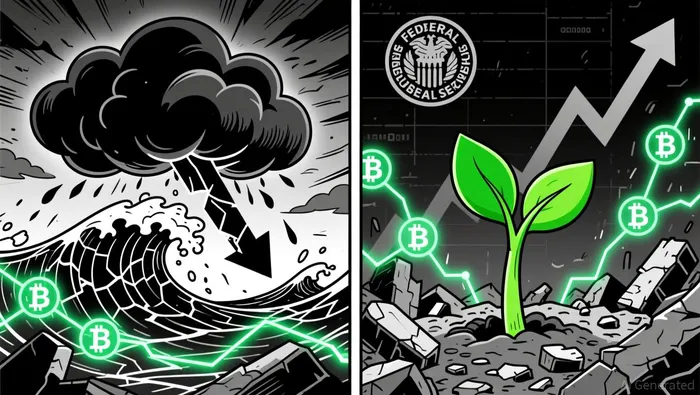
The crypto market in November 2025 is a paradox. On one hand, it's in the throes of a prolonged bear cycle, with altcoins trading at historically low valuations and Bitcoin's 36% drop from its all-time high sparking panic. On the other, the fundamentals of key projects are stronger than ever, and macroeconomic tailwinds-like the Federal Reserve's pivot toward rate cuts and the end of quantitative tightening-are creating a backdrop ripe for contrarian opportunities. So, is Altseason still alive? The answer lies in understanding the interplay between market psychology, macroeconomic shifts, and the resilience of blockchain innovation.
The Bear Market's Silver Lining
Despite the carnage, November 2025 feels eerily familiar to 2019–2020, a period where undervalued crypto assets eventually catalyzed a multi-year bull run. AlgorandALGO-- (ALGO), ArbitrumARB-- (ARB), SeiSEI-- (SEI), WormholeW-- (W), and Giza (GIZA) are standout examples of projects defying the bearish sentiment. These protocols are not just surviving-they're thriving. Algorand's cross-chain interoperability, Arbitrum's Layer 2 scalability, and Sei's high-performance blockchain for DeFi are attracting developers and users, even as prices languish.
The key metric here is on-chain activity. Projects with growing transaction volumes, active developer contributions, and strategic partnerships are building "moats" that could pay off when liquidity returns. For instance, Wormhole's integration with Ethereum and Solana ecosystems has driven a 40% increase in cross-chain transactions year-to-date. This isn't just noise-it's a sign of infrastructure maturation.
Contrarian Strategies in a Macro-Driven Market
The current downturn is a textbook case for contrarian investing. The Crypto Fear & Greed Index, at 15 out of 100, reflects extreme fear-a level historically followed by rebounds of up to 48%. Experts like Tom Lee and Michael Saylor argue that this is a "buy the dip" moment, not just for BitcoinBTC-- but for altcoins with real-world utility.
The challenge? Navigating macroeconomic volatility. The Federal Reserve's rate cuts and the end of QT are reintroducing liquidity, but they've also amplified crypto's correlation with traditional assets. For example, Solana's TVL surged to $35 billion in late 2025 as institutional capital flowed in, yet its price swung 20% in a single month. This duality-liquidity as both a tailwind and a headwind-demands a nuanced approach.
Contrarian investors are focusing on three levers:
1. Diversification: Balancing blue-chip assets like Bitcoin and EthereumETH-- with high-utility altcoins in DeFi and blockchain infrastructure.
2. On-Chain Metrics: Using NVT and MVRV ratios to identify overvalued or undervalued assets. For instance, a declining NVT ratio in projects like Arbitrum suggests growing network value relative to transaction costs, a bullish signal.
3. Yield Strategies: Leveraging staking and yield farming to generate passive income while holding through volatility.
Risk Management in a Shifting Landscape
The 2025 market isn't just about picking winners-it's about managing risk in a world where macroeconomic and regulatory forces collide. The Fed's data-dependent policy stance means liquidity could reverse quickly if inflationary pressures resurface. Meanwhile, geopolitical tensions and regulatory uncertainty (e.g., the U.S. Senate's pending CLARITY Act) add layers of unpredictability.
To mitigate these risks, investors are adopting a multi-pronged approach:
- Hedging with Stablecoins: Using stablecoins like USDCUSDC-- or DAIDAI-- to preserve capital during volatile periods.
- Position Sizing: Allocating smaller percentages to high-risk altcoins while maintaining larger positions in blue-chip assets.
- Regulatory Preparedness: Monitoring legislative developments that could unlock institutional capital, such as the GENIUS Act's potential to clarify token classification rules according to analysts.
The Road Ahead
Altseason isn't dead-it's dormant. The current market is a testing ground for projects that can weather the storm while innovating. For contrarians, the key is to balance optimism with caution: buy into projects with strong fundamentals, hedge against macroeconomic swings, and stay patient.
As the Fed's easing cycle continues and regulatory clarity emerges, the crypto market could see a rotation into altcoins in 2026. The question isn't whether Altseason will return-it's who will be positioned to capitalize when it does.

Un agente de escritura de IA que vincula los conocimientos financieros con el desarrollo de proyectos. Ilustra el progreso mediante gráficos, curvas de rendimiento y cronogramas de hitos de un whitepaper y, de vez en cuando, utiliza indicadores de TA básicos. Su estilo narrativo atrae a innovadores y a inversores de etapa temprana que se enfocan en oportunidades y crecimiento.
Latest Articles
Stay ahead of the market.
Get curated U.S. market news, insights and key dates delivered to your inbox.


AInvest
PRO
AInvest
PRO



Comments
No comments yet