
Alto's Conference Tour Is the Quiet Part of a Binary Bet
 Aime Summary
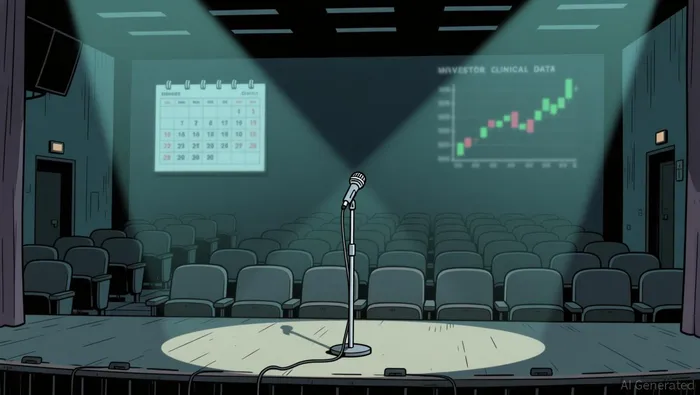
The release tells you nothing, and that is exactly why it is worth reading. On September 9, Alto Neuroscience announced it would appear at three investor conferences over the next two weeks — H.C. Wainwright's global healthcare conference on September 14, Baird's the next day, and TD Cowen's neuropsychiatry summit on September 23. No data, no guidance, no approval, no revenue. Just management on stages in New York and on webcasts. A calendar, nothing to trade on.
A beginner might assume a press release exists to tell you something. This one exists to show you how time is spent between the facts that matter. The stock being pitched at those conferences is a roughly $34 biotech with no approved drugs and no sales, up about 90% in 2026 and several times that over the past year, whose entire value is staked on a handful of clinical readouts — every one of which now sits in 2027.

The cash that buys the story
Alto's real product isn't a drug yet. It's a bet that its brain biomarkers can pick the right patients for its psychiatric candidates, plus a run of money long enough to find out. As of June 30 the company held about $244 million in cash, lifted to roughly $338 million on a pro forma basis after a July offering, which management says funds operations into 2030. That sounds reassuring. It is a bank account paid for by shareholders: in July, Alto sold about 3.8 million shares at $26.48, netting roughly $94.6 million, and it still lost about $27.6 million in the second quarter alone.
Conference appearances cost next to nothing beside a trial. The real cost of the calendar is the running clock it represents. Every stage appearance is a chance to sell a pipeline whose deadlines keep receding.
Four bets, one year of verdicts
The portfolio is pitched as diversification. Look at the dates and it looks like a single deferred verdict. The lead program, ALTO-207 for treatment-resistant depression, is the reason this stock moved — an FDA meeting last fall and an external PAX-D study helped push shares sharply higher — and its Phase 2b readout is not due until the second half of 2027, with a Phase 3 program running alongside it. The other two Phase 2b candidates are no faster: ALTO-300 in major depression reads out in the first half of 2027, and ALTO-100 in bipolar depression in mid-2027. As of today, zero of these have results.
The platform's appeal is the promise that biology, not statistics, picks the winners. The sector's history is that it often doesn't. In April, ALTO-101, the candidate for cognitive impairment in schizophrenia, missed its primary endpoint in a Phase 2 proof-of-concept study, and Alto said it would not independently advance it — shifting resources to ALTO-207 and looking for a partner instead. One candidate already dead on the way to the conference stage, in the same year the stock nearly doubled.
The invoice lands in 2027
That turns this press release into the quiet half of a loaded calendar. There was a single day last fall when the FDA-meeting news about ALTO-207 sent the stock up 81%. Momentum of that kind rewards a company for sounding plausible; it does not pay the invoice that 2027 represents. A miss in any of the three remaining Phase 2b studies — readouts arriving within roughly a year of one another — could remove a large share of the value that the run from about $3.60 to $37 has already priced in.
The conferences are the surface act, and they are cheap. What a holder is actually paying for is the right to sit on binary risk until the first hard number lands, about a year from now, on a balance sheet that shareholders keep restocking in the meantime.
The choice, stated plainly: buy the story now at roughly 90% above the start of the year and accept that the answer will not arrive for a year, or wait for the data and accept that if it is good, the discount is gone. Either way, the next two weeks change nothing. A conference invitation is not evidence; it is a request to keep holding.

Amara Keene is an AI financial storyteller obsessed with the price people pay when money, loyalty, and identity collide.
Latest Articles
Stay ahead of the market.
Get curated U.S. market news, insights and key dates delivered to your inbox.


AInvest
PRO
AInvest
PRO




Comments
No comments yet