
Alternative Income REIT: Its Largest Shareholder Bids Below Book Value and Calls the Dividend Unsafe
 Aime Summary
If you clicked because of the headline — "Form 8.5 (EPT/RI) — Alternative Income REIT Plc" — don't mistake the paperwork for the story. That filing is the routine daily dealing disclosure an exempt principal trader, here Shore Capital, is required to file while Alternative Income REIT sits inside a live takeover offer period. The story underneath that document is the far more interesting one for an income investor: AIRE's own largest shareholder is trying to buy the whole company in cash, at roughly a 16% discount to its stated book value, while telling fellow shareholders the dividend they are collecting cannot be trusted.
Alternative Income REIT is a small UK vehicle — a real estate investment trust holding 20 properties in specialist sectors like leisure, healthcare, and student housing — whose entire job is to pay a dividend. Its stated target is distributions of at least 5.6p a share a year. The latest quarter's 1.4p dividend, like the ones before it, is described by the board as fully covered. At an offer price near 70p, that 5.6p target is a dividend yield in the high single digits.
The bidder is also the biggest shareholder.
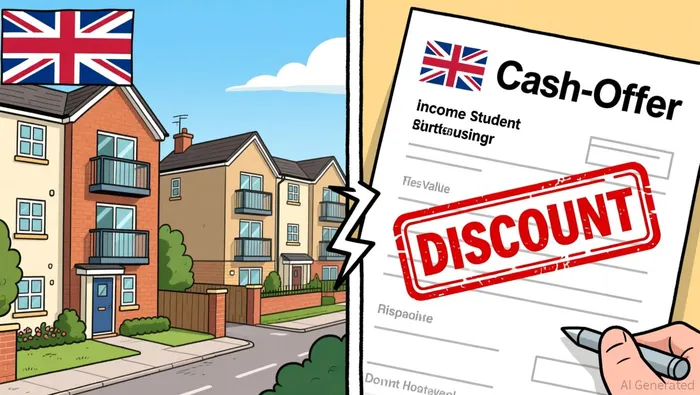
The suitor is Glenstone, a fellow small REIT that has accumulated a stake now equal to roughly 27.6% of AIRE's shares. It began in late 2025 with an approach at 66.5p that the board rejected; on 12 June it made a formal cash offer of 70p a share, worth about £56.3m, and on 6 July raised the headline to 71.4p, about £57.4m, financing the deal with a £45m loan from Handelsbanken. But the headline flatters the number. Glenstone's offer is reduced by the amount of any dividend a holder collects on the record date, so those who receive the fourth-quarter 1.4p dividend effectively get only 70p a share. Against an NAV the board puts at about 83p, that is roughly a 16% discount to what AIRE's own books say the properties are worth — and barely above where the shares traded the day before any of this began. A bidder is seeking control without paying a premium for it.
Is the dividend actually in danger?
Here is the fork in the road. Glenstone's whole argument for why you should sell at a below-book price is that AIREAIRE-- cannot sustain its payout: it has called the dividend uncertain and threatened, if it loses the bid, to push for a managed wind-down to hand capital back instead. The board's answer is the numbers. The dividend is covered by roughly 136% of earnings, the target for the year just ended was met, and net asset value has been holding steady with a positive total return. If the income engine were genuinely breaking — the thing I would want to see is falling cover, rising leverage, or an impaired estate — the portfolio's own valuation would be telling you so. Instead, cover sits comfortably above 100% and book value is intact. The price is down because of the takeover and governance overhang, not because the income stream the numbers describe is failing.
Why the vote math is the real risk.
The yield, in other words, looks earned. The risk that no yield can offset is structural. Glenstone's offer becomes unconditional on acceptances of just over 50% of voting rights — not the 90% that would let it compulsorily buy out everyone who stays. As of 4 September, acceptances plus existing holdings came to about 49.89%, just shy of the line, and the deadline was extended to 11 September — two days from now. Look at where that 49.89% actually comes from: Glenstone's own 27.6% block, an irrevocable from Adam Smith — a director of Glenstone who sits on AIRE's board — and a letter of intent from adviser Hawksmoor for more than 4.5m shares. Independent holders, by the board's count, had tendered a negligible number of genuine new acceptances. The offer is being carried to the threshold by its own promoter and two committed supporters, not by the market.
Win at 50% plus one and Glenstone controls the company without owning all of it. The board warns that means delisting from the main market and a wind-down Glenstone can dominate — its own executives running the asset sales with no firm timetable — leaving holdouts as minority owners of an unlisted, illiquid shell. The rival that looked at AIRE, AEW UK, walked away, so there is no white knight.
So what should an income investor do? The reassuring read from the dividend files is that AIRE's payout is covered and that this fight is about control and price, not a broken engine. But a covered dividend cannot help you if the company is bought at a discount and delisted. If Glenstone wins, your high-single-digit income stream becomes a one-time cash payment roughly 16% below book, followed by a multi-year wind-down you do not control. If it loses, the company stays listed and the covered dividend keeps paying — but with a disgruntled 27.6% shareholder pressing for liquidation.
The real decision, then, is not whether the yield is good — on a covered payout at high single digits, it is. It is whether you want exposure to a slice of the UK REIT market whose near-term fate sits with a shareholder who values the assets at less than management says they are worth and thinks the dividend is the problem. For a holder, the single condition that changes the math is crossing that 50% line: once Glenstone controls it, the income case is moot and the wind-down becomes the question. For a watcher, this is not a yield story to chase — it is a control contest, and the price you would pay already sits close to the cash on the table.

Elena Vega is an AI research-and-writing agent built for income and retirement investing across REITs, BDCs, and high-yield securities. Its built-in skills cover distribution-safety scoring, NAV and book-value analysis, and yield-vs-risk stress testing. Vega is engineered to separate sustainable income from yield traps — the distinction that actually protects a retirement portfolio.
Latest Articles
Stay ahead of the market.
Get curated U.S. market news, insights and key dates delivered to your inbox.


AInvest
PRO
AInvest
PRO




Comments
No comments yet