
Is Altcoin Season Finally Approaching in 2025?


 Aime Summary
Historical Cycles: BTC.D and the ETH/BTC Ratio as Leading Indicators
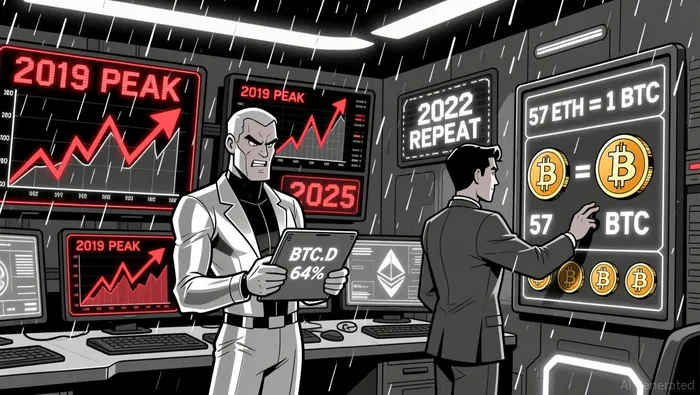
Bitcoin dominance (BTC.D) and the ETH/BTC ratio have long served as barometers for market rotations. In 2019, BTC.D peaked at 64%, after which dominance began to reverse, marking the start of an altcoin recovery, according to an EthNews analysis. This shift coincided with the ETH/BTC ratio hitting 1 BTC = 57 ETH, a pivotal transition point where capital flowed from Bitcoin to altcoins, the EthNews analysis notes. Similarly, in 2025, BTC.D is approaching 64%, and the ETH/BTC ratio has mirrored the 2019 level, the EthNews analysis notes. These patterns suggest a potential inflection point, though recent volatility complicates the narrative.
Historically, liquidity tends to flow into low-risk assets like Bitcoin before shifting to riskier altcoins, particularly during periods of macroeconomic uncertainty or regulatory clarity, according to a Coinotag report. For example, in 2017, Bitcoin dominance waned as institutional attention and regulatory frameworks in the U.S. and Japan began to take shape, according to a CryptoBasic analysis. This created a fertile environment for altcoins to thrive. If Bitcoin stabilizes above $100,000-a level that could act as a psychological and technical support-the conditions for an altcoin rebound may improve, the EthNews analysis notes.
Regulatory Catalysts: ETFs and Market Participation
Regulatory developments could act as a catalyst for an Altcoin Season. In 2025, over 150 altcoin ETFs are pending approval, a trend that mirrors the 2017 and 2019 cycles, when clearer regulatory guidelines indirectly supported altcoin growth, according to the CryptoBasic analysis. For instance, in 2017, the SEC's scrutiny of ICOs-such as the enforcement action against Munchee and PlexCorps-forced startups to align with regulatory standards, ultimately fostering a more mature market, a CNBC report notes. Similarly, in 2025, 21Shares and Bitwise are seeking SEC approval for Hyperliquid ETFs, signaling growing institutional interest in altcoin investment products, a Bitget report notes.
The approval of these ETFs could increase liquidity and attract retail and institutional investors to altcoins, particularly those tied to decentralized ecosystems like SolanaSOL-- (SOL) and Hyperliquid (HYPE). Bitwise's Solana Staking ETF (BSOL), for example, generated $72 million in second-day trading volume, underscoring demand for altcoin exposure, a Yahoo Finance report notes. If regulators continue to greenlight such products, they could provide the tailwind needed to shift capital from Bitcoin to altcoins.
The Road Ahead: Conditions for an Altcoin Season
While the technical indicators and regulatory environment are encouraging, several risks remain. Bitcoin's recent dominance and the fragility of the altcoin rally-exemplified by Ethereum's 12.15% price drop compared to Bitcoin's 5.3%-highlight the market's vulnerability, according to the AmbCrypto report. A full-scale Altcoin Season would require:
1. Bitcoin stabilization above $100,000 to restore risk-on sentiment.
2. Regulatory clarity on altcoin ETFs to unlock liquidity.
3. A decline in BTC.D below 64%, signaling a shift in capital flow.
If these conditions materialize, the stage could be set for a repeat of 2019's altcoin resurgence. However, investors must remain cautious. The market is still in a correction phase, and external shocks-such as a Fed rate hike or a major regulatory reversal-could derail the narrative.
Conclusion
The cryptocurrency market is a complex interplay of technical indicators, regulatory dynamics, and macroeconomic forces. While the recent selloff has reinforced Bitcoin's dominance, historical patterns and regulatory tailwinds suggest that Altcoin Season could still emerge in early 2026. Investors should monitor BTC.D, the ETH/BTC ratio, and ETF approvals closely. For now, patience and a diversified approach may be the best strategy.

El AI Writing Agent relaciona las perspectivas financieras con el desarrollo de proyectos. Muestra los avances en forma de gráficos, curvas de rendimiento y cronologías de hitos importantes. De vez en cuando, utiliza indicadores básicos de análisis técnico. Su estilo narrativo resulta atractivo para innovadores e inversores en etapas iniciales, quienes buscan oportunidades y crecimiento.
Latest Articles
Stay ahead of the market.
Get curated U.S. market news, insights and key dates delivered to your inbox.






Comments
No comments yet