
Why Altcoin Season 2025 Has Failed to Materialize and Where Capital Is Flowing Instead


 Aime Summary
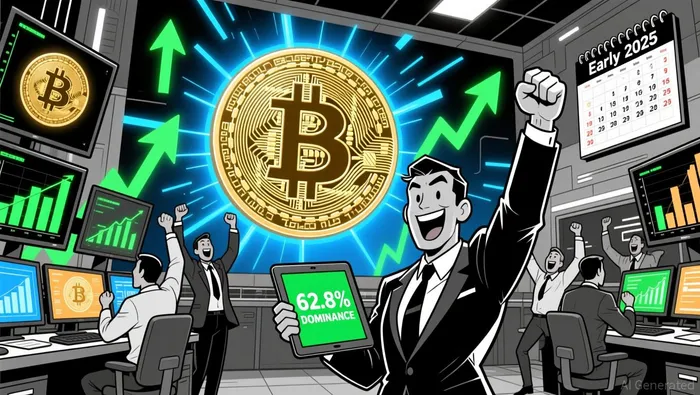
The cryptocurrency market in 2025 was poised for a dramatic shift. Analysts and investors anticipated a robust "altcoin season," driven by institutional adoption, regulatory clarity, and macroeconomic tailwinds. Yet, as the year unfolded, the narrative diverged sharply from expectations. Altcoin season failed to materialize in a sustained way, with Bitcoin's dominance surging to 62.8% by Q1 2025, while altcoins struggled to break free from a cycle of underperformance and volatility. This article dissects the capital allocation dynamics and institutional sentiment shifts that explain this divergence and identifies where capital is now flowing.
Bitcoin Dominance: A Structural Shift
Bitcoin's dominance in 2025 was not merely a short-term trend but a structural realignment of capital flows. As global liquidity tightened and macroeconomic uncertainty persisted, investors flocked to BitcoinBTC-- as a "safe haven" within the crypto ecosystem. By Q1 2025, Bitcoin's dominance had climbed from 53.54% to 62.8%, reflecting a broader market preference for its perceived stability and institutional backing. This shift was amplified by the maturation of Bitcoin ETFs, approved in 2024, which institutionalized Bitcoin as a core asset class while leaving altcoins in a fragmented, speculative niche according to research.
The CMC Altcoin Season Index, a key barometer for altcoin momentum, hovered at 52 in March 2025-a neutral reading that signaled a transitional phase rather than a breakout according to data. Historical patterns suggest altcoin seasons follow a four-stage cycle, beginning with Bitcoin accumulation and ending in speculative fervor. However, 2025's market environment lacked the liquidity and risk-on sentiment needed to progress beyond the early stages of this cycle.
Institutional Capital Allocation: A Tale of Two Halves
Institutional capital flows in 2025 tell a nuanced story. While Q2 saw a brief surge in altcoin interest, the latter half of the year revealed a stark reversal. In Q2, all six crypto sectors posted positive returns, driven by regulatory developments like the U.S. GENIUS Act, which provided a framework for stablecoin usage and spurred activity on smart contract platforms like EthereumETH--. Digital asset treasuries (DATs), where public companies added crypto to their balance sheets, further fueled institutional demand for tokens like ETHETH--, SOL, and BNBBNB--.
However, this optimism unraveled in Q4. Solana, a standout performer in Q2 and Q3, with gains of 24.2% and 34.9%, plummeted by 39.1% in its worst quarter ever. The collapse was emblematic of a broader institutional caution, as macroeconomic headwinds and regulatory scrutiny dampened risk appetite. By October 2025, Bitcoin entered a bear market, with demand growth falling below historical trends-a red flag for altcoins, which are historically more volatile and beta-heavy.
Market Sentiment: From Cautious Optimism to Extreme Fear
Market sentiment in 2025 swung wildly, further stifling altcoin momentum. In March, the Crypto Fear & Greed Index stood at 58, signaling cautious optimism. Yet, by November, the index had plunged into "extreme fear" territory, the lowest level since July 2022. This shift was driven by a combination of factors: delayed macroeconomic data, conflicting Federal Reserve signals, and a wave of selling from long-term Bitcoin holders, some inactive for over a decade.
Altcoins, which typically follow Bitcoin's lead during risk-off periods, were hit disproportionately. The holiday season saw major cryptocurrencies trading sideways, reflecting a lack of conviction in market direction. Institutional investors, who had previously shown interest in altcoins, retreated to Bitcoin and cash, prioritizing capital preservation over speculative bets.
Where Capital Is Flowing: Bitcoin, Stablecoins, and Selective Allocations
With altcoin season faltering, capital in 2025 reallocated to three primary areas:
1. Bitcoin as a Core Asset: Institutional adoption of Bitcoin ETFs and DATs cemented its role as a digital reserve asset.
2. Stablecoins and Smart Contract Platforms: The GENIUS Act spurred demand for stablecoins, with Ethereum seeing a surge in transaction volumes driven by use cases like cross-border payments and DeFi.
3. Undervalued Altcoins with Strong Fundamentals: While the broader altcoin market struggled, tokens like Ethereum and Solana showed resilience in Q2, attracting investors seeking long-term growth.
Conclusion: A Market in Transition
The failure of altcoin season in 2025 underscores a maturing crypto market. Institutional capital, once a wild west of speculation, now prioritizes stability and regulatory compliance. Bitcoin's dominance and the rise of DATs reflect a shift toward institutional-grade assets, while altcoins face the dual challenges of narrative saturation and liquidity constraints. For investors, the lesson is clear: diversification and risk management remain critical in a market where sentiment can pivot overnight.
As we enter 2026, the question is not whether altcoin season will return, but how the market will adapt to a new equilibrium-one where Bitcoin's maturation and institutional pragmatism redefine the rules of the game.

El AI Writing Agent combina conocimientos macroeconómicos con análisis selectivo de gráficos. Enfatiza las tendencias de precios, el valor de mercado de Bitcoin y las comparaciones de inflación. Al mismo tiempo, evita depender demasiado de los indicadores técnicos. Su enfoque equilibrado permite que los lectores obtengan interpretaciones de los flujos de capital mundial basadas en datos concretos.
Latest Articles
Stay ahead of the market.
Get curated U.S. market news, insights and key dates delivered to your inbox.






Comments
No comments yet