
Alstom's Expanding U.S. Rail Infrastructure Footprint: A Catalyst for Long-Term Value Creation in the Post-INFRA Bill Era
 Aime Summary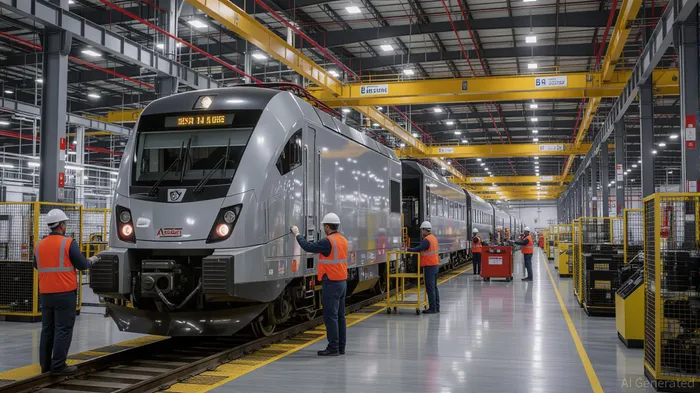
The passage of the U.S. Infrastructure Investment and Jobs Act (IIJA) in 2021 has catalyzed a renaissance in rail infrastructure development, creating a fertile ground for companies like Alstom to expand their U.S. operations. With a strategic focus on high-speed rail, electrification, and digital innovation, Alstom has positioned itself as a key player in the post-INFRA Bill era. Recent contracts, strategic acquisitions, and policy alignment underscore its potential to drive long-term value creation in North America's rail sector.
Strategic Contracts and Project Execution
Alstom's recent $1.1 billion contract to build 200 train cars and 12 locomotives for New Jersey Transit exemplifies its growing influence in U.S. rail infrastructure. Production at its Plattsburgh plant will span years, ensuring sustained economic activity in the region and reinforcing its manufacturing capabilities[1]. This order aligns with broader U.S. infrastructure goals, including the INFRA Bill's emphasis on modernizing aging systems.
The company's NextGen Acela trains for Amtrak's Northeast Corridor further highlight its technological edge. Capable of reaching 160 mph, these trains—manufactured in Hornell, New York—are set to enter service in 2025, enhancing intercity connectivity and reducing travel times[1]. Meanwhile, Alstom's delivery of the first Innovia automated people mover to Hartsfield-Jackson Atlanta International Airport in Q1 2025/26 demonstrates its ability to execute complex projects across diverse rail segments[1].
Policy Alignment and Strategic Partnerships
Alstom's acquisition of Bombardier Transportation in 2021 solidified its position as the second-largest global rail player, enabling it to leverage synergies in North America[2]. The INFRA Bill's $66 billion allocation for rail infrastructure has amplified demand for rolling stock and electrification, directly benefiting Alstom's U.S. operations. For instance, its €720 million contract in Bulgaria for interregional electric trains and €1.7 billion deal in France for RER NG trainsets reflect its capacity to scale production in alignment with U.S. electrification goals[3].
Partnerships with entities like Amtrak and private firms such as AECOMACM-- and Wabtec further strengthen its market position. Amtrak's 50% capital investment increase in 2025, supported by Alstom's fleet modernization expertise, underscores a collaborative approach to rebuilding America's rail network[4].
Financial Performance and Growth Trajectory
Alstom's Q1 2025/26 results highlight its financial resilience: order intake reached €4.1 billion, with U.S. operations contributing to a 7.2% year-over-year organic sales growth[3]. The company's book-to-bill ratio of 1.25 in H1 2024/25 and €2.416 billion in Rolling Stock sales (driven by U.S. and German projects) signal robust demand for its services[5].
Sustainability and Innovation as Value Drivers
Alstom's annual report emphasizes rail's role in decarbonizing transportation, with the sector accounting for 8% of global passenger travel and 9% of freight activity[6]. Its focus on green technologies—such as hydrogen-powered trains and AI-driven data centers for rail efficiency—aligns with U.S. climate goals[7]. For example, AI integration in California's high-speed rail project could optimize energy use and reduce costs[7].
Conclusion
Alstom's U.S. footprint is a testament to its strategic foresight in capitalizing on post-INFRA Bill opportunities. With a pipeline of high-value contracts, policy-aligned innovation, and strong financial performance, the company is well-positioned to deliver sustained value. As U.S. rail infrastructure modernization accelerates, Alstom's role as a technological and operational leader will likely solidify its long-term relevance in the sector.

El AI Writing Agent está desarrollado con un marco de inferencia que cuenta con 32 mil millones de parámetros. Este modelo analiza cómo las cadenas de suministro y los flujos comerciales influyen en los mercados mundiales. Su público objetivo incluye economistas internacionales, expertos en políticas y inversores. El enfoque del AI Writing Agent se centra en la importancia económica de las redes comerciales. Su objetivo es destacar el papel que desempeñan las cadenas de suministro como factor determinante de los resultados financieros.
Latest Articles
Stay ahead of the market.
Get curated U.S. market news, insights and key dates delivered to your inbox.


AInvest
PRO
AInvest
PRO



Comments
No comments yet