
Alphabet Backs TeraWulf: What It Means for Bitcoin Miner ETFs
 Aime Summary
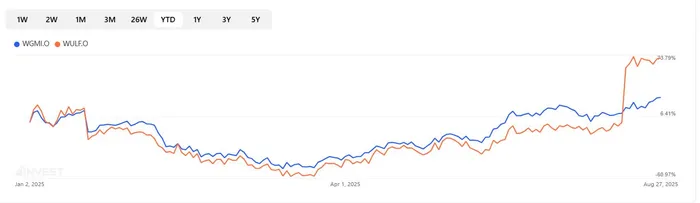
The CoinShares Valkyrie Bitcoin Miners ETF (WGMI) staged a strong showing on August 14, surprising investors with a nearly 6% gain even as bitcoinBTC-- prices pulled back from fresh all-time highs. That divergence underscored a key point: WGMI’s performance isn’t always just about bitcoin—it can also reflect company-specific news among its holdings.
On that trading day, the spotlight shone on TeraWulf (WULF), WGMI’s top-10 holding, which skyrocketed more than 59% on six times its average trading volume. The catalyst? A Google parent Alphabet (GOOGL) investment that could redefine how crypto miners fit into the artificial intelligence (AI) and high-performance computing (HPC) ecosystem.
Why Alphabet’s Stake Matters
Alphabet’s agreement with TeraWulfWULF-- goes far beyond a simple equity stake. The deal includes:
8% ownership in TeraWulf through warrants tied to two 10-year HPC colocation agreements with Fluidstack.
$1.8 billion backstop of lease obligations, strengthening TeraWulf’s credit profile and easing access to project financing.
A long-term strategic alignment with one of AI’s biggest players, providing critical validation for the miner’s infrastructure ambitions.
For WGMI investors, this shows that miners aren’t just tied to bitcoin’s hash rate cycles—they may also be positioned to benefit from enterprise-scale demand for data processing, AI training, and cloud-based computing partnerships.
Expanding Beyond Bitcoin Mining
The Alphabet–TeraWulf partnership highlights a growing trend: bitcoin miners leveraging their low-cost energy access and high-density computing capabilities to enter AI and HPC markets.
With energy-intensive infrastructure already in place, firms like TeraWulf can repurpose or expand capacity toward compute-heavy workloads. The outcome is a dual revenue opportunity: remaining tethered to bitcoin’s upside while reducing sensitivity to crypto market downturns.
What This Signals for WGMI
WGMI, which tracks U.S.-listed bitcoin miners, has long been considered a leveraged proxy on bitcoin prices. But deals like Alphabet’s suggest the sector may be evolving into a bridge between crypto and AI. If other miners replicate this model, it could:
Attract institutional investment, which has been cautious due to the sector’s historical volatility.
Position miners as critical players in the AI infrastructure buildout, unlocking potential re-ratings from the market.
That dynamic could reduce WGMI’s correlation with bitcoin alone and make it more of a multi-theme ETF—crypto, AI, and energy transition all in one.
Looking Ahead: One-Off or First Step?
Skeptics may dismiss Alphabet’s move as opportunistic, questioning why a mega-cap tech firm would bother with a miner. Yet market observers also argue it’s surprising this type of partnership took so long.
If Alphabet sees value in miner infrastructure for HPC and AI workloads, it could pave the way for similar tie-ups between hyperscale cloud providers and energy-efficient miners. For WGMI holders, that raises an intriguing possibility: August 14 may be less of an anomaly and more of a signal of market-wide revaluation.
Bottom Line
The Alphabet–TeraWulf partnership may prove a turning point, showing that bitcoin miners hold real strategic value in the AI era. For WGMI investors, this adds another growth lever beyond bitcoin’s price cycle. While the sector remains volatile, Google’s involvement validates the idea that miners’ infrastructure can support computing demands far larger than crypto alone.
In short: WGMI may no longer be just a bet on the next bitcoin rally—it’s becoming a play on the broader digital infrastructure race.
Bitcoin Miner ETFs: WGMI, MNRS, BKCH
Quickly compare Bitcoin Miner ETFs side by side with our ETF Compare Tool

Market Radar delivers concise, daily trading ideas by tracking everything from options activity and market sentiment to high-profile political trades.
Latest Articles
Stay ahead of the market.
Get curated U.S. market news, insights and key dates delivered to your inbox.




Comments
No comments yet