
Alphabet Accelerates AI Infrastructure Expansion, Targets 1,000× Compute Growth by 2029 as Hyperscaler Capex Surges
 Aime Summary
Alphabet Inc. is accelerating its AI infrastructure expansion, . The strategy, announced during an internal all-hands meeting, underscores the urgency to address bottlenecks in products like Gemini 3 and Veo, as demand for AI-driven capabilities intensifies across industries. The plan aligns with a broader industry trend, as major hyperscalers including MicrosoftMSFT--, AmazonAMZN--, and MetaMETA-- have similarly escalated capital expenditures, .
Aggressive Compute Expansion Strategy
Google's vice president of cloud, , emphasized the need to "double every 6 months" to maintain competitiveness, framing AI infrastructure as the most critical and costly element of the AI race. , a goal reiterated by CEO and CFO during the November 6 meeting. The announcement followed Alphabet's Q3 results, which exceeded Wall Street forecasts, , with further increases expected in 2026.
Infrastructure Efficiency and Innovation
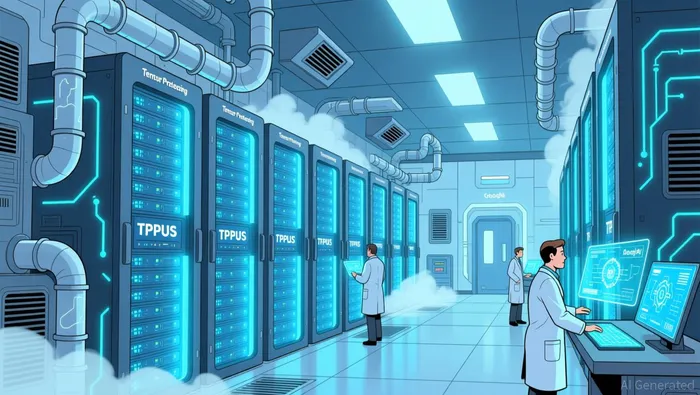
To meet this ambitious target without outspending rivals, Google is prioritizing architectural optimization and custom silicon. The recently launched Ironwood TPU, the seventh-generation Tensor Processing Unit, is cited as a key enabler, . Amin highlighted the integration of smarter data center designs, advanced AI models, and DeepMind's research as pillars of the strategy. , storage, and networking capabilities while maintaining cost and energy efficiency.
Financial Commitment and Market Position
Google Cloud, , is central to this effort. , , underscores the scalability of its infrastructure-as-a-service (IaaS) and platform-as-a-service (PaaS) offerings. Despite capex outpacing operating income growth, CFO Anat Ashkenazi defended the strategy, citing opportunities in cloud adoption and enterprise migration from traditional data centers. The company's balance sheet flexibility is positioned as a buffer against market volatility.
Long-Term Strategic Considerations
acknowledged concerns about an AI bubble, acknowledging the "zeitgeist" of market skepticism but cautioning against underinvestment. He cited compute constraints as a limiting factor for products like Veo, where distribution challenges outweighed development achievements. While competitors like Microsoft and Amazon have also scaled capex, Google's focus on efficiency over sheer spending aims to differentiate its approach. The company's ability to sustain this trajectory will depend on maintaining its edge in AI research, infrastructure innovation, and enterprise cloud adoption.
Infrastructure and Efficiency Breakdown
Capex and Revenue Trends
Backtesting Strategy

Stay ahead of the market.
Get curated U.S. market news, insights and key dates delivered to your inbox.
AInvest
PRO
AInvest
PRO



Comments
No comments yet