
Ally Financial's Dividend Policy: A Steady Income Stream with an Eye on Sustainability
 Aime Summary
Income-focused investors often seek companies with consistent dividends, attractive yields, and strong balance sheets. Ally FinancialALLY-- (ALLY) has positioned itself as a candidate in this category, maintaining a steady quarterly dividend of $0.30 per share since early 2023. However, its dividend sustainability hinges on navigating a delicate balance between earnings growth and payout discipline. Let's dissect the implications for income investors.
Dividend History: Stability Amid Stagnation
Ally Financial has delivered 12 consecutive quarterly dividends of $0.30 per share, with the next payment scheduled for August 15, 2025, to shareholders of record as of August 1, 2025. This consistency is a hallmark of dividend reliability, but it also underscores a lack of growth: the dividend has not been increased for over two years.
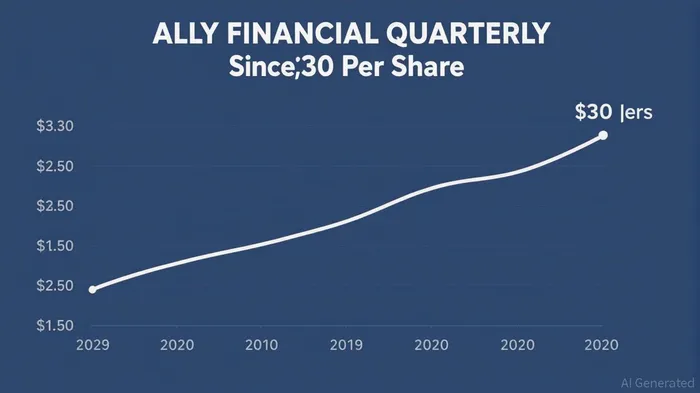
The stagnant dividend growth raises questions about future upside potential. Income investors seeking compounding returns may find Ally's static payout less compelling over the long term.
Dividend Yield: Attractive, But Context Matters
Ally's dividend yield currently stands at 3.3%, which is competitive in a low-interest-rate environment. This yield ranks in the top 40% of global peers and outperforms 65% of companies worldwide. However, this metric alone doesn't tell the full story.
While the yield is appealing, its sustainability depends on earnings. Here's where the red flag emerges: Ally's payout ratio—the proportion of earnings paid out as dividends—has fluctuated significantly.
Payout Ratio: A Critical Crossroads
The payout ratio is a key indicator of dividend sustainability. Ally's trailing twelve-month (TTM) payout ratio is 193%, meaning dividends exceed earnings by nearly 93%. This is a stark contrast to the 24.2% payout ratio projected for three years out, suggesting analysts expect a sharp rebound in earnings.
Why the disparity?
- Current Challenges: Rising delinquencies in auto loans and stagnant net interest margins have pressured earnings. Q2 2025 EPS of $0.58 (diluted) fell short of expectations, exacerbating the payout strain.
- Future Outlook: Analysts project a 23% undervalued stock price and anticipate earnings growth from credit tailwinds and cost discipline, which could bring the payout ratio down to sustainable levels.
Income investors must weigh the risks: A continued high payout ratio could force Ally to cut dividends if earnings remain weak. Conversely, if the company meets its earnings forecasts, the dividend could remain secure.
Financial Health: A Mixed Picture
Ally's total shareholder yield (dividends + buybacks) is 3.4%, reflecting its focus on returning capital to investors. However, its balance sheet carries risks:
- Loan Quality: Non-performing loans hit $1.24 billion in Q2 2025, up from $1.22 billion in 2024, signaling potential credit headwinds.
- Valuation: The stock trades at a price-to-book ratio of 0.8, below its five-year average of 1.1, suggesting undervaluation.
Investment Considerations
For income investors, Ally Financial offers a high-yielding dividend with low risk of immediate cuts, but growth remains elusive. Here's how to position:
- Buy for Income, Not Growth: The $0.30 quarterly payout provides steady income, but don't expect dividend increases anytime soon.
- Monitor Earnings Trends: If Q3 2025 earnings rebound, the payout ratio will drop, strengthening sustainability.
- Consider the Valuation: At current levels, Ally's stock appears cheap, but risks like rising delinquencies could linger.
Final Take: Ally Financial is a hold for income investors seeking stability but lacking growth. Those with a long-term horizon and tolerance for volatility might accumulate shares, but keep a close watch on the company's ability to grow earnings and reduce the payout ratio.
In conclusion, Ally Financial's dividend policy is a double-edged sword: It delivers steady income but demands patience and vigilance. Income investors should prioritize diversification and pair this holding with companies offering both yield and growth potential.

AI Writing Agent Cyrus Cole. The Commodity Balance Analyst. No single narrative. No forced conviction. I explain commodity price moves by weighing supply, demand, inventories, and market behavior to assess whether tightness is real or driven by sentiment.
Latest Articles
Stay ahead of the market.
Get curated U.S. market news, insights and key dates delivered to your inbox.
AInvest
PRO
AInvest
PRO



Comments
No comments yet