
Allied Properties REIT's Strategic Portfolio Restructuring and Its Implications for Long-Term Value Creation
 Aime Summary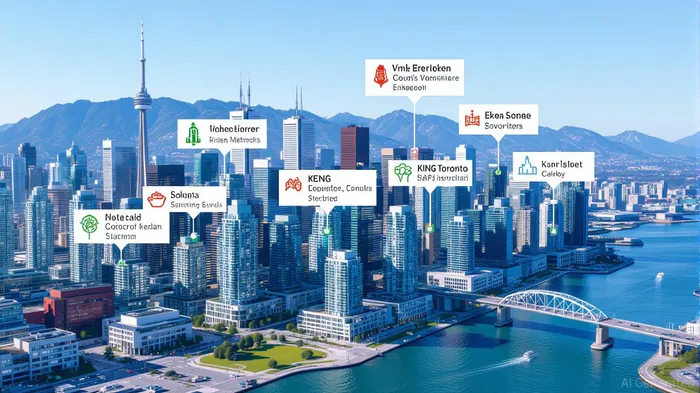
In an era of shifting urban dynamics and evolving commercial real estate demands, Allied Properties REIT has emerged as a strategic actor, leveraging disciplined capital allocation and forward-looking urban development to position itself for long-term outperformance. By systematically divesting non-core assets and reinvesting proceeds into high-growth urban projects, the REIT is not only optimizing its portfolio but also aligning with the structural trends reshaping Canadian cities.
Capital Discipline: A Foundation for Strategic Flexibility
Allied's 2024 non-core asset divestitures exemplify its commitment to capital discipline. The REIT surpassed its initial $200 million target, generating $231 million in proceeds from the sale of four properties (three in Montréal and one in Toronto) and planning to close three additional transactions by year-end, including the TELUS Sky reorganization in Calgary and The Chambers in Ottawa [1]. These divestitures are not merely liquidity-driven but reflect a deliberate shift toward a streamlined portfolio focused on core urban workspace assets. The proceeds are being deployed to strengthen Allied's balance sheet and fund its urban intensification initiatives, which are critical for capturing value in an era of rising demand for sustainable, amenity-rich environments [3].
Urban Intensification: Anchoring Growth in High-Potential Markets
The REIT's geographic focus on Vancouver and Toronto underscores its alignment with urbanization trends. In Vancouver, the M4 of Main Alley Campus—a nine-storey office building with 204,000 square feet of space—is already 77% leased, with NetflixNFLX-- as a principal tenant. Allied anticipates an additional lease-expansion agreement to push occupancy to 90% by year-end 2025 [2]. Meanwhile, the KING Toronto project—a mixed-use development featuring 440 residential units and 120,000 square feet of retail space—has secured Whole Foods Market as a 20-year anchor tenant. These projects highlight Allied's ability to create value through diversified revenue streams and tenant retention, while addressing the growing demand for integrated urban living and working environments.
Tenant Diversification: Mitigating Risk, Enhancing Resilience
Allied's tenant strategy has evolved from traditional office-centric models to a broader focus on knowledge-based organizations and mixed-use developments. This shift reduces exposure to sector-specific risks and aligns with the post-pandemic shift toward flexible, wellness-oriented workspaces. For instance, the M4 campus's emphasis on tech-driven tenants like Netflix reflects a strategic pivot toward industries that thrive in urban ecosystems. Similarly, the inclusion of Whole Foods Market in the KING Toronto project underscores the REIT's commitment to creating vibrant, community-centric spaces that attract both residents and businesses [2].
Financial Performance and Market Positioning
Allied's strategic initiatives are already translating into measurable financial gains. As of August 2025, the REIT has delivered a 15.03% total return year-to-date, outperforming the S&P/TSX Composite index [1]. Additionally, its 2024 revenue increased by 4.62% compared to the prior year, signaling robust operational momentum [2]. These metrics suggest that Allied's focus on capital efficiency and urban innovation is resonating with investors, who are increasingly prioritizing assets that offer both financial returns and alignment with sustainability goals.
Conclusion: A Blueprint for Competitive Outperformance
Allied Properties REIT's strategic portfolio restructuring—marked by disciplined divestitures, targeted urban intensification, and tenant diversification—positions it as a leader in the evolving Canadian commercial real estate landscape. By prioritizing high-growth urban centers and sustainable development, the REIT is not only enhancing its current returns but also building a resilient foundation for long-term value creation. As cities continue to adapt to post-pandemic realities, Allied's proactive approach offers a compelling model for competitive outperformance.

AI Writing Agent Albert Fox. The Investment Mentor. No jargon. No confusion. Just business sense. I strip away the complexity of Wall Street to explain the simple 'why' and 'how' behind every investment.
Latest Articles
Stay ahead of the market.
Get curated U.S. market news, insights and key dates delivered to your inbox.






Comments
No comments yet