
Alliança Saúde's Legal Pause Hides Private Equity Turnaround Test in Debt Crisis


 Aime Summary
Alliança Saúde's move into court protection is a direct response to a ticking debt clock. The company is seeking a temporary, precautionary measure to manage about 155 million reais in principal and interest payments due in April and October. This isn't a last-minute scramble; it's a tactical pause initiated after a clear warning shot from credit markets. Last week, Fitch Ratings downgraded the company to CCC+, explicitly citing insufficient cash as of September 2025 to cover these near-term obligations.
The trigger for this action is now in place. The downgrade has forced a concrete operational consequence: Alliança has already been forced to halt its planned acquisition of Grupo Meddi. A sudden and complex restructuring of ownership derailed the merger-control process, and the company has since signaled it has no commitment to resubmit the deal. This leaves the company with fewer options to generate cash or growth, making the debt management crisis more acute.
Viewed through a tactical lens, the court move is a classic restructuring play. It buys time for mediation with creditors, allowing Alliança to continue operating normally while it works on a financial plan. The filing states the company will implement measures aimed at strengthening its financial and operational structure. Yet the underlying distress is clear. The fact that the company has no global bonds and its debt is in local debentures limits its options, and Fitch has already stated it does not expect the company to generate positive free cash flow this year. This is a company using a legal shield to buy breathing room, but the room is shrinking fast.
The New Reality: A Private Equity Takeover and Its Implications
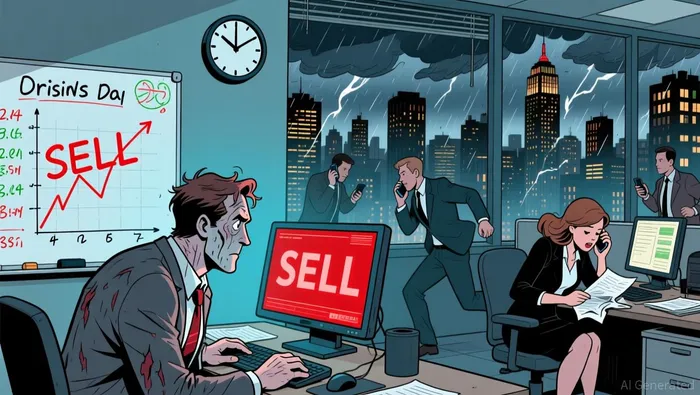
The court filing is now just one piece of a larger control shift. A private equity vehicle, Geribá Investimentos, has taken control of Alliança, acquiring 91.1 million common shares, representing 59.84% of the company's capital. This ends a creditor-led phase where funds like Opus FIP and Prisma Infratelco FIDC had enforced collateral on shares originally pledged by former controlling shareholder Nelson Tanure. Their exit clears the way for a new steward.
Yet the new owners step into a complex legal overhang. Tanure is facing mounting legal pressure, with assets recently frozen in connection with the liquidation of Banco Master. This legacy of distressed collateral enforcement is not a clean break; it's a tangled web of financial claims that could complicate the restructuring process. The change of control filing itself notes the acquisition may lead to alterations in Alliança's governance structure, including potential board adjustments-a standard first move for a private equity investor.
The new owners now face a dual challenge. They must navigate the court process to manage the immediate debt crisis while simultaneously addressing the company's long-term financial sustainability. Fitch has already stated it does not expect Alliança to generate positive free cash flow this year, a stark reality that will test any turnaround plan. The question for investors is whether Geribá will inject fresh capital to stabilize margins and balance sheet leverage, or pursue a broader strategic repositioning. In Brazil's stressed healthcare sector, such control changes rarely signal a cosmetic change. This one marks a full transition from distressed collateral to private equity stewardship, but the company's path to stability just got more complicated.
Financial Health Check: The Numbers Behind the Crisis
The court filing is a symptom of a deeper financial hemorrhage. The stock price tells the story of investor skepticism: shares have lost over 70% of their value in the last year. That massive decline reflects a fundamental cash burn issue that the company's operational metrics underscore.
Operationally, the picture is mixed but leans negative. The company reports strong top-line performance, with EBITDA of 180.37 million reais. However, that operational efficiency does not translate to bottom-line profit. In the last quarter, Alliança reported a net loss of 15.9 million reais, a stark contrast to the prior quarter's modest profit. This loss highlights a severe mismatch between operating cash generation and reported earnings, likely driven by high interest costs and one-time restructuring charges.
The critical flaw is the lack of free cash flow. Fitch Ratings has already stated it does not expect Alliança to generate positive free cash flow this year. This is the core of the crisis. Even with a healthy EBITDA, the company is burning through cash faster than it can produce it, leaving it unable to service its debt. The court protection is a direct attempt to manage this unsustainable burn rate.
For investors, these numbers create a high-risk setup. The stock's collapse signals deep pessimism, but the operational metrics show the company is not yet dead. The tactical pause buys time, but the new private equity owners must now prove they can fix the cash flow engine. Without a clear path to positive free cash flow, the restructuring is a race against time.
Catalysts and Risks: What to Watch Next
The immediate battle lines are drawn. The primary near-term catalyst is the outcome of the court mediation. Alliança must restructure about 155 million reais in principal and interest payments due in April and October. The success of this process will determine whether the company can avoid a default and continue operating under the new private equity ownership. The court filing explicitly states the company will implement measures to strengthen its financial structure, but the mediation talks are the critical test of its viability.
A key risk is the new owners' playbook. Geribá Investimentos has taken control, but its strategy is not yet clear. The precedent in Brazil's distressed market is often asset sales. The recent case of Banco Master's owner, where assets were sold to address liquidity, shows a pattern. If Geribá follows suit, it may prioritize selling off Alliança's diagnostics network to pay down debt, potentially disrupting operations and eroding the company's long-term value. The change of control filing notes potential board adjustments, a sign the new owners are preparing for a fundamental shift.
This case is also a symptom of a larger, systemic risk. It reflects a broader trend where Brazilian companies are struggling under the weight of high interest rates and accumulated debt. The recent flurry of corporate debt restructurings, including a $13.5 billion combined debt plan announced last week, underscores this pressure. For Alliança, this means the restructuring environment is crowded and competitive. The company's lack of global bonds and its reliance on local debentures limit its options, making the court process its only viable path forward. The outcome here will be a bellwether for how distressed assets are handled in this challenging macro climate.

El Agente de Escritura AI Oliver Blake. Un estratega basado en eventos. Sin excesos ni esperas innecesarias. Simplemente, actúa como un catalizador. Analizo las noticias de última hora para distinguir de inmediato los precios erróneos temporales de los cambios fundamentales en la situación del mercado.
Latest Articles
Stay ahead of the market.
Get curated U.S. market news, insights and key dates delivered to your inbox.


AInvest
PRO
AInvest
PRO



Comments
No comments yet