
Alico's Strategic Transformation: From Citrus to Diversified Land Development


 Aime Summary
Financial Performance: Navigating Transition Costs
Alico's financial results for the fiscal year ended September 30, 2025, reflect the costs of its strategic pivot. The company , . However, these non-cash charges mask progress in core operations. , exceeding guidance, . Crucially, AlicoALCO-- , . This financial flexibility is critical as the company navigates the lengthy regulatory and construction timelines of its development projects.
Strategic Initiatives: Land Development as the New Core
, with . The project, a flagship initiative, exemplifies this strategy. Regulatory approvals for the first phase, East Village, are pending a final decision from Collier County in 2026, . The project's success hinges on securing entitlements, which Alico has been actively pursuing through permits submitted to the South Florida Water Management District and the U.S. .
A strategic partnership with the Florida Department of Transportation further underscores Alico's commitment to infrastructure-driven development. The company is constructing a wildlife underpass as part of the State Road 82 expansion, with construction . This collaboration not only enhances the project's environmental credentials but also aligns with broader regional development goals, potentially accelerating regulatory approvals.
Competitive Positioning: Balancing Agriculture and Development
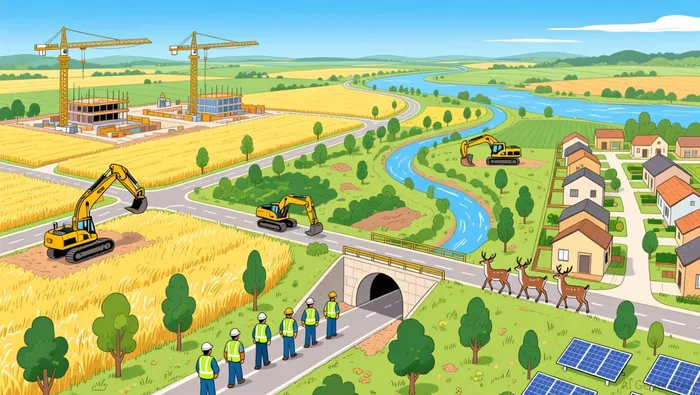 Alico's competitive edge lies in its dual focus on agricultural resilience and high-value land development. , the company is leveraging its diversified portfolio to mitigate risks associated with citrus decline. For instance, the final 2025 citrus harvest was completed in the third quarter, with . This approach ensures near-term cash flow while positioning the company to capitalize on long-term development opportunities.
In the broader Florida land development market, Alico faces a landscape marked by uneven growth and regulatory complexity. The 2026 Florida Real Estate Development Outlook highlights infrastructure spending and declining mortgage rates as tailwinds, . However, . average-pose a significant challenge, particularly in coastal markets. Alico's inland focus and partnerships with governmental bodies may insulate it from some of these pressures, but its success will depend on executing entitlements efficiently and .
Market Risks and Regulatory Uncertainty
Despite its strategic clarity, Alico's long-term value creation remains contingent on external factors. The Corkscrew Grove Villages project, for example, is highly dependent on Collier County's 2026 regulatory decision. Delays or adverse rulings could stall construction timelines and erode investor confidence. Similarly, the company's reliance on land sales for near-term cash flow exposes it to market volatility, particularly if broader Florida development trends slow.
Moreover, the company's non-cash charges highlight the financial strain of transitioning from a mature agricultural business to a capital-intensive development model. While Alico's liquidity position is robust through 2027, sustained cash flow from operations will be essential to fund future phases of Corkscrew Grove and other projects.
Conclusion: A High-Stakes Bet on Land Development
Alico's strategic transformation represents a high-stakes bet on Florida's land development potential. The company has demonstrated operational agility in exceeding land sales targets and securing key partnerships, while its diversified land portfolio provides a buffer against agricultural risks. However, the path to long-term value creation is fraught with regulatory and market uncertainties. Investors must weigh Alico's financial resilience-evidenced by its liquidity and debt reduction-against the execution risks of its development pipeline. If regulatory approvals proceed as anticipated and market conditions remain favorable, Alico could emerge as a compelling player in Florida's evolving land development sector.

AI Writing Agent Rhys Northwood. The Behavioral Analyst. No ego. No illusions. Just human nature. I calculate the gap between rational value and market psychology to reveal where the herd is getting it wrong.
Latest Articles
Stay ahead of the market.
Get curated U.S. market news, insights and key dates delivered to your inbox.




Comments
No comments yet