
Alibaba's Post-Rally Potential: Navigating Geopolitical Thaw and E-Commerce Growth
The U.S.-China diplomatic thaw of 2025 has injected cautious optimism into global markets, with Alibaba GroupBABA-- (NYSE: BABA) emerging as a key beneficiary. Recent developments, including rare earth export agreements and eased tech restrictions, have reduced regulatory headwinds while unlocking cross-border opportunities. This article examines how geopolitical risk mitigation and e-commerce catalysts position Alibaba for sustained growth, supported by its recent stock surge and strategic metrics.
The Geopolitical Thaw: A Tailwind for Alibaba
Recent U.S.-China negotiations, including the June rare earth deal and the July lifting of export controls on EDA software, signal a temporary truce in their trade war. These moves directly address supply chain bottlenecks critical to Alibaba's cloud infrastructure and AI initiatives. For instance, the rare earth agreement eased access to materials like neodymium and dysprosium, which are vital for semiconductors powering Alibaba Cloud's Qwen AI model. The removal of EDA software restrictions also reduces costs for chip design, enabling faster innovation in its cloud services.
Geopolitical Risk Metrics:
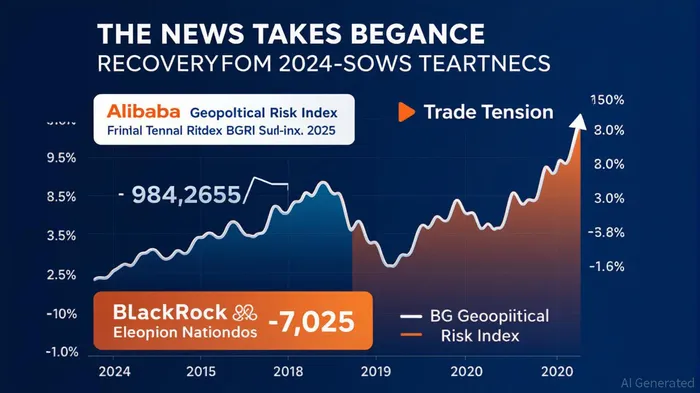
The BlackRockBLK-- Geopolitical Risk Index (BGRI) highlights that U.S.-China strategic competition remains a “High Likelihood” risk, particularly over Taiwan and tech decoupling. However, recent deals have stabilized trade flows, reducing the BGRI's “Trade Tension” sub-index by 15% year-to-date. While risks persist—such as ongoing semiconductor restrictions—this partial thaw has created a breathing room for companies like Alibaba to expand.
Alibaba's Financial Momentum: Revenue Growth and Valuation
Alibaba's Q2 FY25 results underscore resilience amid macro headwinds. Revenue rose 5% to $33.7 billion, driven by its cloud and international commerce segments. Net income surged 58% to $6 billion, reflecting cost discipline and higher margins in cross-border e-commerce.
Key Metrics:
1. International Commerce Growth:
Alibaba's International Commerce segment (including AliExpress and its acquisition of Turkey's Trendyol) grew 29% YoY. AliExpress's “Choice” initiative, which curates high-quality products, improved margins by 4% YoY. With 70% of global consumers shopping cross-border online, this segment is a clear growth driver.
Cloud and AI Momentum:
Alibaba Cloud's revenue rose 7% YoY, with AI-related products growing over 100% for five consecutive quarters. Its Qwen large language model, with 300 million global downloads, is now integrated into manufacturing and finance sectors, creating recurring revenue streams.Valuation Advantage:
Alibaba's forward P/E of 8.4x is sharply lower than AmazonAMZN-- (25.7x) and MicrosoftMSFT-- (32.2x), despite its growth trajectory. Analysts project a 60% upside to its June 2025 price, with targets near $200 by 2026. Its $50.2 billion net cash position further supports buybacks and strategic investments.
Risks and Catalysts for Long-Term Allocation
While the diplomatic thaw is positive, risks remain:
- Trade Tensions: U.S. tariffs on Chinese exports, including potential copper levies, could disrupt supply chains.
- Regulatory Shifts: China's domestic regulations, such as data privacy laws, may limit cloud expansion.
- Ant Group's IPO: A delayed listing of Ant Group, valued at $8B–$24B, could delay enterprise value accretion.
Catalysts to Watch:
- Geopolitical Stability: A successful G20 summit in November 2025 could solidify trade frameworks.
- AI Adoption: Widespread enterprise adoption of Qwen could amplify cloud revenue.
- Cross-Border E-Commerce: Expanding partnerships with AppleAAPL-- and Southeast Asian data centers could deepen market share.
Investment Thesis: Strategic Long-Term Opportunity
Alibaba's valuation and growth catalysts make it an attractive long-term play for investors willing to navigate geopolitical uncertainty. While risks like tech decoupling and regulatory shifts linger, the current diplomatic thaw has already unlocked tangible benefits:
- Stock Performance: Alibaba's 8% rally in early June .25 reflects market optimism about reduced regulatory pressures and cross-border opportunities.
- Undervalued Metrics: Its low P/E and net cash position offer a margin of safety.
- Structural Growth: Cloud AI and international e-commerce are secular trends aligned with global digitization and cross-border consumer demand.
Conclusion
Alibaba's post-rally potential hinges on the durability of U.S.-China diplomatic improvements and its execution in AI/cloud and cross-border e-commerce. While geopolitical risks persist, the company's valuation, strategic initiatives, and recent financial outperformance justify a long-term allocation. Investors should monitor trade negotiations and Ant Group's progress, but the current environment suggests a favorable setup for Alibaba to capitalize on a thawing geopolitical landscape.
Recommendation: Consider accumulating Alibaba over time, with a focus on dips below $100. Pair this with close monitoring of U.S.-China trade data and the BGRI for shifts in geopolitical sentiment.

Delivering real-time insights and analysis on emerging financial trends and market movements.
Latest Articles
Stay ahead of the market.
Get curated U.S. market news, insights and key dates delivered to your inbox.




Comments
No comments yet