
Alibaba's AI-Driven Resurgence and the Future of Cloud Computing


 Aime Summary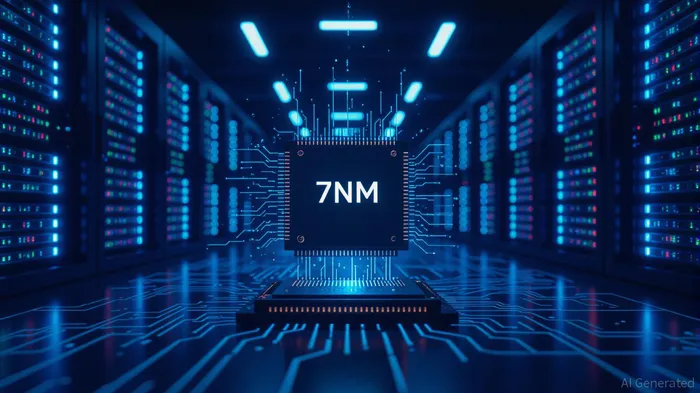
In the ever-evolving landscape of global technology, Alibaba GroupBABA-- has emerged as a formidable force in artificial intelligence and cloud computing. The company's recent 19% stock surge in August 2025 underscores a strategic pivot toward AI-driven infrastructure and self-reliance in semiconductor production. This resurgence is not merely a reaction to market dynamics but a calculated move to position AlibabaBABA-- as a leader in the next phase of the AI revolution.
Strategic Capital Allocation: Building a Domestic AI Ecosystem
Alibaba's $53 billion investment in cloud and AI infrastructure over the next three years is a testament to its long-term vision. This capital is being directed toward two critical areas: cloud computing expansion and indigenous AI chip development. The cloud unit, already China's largest with a 33% market share, reported 26% year-on-year revenue growth in Q1 2025, driven by triple-digit growth in AI-related services. This performance rivals U.S. hyperscalers like MicrosoftMSFT-- and AmazonAMZN--, despite the latter's 17.5% growth in AWS.
The cornerstone of Alibaba's strategy is its new 7nm AI inference chip, developed in-house and manufactured domestically. This chip, designed for tasks like recommendation systems and natural language processing, reduces reliance on U.S. suppliers such as NvidiaNVDA--. While it may not yet rival the H100 or Blackwell GPUs, its compatibility with CUDA and PyTorch ensures seamless integration for developers. This hybrid approach—leveraging U.S. software while substituting hardware—positions Alibaba to dominate the inference market, which is projected to grow to $20 billion by 2027.
Geopolitical Dynamics: A Semiconductor Arms Race
The U.S. semiconductor strategy, centered on maintaining technological superiority, has inadvertently accelerated Alibaba's self-sufficiency. Export restrictions on advanced chips like the H100 and Blackwell have created a vacuum in China's AI market, which Alibaba is filling with its domestically produced alternatives. While U.S. firms like Nvidia adapt by offering lower-spec H20 chips, Chinese regulators have discouraged their use in government projects, citing security concerns. This regulatory shift has opened a window for Alibaba to capture market share, particularly in inference workloads where its chips are cost-competitive.
Meanwhile, U.S. export controls on lithography equipment (e.g., ASML's EUV machines) have further constrained China's ability to produce cutting-edge chips. However, Alibaba's focus on 7nm technology—a process already mature in China—allows it to bypass these bottlenecks. This strategic alignment with China's national goal of tripling AI chip output by 2025 ensures Alibaba's dominance in a market projected to grow at 55% annually.
Long-Term Competitive Positioning: Cloud as a Strategic Lever
Alibaba's cloud unit is not just a revenue driver but a strategic asset. By integrating its AI chips into cloud infrastructure, the company creates a closed-loop ecosystem where data, models, and hardware are tightly coupled. This approach mirrors Amazon's AWS and Microsoft's Azure but with a critical advantage: data sovereignty. In a regulatory environment where cross-border data flows are increasingly restricted, Alibaba's localized infrastructure ensures compliance and builds trust with Chinese enterprises.
Global expansion further strengthens this position. Alibaba's data centers in Malaysia, South Korea, and Singapore, coupled with partnerships like the SAPSAP-- collaboration, signal its intent to challenge U.S. cloud giants in international markets. The company's Qwen AI models, now powering enterprise services for SAP clients, demonstrate its ability to monetize AI at scale.
Investment Case: Emerging Markets and AI-First Plays
For investors, Alibaba represents a compelling case study in strategic capital allocation. Its $53 billion investment in AI infrastructure is not just a bet on growth but a hedge against geopolitical risks. While U.S. tech stocks face regulatory scrutiny and margin pressures, Alibaba's focus on emerging markets and AI-driven cloud services offers a diversified growth path.
The company's stock surge in August 2025—its largest in over two years—reflects this optimism. With a forward P/E of 10, Alibaba is undervalued relative to peers like Microsoft (25x) and Amazon (30x), offering a margin of safety for long-term investors. However, risks remain: core e-commerce margins are under pressure due to “instant commerce” investments, and U.S.-China tensions could escalate.
Conclusion: A New Era of AI-Driven Tech Leadership
Alibaba's resurgence is emblematic of a broader shift in the global tech landscape. As emerging markets embrace AI, companies that combine strategic capital allocation with geopolitical agility will thrive. Alibaba's investments in AI chips and cloud infrastructure position it to lead this transition, offering a blueprint for tech plays in regions where self-reliance and innovation intersect. For investors seeking exposure to the AI revolution, Alibaba's story is one of resilience, foresight, and long-term value creation.
In the race for AI dominance, the future belongs to those who build ecosystems, not just chips. Alibaba is betting on both.

Delivering real-time insights and analysis on emerging financial trends and market movements.
Latest Articles
Stay ahead of the market.
Get curated U.S. market news, insights and key dates delivered to your inbox.
AInvest
PRO
AInvest
PRO



Comments
No comments yet