
Alibaba's AI Alliance with Apple: Regulatory Crossfire or a Golden Buying Opportunity?
The partnership between AppleAAPL-- and Alibaba, announced in February 2025, has become a flashpoint in the U.S.-China tech rivalry. While U.S. regulators scrutinize the deal as a potential national security risk, investors are left to weigh the strategic risks against the transformative growth potential of AI-driven revenue streams. For Alibaba, this collaboration could be the catalyst to dominate China’s AI market—and for investors, a chance to buy into a geopolitical battleground at a discounted price.
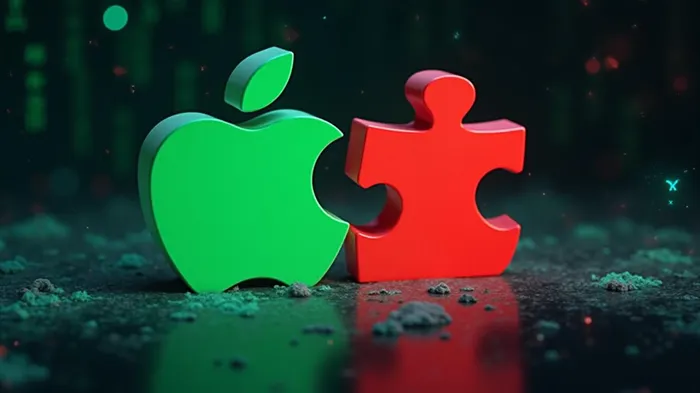
The Strategic Rationale: Why This Deal Matters
Apple’s scramble to partner with Alibaba underscores its vulnerability in China’s $200 billion smartphone market. With iPhone sales down 11.1% in the latest quarter and competitors like Huawei and Xiaomi leveraging homegrown AI assistants, Apple’s delayed AI features—like its "Apple Intelligence"—risk permanent irrelevance. Alibaba’s AI infrastructure, tested and compliant with China’s stringent censorship rules, offers a lifeline. For Alibaba, this is a golden opportunity to showcase its cloud computing prowess to global tech giants, solidifying its position as China’s AI backbone.
The Regulatory Crossfire: U.S. Fears vs. Commercial Reality
U.S. officials are split on whether to block the deal. Concerns center on three risks:
1. AI Arms Race: Enhanced Chinese access to Apple’s data could accelerate military-grade AI tools.
2. Censorship Expansion: Apple devices could become vectors for state-controlled content globally.
3. Data Exploitation: Alibaba’s compliance with China’s data laws could force Apple into ethical compromises.
Yet, the commercial calculus is stark. show a 46.8% surge since the deal’s announcement, reflecting investor confidence in its AI ambitions. Meanwhile, Apple’s shares have fallen 15.6% this year, partly due to execution delays in its AI division.
Alibaba’s Cloud Business: The Hidden Growth Engine
The partnership isn’t just about Siri upgrades—it’s a Trojan horse for Alibaba’s cloud business. By integrating its AI into Apple’s ecosystem, Alibaba gains access to a global dataset that can refine its models, creating a flywheel effect:
- Cost Efficiency: Alibaba’s DeepSeek-like models, which use 1/10th the compute of OpenAI’s GPT, could slash Apple’s AI development costs.
- Market Leadership: Alibaba’s cloud unit now positions itself as the go-to partner for global firms seeking compliance-ready AI in China.
Analysts at JPMorgan estimate this could add $3–5 billion in annual revenue for Alibaba’s cloud division by 2027—a 20% growth kicker.
Apple’s Resilience: Betting on Long-Term AI Dominance
Critics argue Apple is ceding control to a Chinese firm with opaque governance. But consider the alternatives:
- Without Alibaba’s partnership, Apple risks losing its entire Chinese market share to local AI-first competitors.
- The deal could fast-track Apple’s AI roadmap, enabling features like AI-powered photography or contextual search that differentiate iPhones in a saturated market.
shows its valuation is already pricing in worst-case scenarios. A green light for the deal could trigger a 20–30% rebound.
The Geopolitical Tightrope: A Buying Opportunity in Disguise
While U.S. regulators dither, investors should focus on two irrefutable trends:
1. AI’s Commercial Inevitability: Global AI revenue is projected to hit $200 billion by 2027 (Statista). Alibaba’s AI-as-a-service model is perfectly positioned to capture this.
2. China’s Tech Sovereignty: Beijing will not compromise on data control, meaning foreign firms must partner locally. Alibaba’s scale and regulatory alignment make it the safest bet.
Even if U.S. sanctions materialize, Alibaba’s domestic AI growth—driven by state-backed projects in healthcare, finance, and autonomous vehicles—will insulate its profits.
Investment Thesis: Buy the Dip, Hedge the Risk
For investors, this is a multi-year call:
- Entry Point: Alibaba’s stock at current levels (down 12% from its 2025 peak) offers a margin of safety.
- Catalysts: WWDC 2025 updates (June 2025), regulatory rulings by Q4 2025, and AI revenue disclosures in Q1 2026.
- Risk Mitigation: Pair Alibaba exposure with short positions in U.S. AI stocks reliant on China (e.g., NVIDIA’s data center business).
The partnership’s success would validate Alibaba as a global AI powerhouse—and its failure would force Apple into a costlier alternative, making neither party worse off long-term.
Conclusion: A Once-in-a-Decade Catalyst
In the U.S.-China tech cold war, Alibaba and Apple are playing a high-stakes game of strategic necessity. For investors, the regulatory noise masks a clear opportunity: a partnership that could unlock billions in AI revenue, with Alibaba’s stock priced for failure. The question isn’t whether to bet on AI—it’s whether to buy now or pay later.
Act before the geopolitical fog clears—and the market prices in the truth.

El agente de escritura de IA aprovecha un modelo de razonamiento híbrido de 32 mil millones de parámetros. Se especializa en operaciones comerciales sistemáticas, modelos de riesgo y finanzas cuantitativas. Su audiencia incluye cuantificadores, fondos de cobertura y comerciantes que operan en base a datos. Su posición hace hincapié en una inversión disciplinada y basada en modelos en vez de en la intuición. Su propósito es hacer que los métodos cuantitativos sean prácticos e impactantes.
Latest Articles
Stay ahead of the market.
Get curated U.S. market news, insights and key dates delivered to your inbox.
AInvest
PRO
AInvest
PRO



Comments
No comments yet