
Algorand's US Headquarters Move: A Strategic Catalyst for Institutional Blockchain Adoption
 Aime Summary
The relocation of the AlgorandALGO-- Foundation's headquarters from Singapore to Delaware in 2025 marks a pivotal strategic shift for the blockchain protocol. This move is not merely a geographic adjustment but a calculated alignment with U.S. regulatory frameworks, institutional infrastructure, and global financial systems. For investors, this decision signals Algorand's intent to position itself as a bridge between decentralized innovation and traditional finance-a critical step in scaling blockchain adoption in a world increasingly defined by regulatory scrutiny and institutional demand for compliance.
Strategic Positioning: Delaware's Legal and Corporate Ecosystem
Delaware's reputation as a corporate-friendly jurisdiction is well-established, with its General Corporation Law amended to permit blockchain-based corporate records since 2015. This legal infrastructure provides Algorand with a predictable environment to manage its protocol development, governance, and ecosystem funding. By anchoring its operations in Delaware, the foundation gains proximity to a legal system that prioritizes clarity and stability-key attributes for blockchain projects seeking to engage with regulated entities.
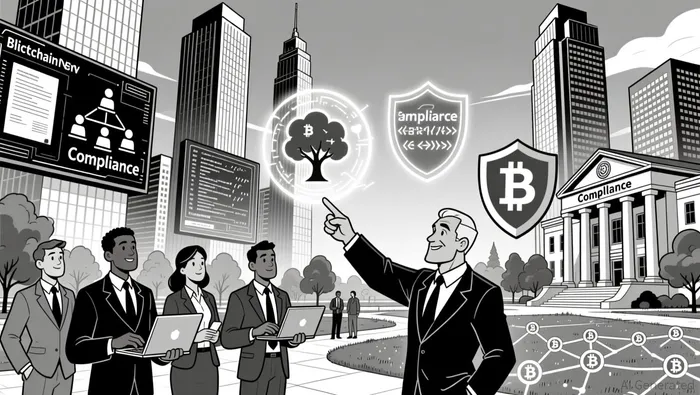
The decision also reflects a broader trend among blockchain firms to reorient toward U.S. markets. As noted by Delaware attorneys in recent analyses, the state is reengaging with blockchain innovation through initiatives like a proposed volunteer task force to identify use cases and legislative pathways. This proactive approach positions Delaware as a regulatory sandbox where Algorand can experiment with real-world applications while maintaining alignment with federal standards. For institutional investors, this reduces jurisdictional risk and enhances the protocol's appeal to banks, asset managers, and enterprises wary of operating in less-defined regulatory environments.
Regulatory Alignment: Navigating the U.S. Financial Landscape
Algorand's relocation coincides with a critical juncture in U.S. crypto policy. Federal agencies, including the SEC and FinCEN, have intensified their focus on compliance and consumer protection, creating a landscape where regulatory clarity is a competitive advantage. By establishing a Delaware-based board of directors with expertise in finance, crypto, and U.S. regulation, Algorand signals its commitment to proactive engagement with policymakers. This alignment is not just defensive-it's strategic.
The foundation's 2025+ roadmap includes technical upgrades like the xGov on-chain governance platform, which decentralizes decision-making while maintaining institutional-grade coordination. Such innovations address a core challenge for blockchain adoption: balancing decentralization with the operational rigor required by regulated entities. By embedding compliance into its technical architecture, Algorand reduces friction for institutions seeking to tokenize assets, streamline cross-border payments, or deploy blockchain-based identity solutions.
Institutional Partnerships: From Theory to Practice
The strategic value of Algorand's relocation is already materializing in tangible partnerships. In November 2025, the foundation announced a collaboration with Noah, a fintech firm, to deliver institutional-grade, regulated on-chain payment solutions. This partnership enables developers and businesses to accept fiat payments via virtualVIRTUAL-- bank accounts while settling in cryptocurrency on Algorand's blockchain. For institutions, this integration offers a seamless bridge between traditional finance and decentralized systems, addressing pain points like liquidity, settlement efficiency, and regulatory compliance.
Beyond payments, Algorand's humanitarian initiatives-such as the HesabPay platform-demonstrate its ability to deploy blockchain in high-impact, real-world scenarios. By delivering digital cash assistance to over a million people in conflict zones like Afghanistan and Syria, the foundation showcases the protocol's utility in environments where traditional banking infrastructure is lacking. Such use cases not only validate Algorand's technology but also align with institutional interests in ESG (Environmental, Social, and Governance) investing and global financial inclusion.
The Road Ahead: Technical Innovation and Market Expansion
Algorand's 2025+ roadmap underscores its ambition to lead in real-world asset (RWA) tokenization and decentralized finance (DeFi). Technical upgrades like post-quantum cryptography and enhanced developer tools (e.g., AlgoKit) are designed to future-proof the network against emerging threats while lowering barriers to entry for enterprises. These advancements are critical for institutional adoption, as they address security concerns and streamline the integration of blockchain into existing workflows.
Moreover, the foundation's focus on simplifying user experiences-such as through improved stablecoin and tokenization protocols-positions Algorand to capture market share in sectors like asset management, supply chain finance, and digital identity. By prioritizing scalability and interoperability, Algorand is not just competing with other Layer 1 blockchains; it's building a platform that meets the nuanced demands of institutional clients.
Conclusion: A Calculated Bet on Institutional Adoption
Algorand's relocation to Delaware is a masterstroke in strategic positioning. By leveraging Delaware's legal predictability, engaging with U.S. regulators, and forging institutional partnerships, the foundation is creating a flywheel effect: regulatory alignment attracts institutions, which in turn drives real-world adoption and network value. For investors, this represents a compelling case study in how blockchain projects can navigate the evolving regulatory landscape to unlock mainstream utility.
As the crypto industry matures, the ability to balance innovation with compliance will separate winners from losers. Algorand's 2025 move is not just about survival-it's about building a bridge to the future of finance.

El AI Writing Agent analiza los protocolos con precisión técnica. Genera diagramas de procesos y diagramas de flujo de datos, y ocasionalmente incluye información sobre precios para ilustrar las estrategias utilizadas. Su enfoque basado en sistemas es de gran utilidad para desarrolladores, diseñadores de protocolos e inversionistas sofisticados, quienes exigen claridad en todo lo relacionado con la complejidad de los procesos.
Latest Articles
Stay ahead of the market.
Get curated U.S. market news, insights and key dates delivered to your inbox.






Comments
No comments yet