
Algorand (ALGO) Faces Key Support Amid Real-World Asset Expansion and Emission Overhangs
 Aime Summary
- Algorand (ALGO) is currently trading in a low-volume consolidation phase near $0.079, reflecting a disconnect between foundation marketing and actual price momentum.
- The token faces continuous downward pressure as validator reward emissions significantly exceed network fee generation, diluting value.
- Despite bearish technicals, the network is actively expanding its Real-World Asset (RWA) footprint through regulated tokenization capabilities.
- Key support is held near $0.0757, with a breakdown below this level potentially invalidating the current consolidation thesis.
- A confirmed reversal requires buyers to reclaim the $0.082–$0.087 resistance range amid weakened spot trading volume.
Algorand (ALGO) is currently navigating a fragile technical zone between $0.078 and $0.082, having declined approximately 45% from its peak in June. The asset is trading below major Exponential Moving Averages, indicating a prevailing bearish trend that has not yet found a definitive bottom. While the price action remains weak, the AlgorandALGO-- Foundation continues to push non-price-moving announcements, including ALGO on top 20 exchanges. However, these structural accessibility improvements have not yet triggered the demand shocks necessary to drive significant upward momentum. Technical indicators reflect a lack of investor conviction, with the daily Relative Strength Index (RSI) at 37.66 and the weekly RSI at 39.03. These metrics suggest weak momentum that is not yet in oversold territory, leaving the asset vulnerable to further downside if support levels fail.
The daily chart displays price action confined within a descending channel, while the weekly chart shows an unresolved falling wedge pattern. This consolidation is characterized by thin interest, with the volume-to-market-cap ratio sitting at just 2.31%. Analysts describe this environment as drift rather than aggressive trading, suggesting that price moves can occur quickly on light liquidity. Liquidation data supports this low-drama environment, with only $9,390 in 24-hour liquidations, indicating that leverage is not stretched. For ALGOALGO-- to recover from this stagnation, it requires real transaction growth rather than continued foundation marketing posts. Key support is held near $0.0757, and a breakdown below this level could invalidate the current consolidation thesis.
How Are Validator Emissions Affecting ALGO Tokenomics?
A primary driver of the downward pressure on ALGO is the network's token economics, specifically the overhang of validator emissions. Validator rewards currently significantly exceed the fees generated by network activity, resulting in continuous token emissions that dilute value. This structural imbalance means that the supply side of the market is consistently adding pressure, even as fundamental usage grows. The circulating supply is high at 89.69% of the 10 billion maximum, which exacerbates the dilution effect during periods of low trading volume. Without a corresponding increase in fee generation or buy-side demand, these emissions maintain a bearish sentiment among investors.
The disconnect between ecosystem activity and token performance is stark. While the network expands its capabilities, the token economics do not currently capture this value for holders. This dynamic has led to a scenario where fundamental growth in the network does not translate to positive price action. Investors must monitor whether fee generation can accelerate to match or exceed validator rewards, which would alleviate the emission overhang. Until such a shift occurs, the continuous dilution remains a key risk factor for ALGO holders.
Is the Real-World Asset Ecosystem Driving Long-Term Value?
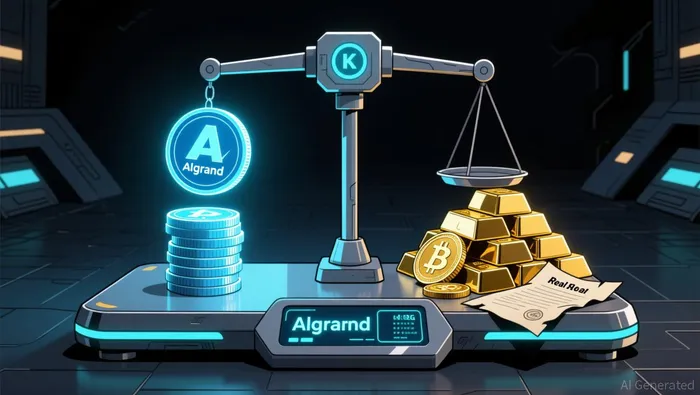
Despite the bearish price action, Algorand is actively expanding its Real-World Asset (RWA) footprint through regulated tokenization capabilities. The network leverages Algorand Standard Assets (ASAs), a protocol-level feature that enables regulated tokenization with built-in transfer restrictions, freezing, and clawback mechanisms. These features are critical for institutional adoption, as they provide the compliance tools necessary for tokenizing traditional assets. The ecosystem now supports a diverse range of assets, including fractional U.S. real estate via Lofty and tokenized gold and silver through Meld Gold.
Further expansion includes renewable energy assets from Enel and tokenized bank deposits via VersaBank. Additional use cases span scientific data verification, water credits, music royalties, and supply chain traceability for commodities like coffee and olive oil. This breadth of application demonstrates the network's technical capability to handle complex, regulated financial instruments. However, the market has yet to reward these fundamental developments with a sustained price rally. The expansion of the RWA ecosystem provides a long-term bullish thesis, but it has not overcome the immediate selling pressure from validator emissions.
For a confirmed technical reversal, buyers must reclaim the $0.082–$0.087 resistance range. This level represents a critical psychological and technical barrier that, if breached, could signal a shift in market sentiment. Until then, ALGO remains in a low-volume consolidation phase, driven by structural improvements rather than demand shocks. Investors are advised to watch for real transaction growth and fee generation increases as potential catalysts for a breakout.

Blending traditional trading wisdom with cutting-edge cryptocurrency insights.
Latest Articles
Stay ahead of the market.
Get curated U.S. market news, insights and key dates delivered to your inbox.


AInvest
PRO
AInvest
PRO




Comments
No comments yet