
ALGO Rises 1.79% as Algo Trading Gains Prominence in Reshaping Investment Strategies
 Aime Summary
On DEC 23, 2025, ALGOALGO-- surged by 1.79% within 24 hours to trade at $0.1135, reflecting a 6.06% rise over the past week. However, the token has declined by 16.69% in the last month and 65.98% year-to-date. The recent price action comes amid growing interest in algorithmic trading, a trend reshaping modern financial markets and influencing how assets like ALGO are analyzed and traded.
Algorithmic Trading Gains Traction Among Institutional and HNIs
Algorithmic trading—once the exclusive domain of hedge funds and large financial institutions—is now being adopted by high-net-worth individuals (HNIs) and institutional investors in both Indian and global markets. This method relies on pre-defined rules and automated systems to execute trades with speed and precision, allowing for optimized entry and exit points while minimizing market impact.
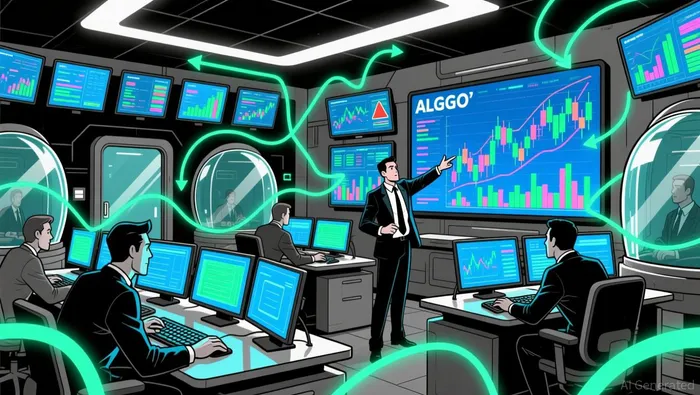 The process involves several key steps: strategy design, backtesting using historical data, coding the algorithm, automated execution, and continuous risk monitoring. Strategies range from simple execution algorithms to complex high-frequency trading models, each aimed at capturing market inefficiencies.
In the context of ALGO, the growing adoption of algorithmic systems means that traders are increasingly using data-driven models to analyze the token’s price movements and market conditions. This has led to tighter bid-ask spreads and faster trade execution, contributing to the recent price volatility seen in the asset.
Risk Management and Regulatory Frameworks Strengthen Algo Trading
Modern algorithmic strategies are built with robust risk management protocols. These include stop-loss limits, exposure caps, and real-time monitoring to adapt to shifting market dynamics. In India, the Securities and Exchange Board of India (SEBI) has established clear guidelines for algorithmic trading, ensuring transparency and compliance across exchanges like the NSE and BSE.
In global markets, especially the U.S., algorithmic trading operates within a well-developed regulatory framework under the oversight of the SEC and CFTC. This has fostered a mature ecosystem where algorithmic strategies are not just common but foundational to market liquidity.
For HNIs and institutions, these frameworks provide the confidence needed to deploy algorithmic systems across a wide range of assets, including emerging tokens like ALGO. As liquidity improves and trading infrastructure evolves, algorithmic strategies are becoming a core component of portfolio management for investors seeking both efficiency and scalability.
Strategic Implications for ALGO and Other Digital Assets
The increasing presence of algorithmic trading is particularly relevant for digital assets like ALGO, which exhibit higher volatility and require precise execution. Automated systems can analyze real-time market data to identify trends, mean reversion opportunities, and arbitrage potential, offering a more systematic approach to managing exposure in a fast-moving asset class.
Analysts project that the continued adoption of algorithmic strategies will drive further improvements in market depth and liquidity for tokens like ALGO. This could enhance the token’s appeal to both institutional and retail investors who rely on efficient trade execution and transparent pricing.
At the same time, the rise of algorithmic trading has also introduced new challenges, including the risk of flash crashes, system failures, and regulatory scrutiny. However, the benefits—such as reduced transaction costs, faster execution, and enhanced risk control—suggest that the trend is here to stay and will continue to evolve in tandem with advancements in artificial intelligence and machine learning.
Conclusion: A New Era in Market Dynamics
As algorithmic trading continues to redefine global investing, the implications for assets like ALGO are clear. The recent price action, while modest in the short term, reflects the broader structural changes in how markets operate. With automation driving tighter spreads, higher liquidity, and more consistent trade execution, the landscape for digital assets is becoming increasingly competitive and sophisticated.
For investors, the takeaway is straightforward: algorithmic trading is not a passing trend but a fundamental shift in how markets are navigated. As this technology becomes more accessible, the ability to harness its potential will play a crucial role in shaping future returns.

Delivering real-time analysis and insights on unexpected cryptocurrency price movements to keep traders ahead of the curve.
Latest Articles
Stay ahead of the market.
Get curated U.S. market news, insights and key dates delivered to your inbox.


AInvest
PRO
AInvest
PRO



Comments
No comments yet